Trump’s Situation Room Meeting: Finalizing Iran Deal Today
A Pivotal Moment: Trump’s Situation Room Meeting and the Iran Deal
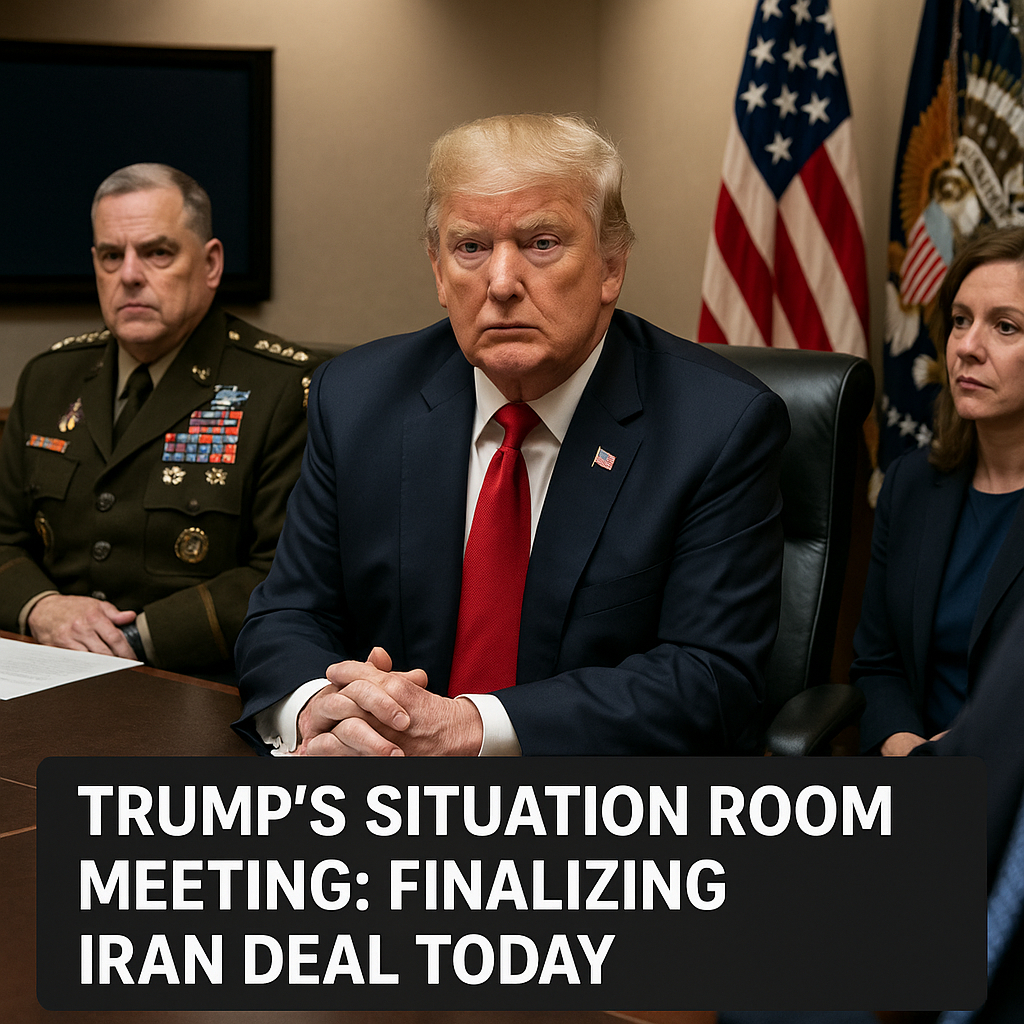
In a high-stakes environment, former President Donald Trump convened a meeting in the Situation Room aimed at finalizing the Iran Deal. This moment reflects not only complex geopolitical negotiations but also the diverse perspectives surrounding the implications of such a deal.

Understanding the Iran Deal Context
The Iran Deal, officially known as the Joint Comprehensive Plan of Action (JCPOA), was initially established in 2015 to limit Iran’s nuclear program in exchange for lifting economic sanctions. However, the deal has experienced significant turbulence, particularly during Trump’s presidency when he unilaterally withdrew the U.S. from the agreement in 2018. Since then, ongoing tensions between the U.S. and Iran have shaped a volatile regional landscape, affecting global stability.

Reports indicated that Trump’s latest meeting aimed to revisit this contentious agreement, which has the potential to reshape Iran’s relations with the West. Proponents of the deal argue that its revival could promote peace and prevent nuclear proliferation in the Middle East. On the other hand, opponents fear that re-entering such an agreement may embolden Iran’s influence in the region.

The Debate Around Rejoining the Deal
A significant aspect discussed in the Situation Room focused on sanctions and their economic impact on Iran, as well as how these sanctions affect global markets. According to reports from Al Jazeera, Trump’s advisors highlighted the economic ramifications of a potential deal. They pointed out that lifting certain sanctions could lead to a stabilization of oil prices, which have fluctuated amid global tension.
Conversely, voices from the opposition, including figures from both political parties, expressed concern that removing sanctions could allow Iran to fund its military initiatives further. According to a report by RT, critics underscored that any new agreement should ensure strict limitations on Iran’s ballistic missile program and its regional activities. These differing views illustrate the contentious nature of negotiations and the complexity involved in reaching a consensus.
Weighing the Options: A Path Forward?
Finding a solution that satisfies multiple stakeholders remains a fundamental challenge. Some analysts believe a gradual re-engagement strategy might be the key. This approach involves reinstating confidence-building measures before any comprehensive deal is finalized. Proponents suggest that this could create a foundation of trust, enabling both sides to negotiate more effectively.
Others argue that time might not be on the U.S.’s side. Sky News highlighted that Iran’s nuclear advancements during this negotiation period pose an increasing risk, which necessitates prompt action from Washington. This urgency is at odds with the more cautious approaches proposed by some diplomats who emphasize maintaining a dialogue while avoiding abrupt policy shifts.
The Future of U.S.-Iran Relations
Regardless of the outcome of Trump’s recent meeting, the implications for U.S.-Iran relations are multifaceted. The Situation Room meeting itself illustrated the gravity of the situation and the stakes involved in negotiating a new or revised deal. It serves as a reminder of the intricate web that international relations weave, where decisions made in high-level meetings could have far-reaching consequences not only for the involved parties but also for global geopolitics.
Among the complexities lies the challenge of sustaining an international consensus. Allies in Europe, who remain supportive of the JCPOA, may not share the same sense of urgency as the U.S., leading to further inconsistencies in strategy. Finding common ground amidst such diverse interests will be key to achieving a sustainable resolution.
In summary, Trump’s Situation Room meeting is emblematic of a broader geopolitical challenge. It’s a moment that not only revisits past decisions but also attempts to chart a course for future relations amidst uncertainty. As negotiations progress, the world will be watching closely to see how these dynamics unfold and what they mean for the stability of the region and, ultimately, for international relations as a whole.