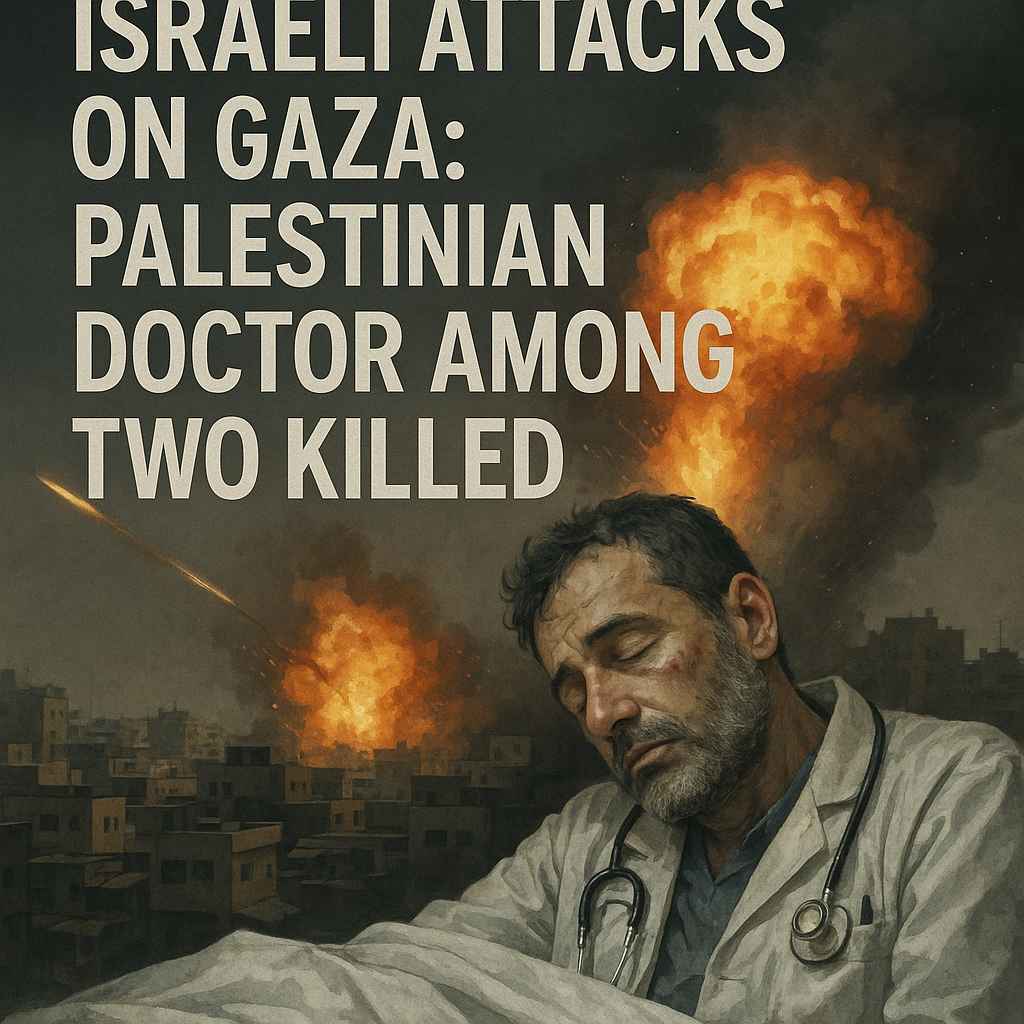
Israeli Attacks on Gaza: Palestinian Doctor Among Two Killed
The Impact of Israeli Attacks on Gaza: A Palestinian Doctor’s Story
The recent escalation of violence in Gaza has led to significant civilian casualties, prompting a global outcry and renewed calls for peace. Among the tragic losses was a Palestinian doctor whose death has brought the humanitarian crisis into sharper focus.

The Human Cost of Conflict
According to multiple reports, the Israeli military operation in Gaza has resulted in the deaths of at least two individuals, including a respected Palestinian doctor. This tragic incident highlights the perilous conditions that medical professionals and civilians endure in conflict zones. Eyewitnesses described the aftermath of the Israeli airstrike, emphasizing the chaos and devastation that permeated the area. Al Jazeera reported that the attack not only claimed lives but also left several others injured, raising urgent concerns about the ongoing humanitarian impact of military actions in this densely populated area.

The reactions to this incident underline the complexity of the situation. Humanitarian organizations have emphasized the dire need for protection of medical staff who often serve on the frontlines. The international community is increasingly concerned about the implications of such attacks on healthcare, with calls for accountability and adherence to international laws garnered a notable response from various human rights advocates. Reports indicate that healthcare facilities in Gaza are already under siege, struggling to meet the needs of a population facing both armed conflict and a crippling blockade.

Diverging Perspectives on Military Actions
Different news outlets have varying perspectives on the justifications provided by the Israeli military regarding their operations in Gaza. While the Israeli government has reiterated that their strikes target militant infrastructure and aim to minimize civilian casualties, critics argue that the reality on the ground often contradicts these claims. The strikes are seen by many as indiscriminate, emphasizing that strikes in such populated areas inevitably lead to collateral damage, comprising mostly innocent lives.
Moreover, RT News referenced comments from Israeli officials asserting that military actions are necessitated by ongoing rocket fire from Gaza. This viewpoint often garners support within Israel, where national security is prioritized. However, many Palestinians and international observers contend that retaliatory measures often exacerbate the cycle of violence, instead of curbing militant activities. The result is a deepening of the rift between both sides and a growing humanitarian crisis that is leaving a lasting impact on civilian life.
The divided sentiments highlight a staggering reality: while Israel prioritizes its security, the Palestinian population continues to bear the brunt of military operations that seem all too frequent and severe. The Multinational debate surrounding the legitimacy of Israeli strikes often finds itself ensnared in historical grievances, where past grievances cloud rational dialogues.
The Path Forward: Calls for Peace and Accountability
The recent events in Gaza have reignited discussions regarding the need for renewed peace efforts. As world leaders and organizations call for an immediate ceasefire, many advocate for a more profound examination of the humanitarian implications of military engagement. Increased attention to the plight of civilian casualties serves as a reminder that, at the core of this conflict, human lives are impacted daily.
Calls have emerged for independent investigations into incidents such as the strike that killed the Palestinian doctor, focusing on the accountability of those responsible for breaches of international law. The establishment of clear protocols that protect civilians—especially healthcare workers—is essential if the international community aims to seek resolution and foster stability in the region.
In the face of such complexity, it remains difficult to discern a straightforward pathway to peace. The discourse surrounding military actions is fraught with emotions and historical tensions that complicate perspectives. As viewpoints continue to diverge, finding common ground for dialogue and capacity-building humanitarian efforts becomes increasingly crucial.
Conclusion: A Collective Responsibility
As the world reflects on the devastating effects of the Israeli attacks on Gaza, the loss of the Palestinian doctor epitomizes a broader humanitarian tragedy that provokes an urgent call for action. Both sides must recognize that sustaining a cycle of violence ultimately inhibits the possibility of peace and carries immeasurable human costs.
Moving forward, fostering dialogue, prioritizing humanitarian efforts, and ensuring accountability are essential components in mitigating the ongoing crisis. The situation in Gaza serves as a poignant reminder of the need for cohesive international efforts to ensure safety, security, and dignity for all those affected by this enduring conflict.