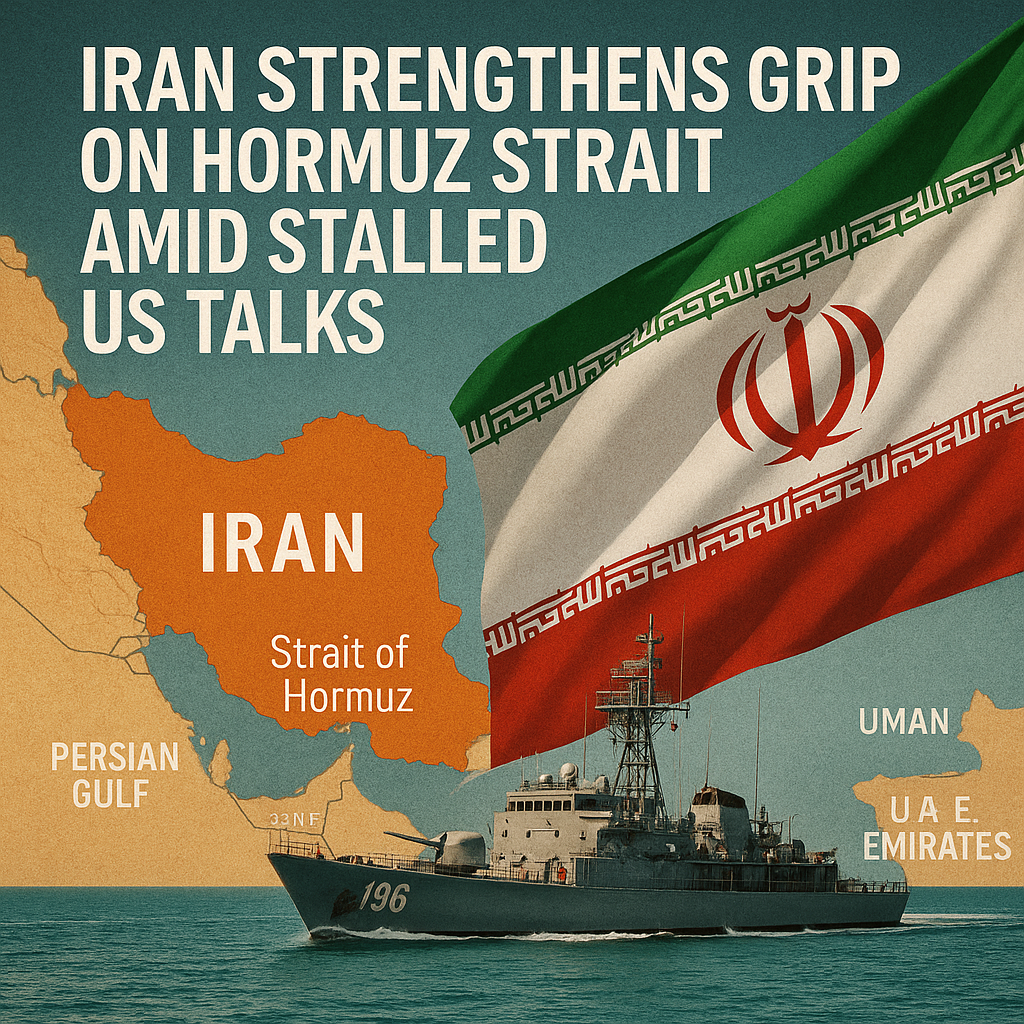
Iran Strengthens Grip on Hormuz Strait Amid Stalled US Talks
Iran Strengthens Grip on Hormuz Strait Amid Stalled US Talks
Amid ongoing geopolitical tensions, Iran is reinforcing its presence in the strategically crucial Hormuz Strait, a vital waterway for global oil shipments. Recent developments indicate that Iran’s military maneuvering in the area comes as negotiations between Tehran and Washington fail to produce meaningful results, raising concerns about stability in the region.

Strategic Importance of the Hormuz Strait
The Hormuz Strait is a narrow passage that connects the Persian Gulf to the Arabian Sea, with approximately 20% of the world’s oil trade passing through it. This makes the strait a focal point not only for energy supply but also for geopolitical dynamics involving major world powers.

Iran has historically regarded the Hormuz Strait as a key element of its national security strategy. As stated in a recent report from Al Jazeera, the Iranian government has emphasized its commitment to asserting control over this critical corridor, especially in the face of what it perceives as external threats, particularly from the United States and its allies.

Tehran’s military activities, including naval exercises and the fortification of coastal defenses, signal its intent to reinforce its claim over the strait. Such moves draw a mixed response from the international community: while some countries express concern over escalating tensions, others see Iran’s actions as a defensive posture in response to sanctions and military pressuring.
Stalled Negotiations and Regional Implications
The stalled U.S.-Iran talks, particularly concerning Iran’s nuclear program and the lifting of economic sanctions, are seen as a contributing factor to Iran’s assertiveness in the region. According to reports from RT and Sky News, despite various diplomatic efforts, including backchannel communications, no significant progress has been made. Consequently, Iran seems to be doubling down on its military capabilities and regional influence as a bargaining chip.
Experts note that this situation presents a complicated dynamic. Iran’s actions may not only deter potential aggressors but could also provoke a stronger military response from the United States or its allies in the region. The U.S. has deployed additional naval assets to the Gulf in recent months, escalating the underlying tensions.
Divergent Perspectives on Iran’s Strategy
While some analysts view Iran’s military preparations as a necessary deterrence strategy, others warn that this could spiral into conflict. For example, U.S. officials have voiced concerns that Iran’s increased military presence in the Hormuz Strait signals a willingness to disrupt maritime security and could threaten international oil shipments. This view contrasts sharply with Iran’s narrative that it is merely safeguarding its sovereignty and economic interests, asserting that foreign naval forces pose a more significant threat to regional stability.
Moreover, the broader context of these developments includes growing geopolitical rivalries in the region. The rise of China as a close ally of Iran complicates the situation further, as this has implications for U.S. foreign policy in the Middle East.
The diversity of opinions underscores the complexity of the issue. Some analysts advocate for renewed diplomatic efforts, emphasizing that dialogue is the best path to de-escalation. Others argue that concessions might be viewed as weakness by Tehran, potentially emboldening further provocations.
Conclusion: Navigating a Troubled Waterway
As Iran reinforces its grip on the Hormuz Strait amid stalled talks with the United States, the month ahead may be crucial for understanding the future landscape of the region. With oil prices remaining sensitive to Middle Eastern geopolitics, any escalation in hostilities could have immediate effects on global energy markets.
The situation remains fluid, characterized by a multitude of factors ranging from national pride and security to international economic implications. While the current state of affairs presents significant challenges, it also underscores the need for nuanced diplomacy as stakeholders grapple with complex interdependencies. The international community continues to watch closely, knowing that the stakes in the Hormuz Strait are far greater than just regional control; they encompass a delicate balance of global economic interests and security considerations.