
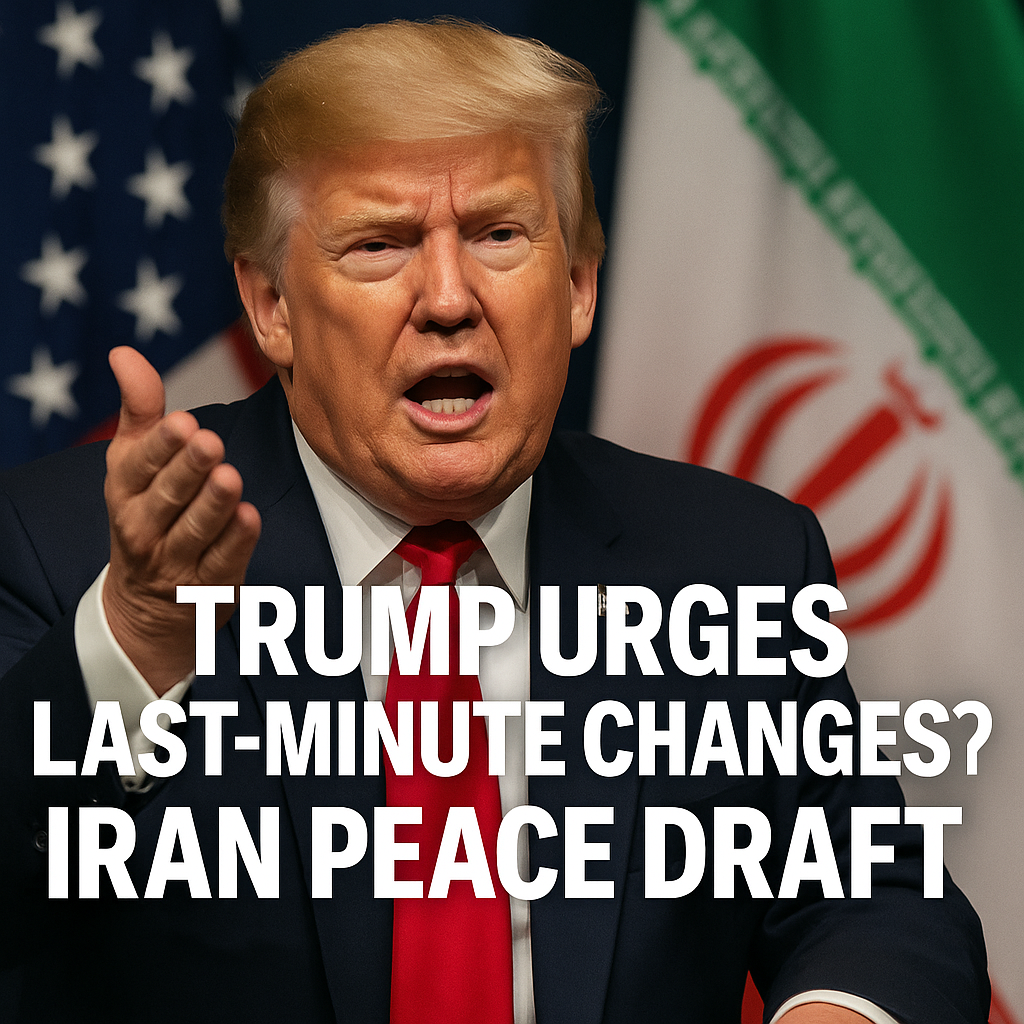
Trump Urges Last-Minute Changes to Iran Peace Draft
Trump Urges Last-Minute Changes to Iran Peace Draft
In a recent turn of events, former President Donald Trump has called for significant modifications to a proposed peace draft regarding Iran. This request comes at a critical juncture in international relations, highlighting the complexities surrounding the Iran nuclear deal and broader geopolitical concerns.

The Context of the Iran Peace Draft
The Iran nuclear deal, formally known as the Joint Comprehensive Plan of Action (JCPOA), has been a contentious topic in U.S. foreign policy since its inception in 2015. It aimed to curtail Iran’s nuclear capabilities in exchange for sanctions relief. Yet, following Trump’s withdrawal from the agreement in 2018, tensions have escalated, creating a precarious situation.

According to reports, Trump’s recent push for last-minute changes is aimed at addressing what he perceives as fundamental flaws in the current draft. His concerns focus on provisions that may lift sanctions too early without ensuring tangible concessions from Iran. This perspective echoes sentiments found in various analyses regarding the deal’s potential repercussions for stability in the Middle East.

Divergent Perspectives on Trump’s Proposal
While Trump’s appeal resonates with a segment of national security experts who prioritize a stricter approach to Iran, it also faces criticism from those advocating for diplomatic engagement.
On one hand, supporters of Trump’s revisions argue that any agreement must guarantee concrete steps from Iran to prevent it from expanding its military influence across the region. They stress the importance of rigorous verification measures, which would ensure compliance and accountability. As outlined by several analysts, lifting sanctions without such assurances could embolden Iran and destabilize neighboring countries further.
Conversely, critics argue that Trump’s last-minute push could undermine the already fragile diplomatic efforts underway. For instance, representatives from various nations engaged in treaty negotiations caution that introducing significant changes at this stage could lead to a breakdown in talks. They highlight the importance of maintaining continuity in diplomatic relations, emphasizing that trust is built over time and can quickly erode with abrupt changes.
Weighing International Reactions
Internationally, reactions to Trump’s demand have been mixed. While allies like Israel have welcomed a tougher stance against Iran—echoing Trump’s sentiments about military threats—European Union leaders have called for de-escalation and sustained dialogue. The EU has reiterated its commitment to the JCPOA and urged all parties to adhere to existing agreements, reflecting a contrasting perspective aimed at fostering peace rather than confrontation.
Reports indicate that diplomats are concerned about the implications of these last-minute demands, suggesting they could complicate ongoing negotiations. Some experts express that focusing on minor revisions might detract from essential discussions about broader issues like regional security and Iran’s missile program.
The Path Forward
As discussions surrounding the Iran peace draft continue, it is clear that finding common ground will not be easy. The stakes are high, and differing opinions complicate the process. Trump’s insistence on modifications has ignited a debate on the effectiveness of diplomacy versus a more hardline approach.
Ultimately, the future of U.S.-Iran relations may rest on the ability of all parties involved to navigate these complex dynamics. Balancing national security interests with the need for diplomatic solutions presents a challenging yet necessary endeavor. As highlighted by various commentators, the goal should be a sustainable peace agreement that not only addresses current concerns but also lays the groundwork for lasting stability in the region.
In conclusion, Trump’s last-minute changes to the Iran peace draft reflect broader tensions in U.S. foreign policy, illustrating the diversities in strategic thought and the ongoing challenge of international diplomacy. While some advocate for a tougher stance, others push for dialogue, emphasizing that the road to peace often requires compromise and collaboration—a lesson that remains ever relevant in the global arena.















