
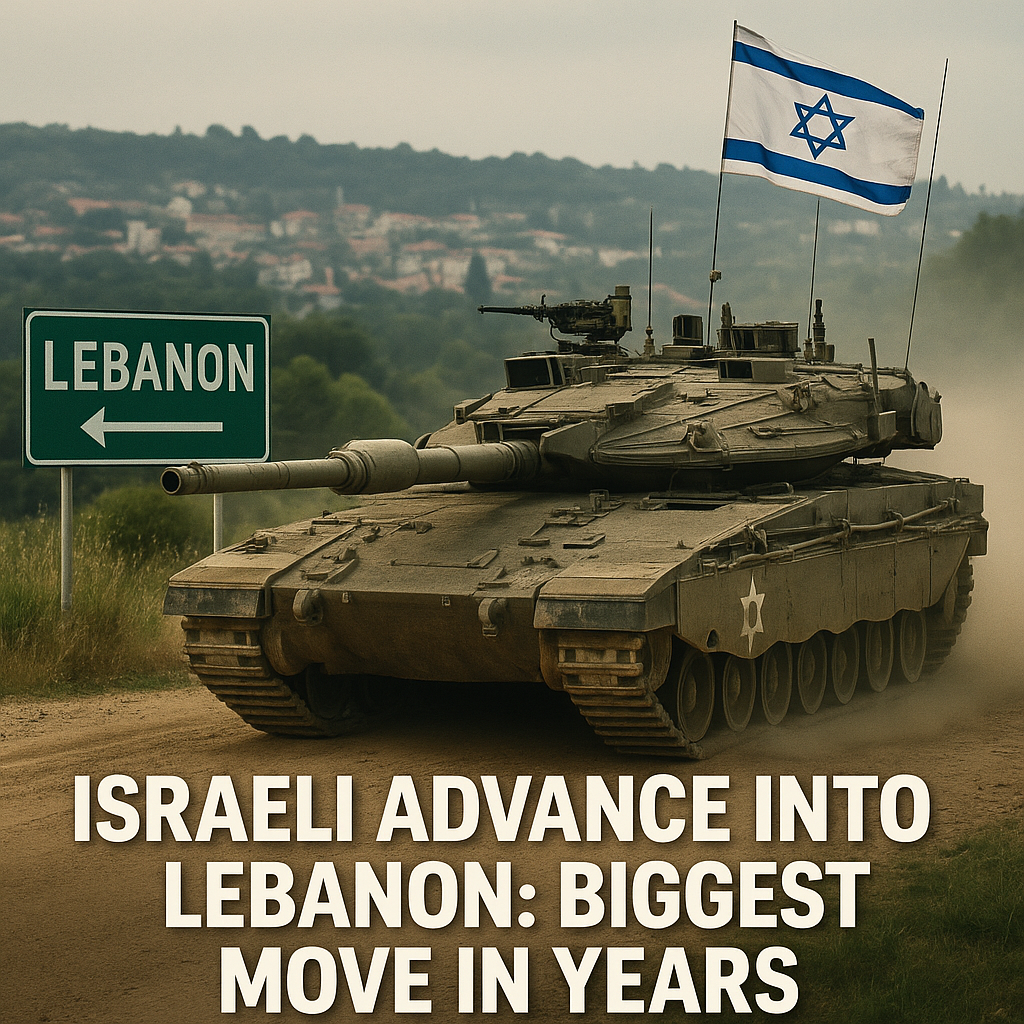
Israeli Advance into Lebanon: Biggest Move in Years
Understanding the Israeli Advance into Lebanon: A Significant Military Shift
The recent Israeli advance into Lebanon marks one of the most notable military moves by the Israel Defense Forces (IDF) in years, drawing widespread attention and varying opinions among experts, analysts, and the general public. This development underscores the complexities and the tensions in the region, raising questions about the potential impact on security, diplomacy, and the long-standing Israel-Lebanon conflict.

Historical Context of the Israel-Lebanon Conflict
To fully appreciate the significance of this military operation, it is essential to consider the historical backdrop. The Lebanese landscape has been shaped by decades of conflict, particularly during the Lebanese Civil War (1975-1990) and the 2006 Lebanon War, when tensions between Hezbollah, a Lebanese militant group, and Israel intensified. Following these events, the region has been relatively quiet, albeit with occasional skirmishes and border disputes.

The emergence of Hezbollah as a formidable military force has been a crucial factor in the calculations of both Lebanese and Israeli military strategies. The group, supported by Iran, has positioned itself as a key player against Israel, leading to a cycle of retaliation that complicates any prospects for lasting peace. Analysts have pointed out that any significant Israeli military movement, such as the current advance, is usually a response to perceived threats from Hezbollah or other hostile entities in Lebanon.

The Current Israeli Operations
The latest Israeli incursion into Lebanon has been characterized by joint military exercises and strategic maneuvers by the IDF. According to reports from Al Jazeera and other outlets, this military advancement is not merely a display of power but is aimed at gathering intelligence and disrupting any potential planning by Lebanese militant factions. IDF spokespersons have suggested that the operations are part of a broader strategy to preemptively counter threats to Israeli sovereignty and safety.
On the flip side, many commentators warn that such activities may escalate tensions rather than mitigate them. Reports from RT highlight concerns within Lebanon regarding national sovereignty and the negative implications for Lebanese civilians. The repeated incursions by Israel could provoke a backlash from Hezbollah, inciting a cycle of violence that neither party desires but finds difficult to avoid.
Perspectives on the Impact of the Advance
The differing perspectives on the Israeli advance reveal the complexity of the situation:
– Israel’s Perspective: Many Israeli officials argue that the move is necessary for national security, emphasizing proactive measures against potential threats. They believe that a show of strength could deter further aggression from Hezbollah and maintain stability along the border. This viewpoint is echoed in multiple reports that stress the importance of a robust defense strategy in an increasingly volatile region.
– Lebanese Response: Conversely, Lebanese authorities and civic leaders have condemned the advance as an infringement of sovereignty. Local sentiment appears to suggest that Israel’s military actions could unify the country against a common external threat, despite or perhaps because of its varied internal divisions. This potential for national unification highlights a complexity often overlooked in international analyses, where the possibility of a cohesive Lebanese front could be misjudged as irrelevant.
Diplomatic Considerations and Future Outlook
As military movements continue to unfold, the question of diplomacy cannot be ignored. The potential for multilateral discussions involving influential regional actors, including the United States and European powers, could play a pivotal role in mitigating tensions. Some analysts propose that a framework for dialogue might help ease hostilities and foster a more stable environment. However, skepticism remains high given the historical precedents of stalled negotiations and unmet promises.
The consensus among regional experts seems to reflect a degree of uncertainty about the future. While some hold out hope for diplomatic resolutions, others warn that the foundations of violence and mistrust are deeply ingrained and may lead to further escalations rather than peace.
Conclusion
The Israeli advance into Lebanon stands as a significant military operation that reopens old wounds and raises new questions about the trajectory of the Israel-Lebanon conflict. While Israel views this action through the lens of defense and deterrence, many in Lebanon perceive it as a direct challenge to their sovereignty. As the two sides navigate this complex landscape, the consequences of their actions could have far-reaching implications, shaping not only regional dynamics but also the broader landscape of Middle Eastern geopolitics in the years to come. The key moving forward may lie in the willingness of all parties to engage in constructive dialogue, even amid the shadow of conflict.















