
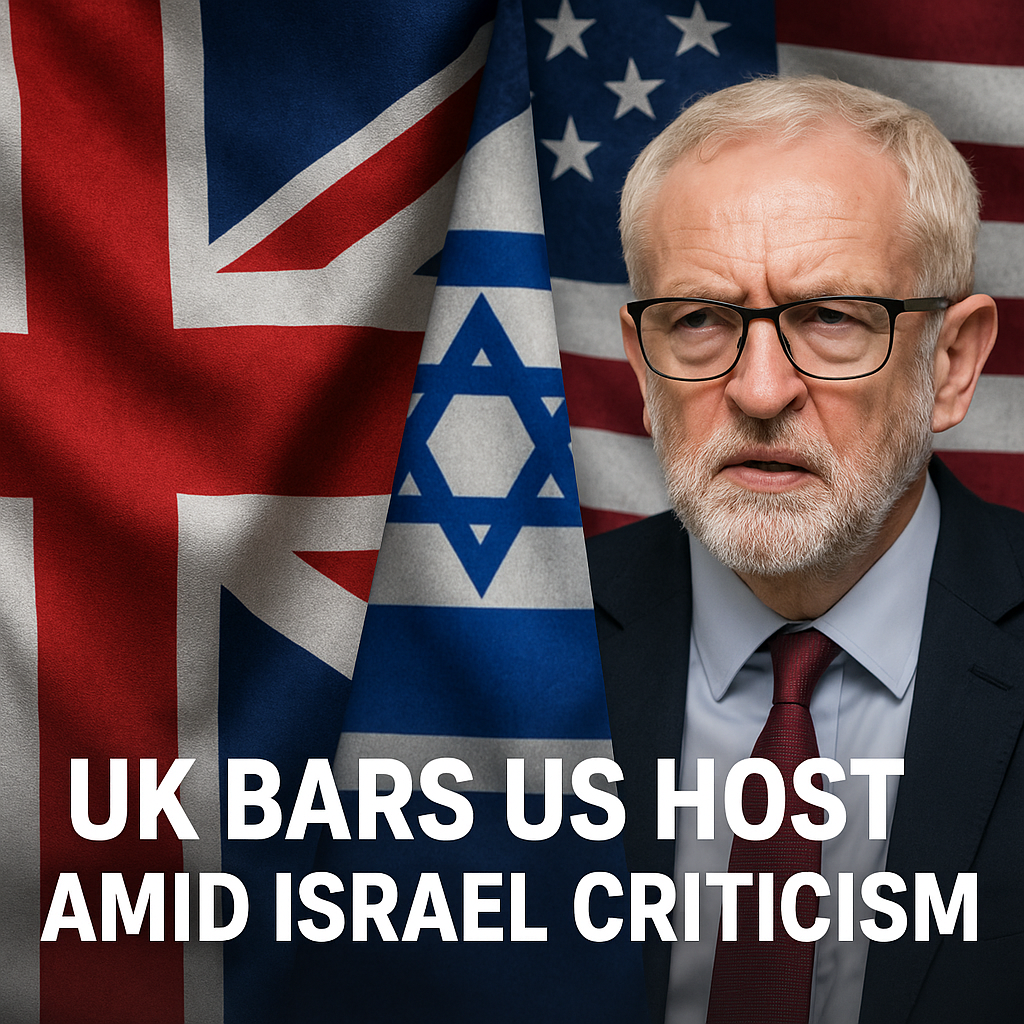
UK Bars US Host Amid Israel Criticism
UK Bars US Host Amid Israel Criticism
In a significant development, the UK has barred a prominent US television host from entering the country following his critical remarks about Israel. This decision raises profound questions about freedom of expression, the responsibilities of public figures, and the broader geopolitical tensions surrounding the Israel-Palestine conflict.

Context of the Barred Entry
The host in question is known for his outspoken views and has garnered both a considerable following and considerable criticism for his comments regarding Israel’s actions in Gaza. According to reports, his statements have been deemed inflammatory and contrary to the UK’s values around public discourse and debate. This judgment aligns with a long-standing sensitivity in the UK regarding expressions that may incite hostility or divide communities, particularly in the context of the Israeli-Palestinian conflict.

UK Home Secretary’s comments indicate a clear stance: “Those who seek to undermine our values will not be welcome in our country.” This statement reflects an underlying tension, suggesting that the UK government is taking a proactive approach to immigration, especially regarding individuals who may contribute to community discord. Critics argue, however, that this could set a dangerous precedent, undermining the principle of free speech.

Varied Perspectives on Free Speech and Censorship
Supporters of the UK’s decision argue that it is essential to protect societal cohesion, especially when discussions surrounding contentious issues like the Israel-Palestine conflict can quickly escalate. They posit that allowing individuals who foster division and hostility to enter could cultivate an environment of fear and conflict among communities in the UK.
Conversely, opponents of the ban contend that this action constitutes a form of censorship. They assert that barring the host sends a troubling message that dissenting voices on sensitive geopolitical issues will not be tolerated. Critics from various news outlets, including Al Jazeera and Sky News, underscore the potential ramifications for public discourse. If influential figures are silenced, the broader dialogue on critical issues might be stunted, with less opportunity for engagement and understanding.
The sentiments vary widely, reflecting differing perceptions of what constitutes responsible speech versus provocative hostility. Some believe it is necessary to take a stand against views that could potentially incite hatred, while others see it as an erosion of civil liberties.
The Broader Implications of the Ban
This incident underlines a crucial juncture in how Western democracies handle the intersection of immigration, free speech, and international politics. Many are asking, to what extent should governments intervene in the free expression of foreign public figures? While the UK government has positioned itself as a defender of societal values, it must also consider the implications of its stance on public perception and international relations.
As reported, the host’s remarks about Israel are emblematic of a larger discourse that spans across borders. In some ways, barring his entry not only affects him but reverberates through the channels of global media, potentially shaping how future criticisms of Israel—or any country—are perceived and treated.
Conclusion: Navigating Complex Issues in a Global Context
The UK’s decision to bar the US host underscores a critical debate between the protection of national values and the preservation of free speech. Critics and supporters alike will likely continue to engage in discussions about the implications of such decisions.
Ultimately, the case reflects a broader trend in how societies must balance the complexities of modern geopolitical conflicts with the fundamental rights of individual expression. As governments navigate these waters, the challenge remains: how to uphold core principles while fostering open dialogue amidst sensitive issues. The ongoing discourse surrounding this event will serve as a vital lens through which to view the evolving landscape of free speech and international relations in an increasingly interconnected world.















