
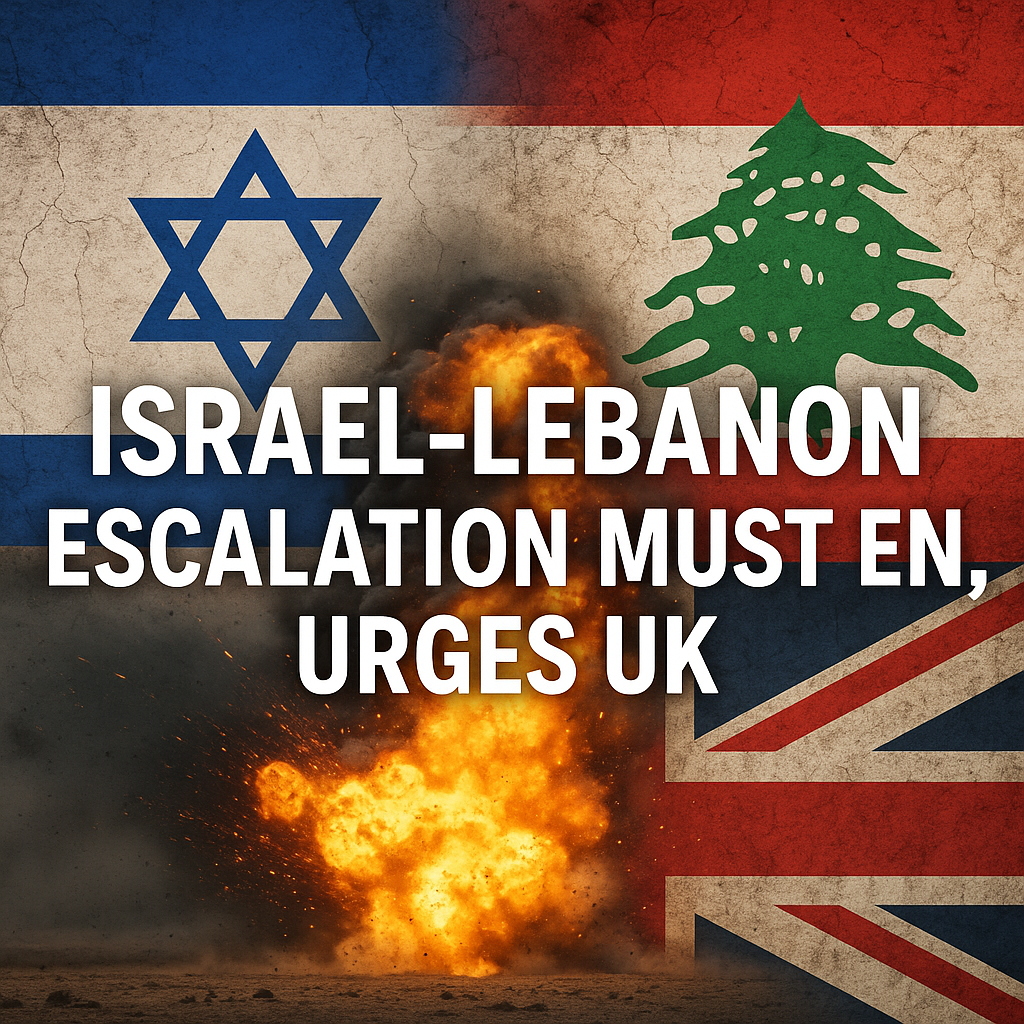
Israel Lebanon Escalation Must End, Urges UK
In recent weeks, the intensifying conflict between Israel and Lebanon has drawn global attention, leading to calls for immediate de-escalation from various international leaders, including officials from the UK. The rising tension in this historic conflict presents a complex interplay of political, social, and military factors that are deeply rooted in the region’s history.

The Current Escalation
The situation at the Israel-Lebanon border has escalated significantly, with exchanges of fire reported and increasing military posturing from both sides. On one hand, Israeli forces have targeted Hezbollah positions in Lebanon, aiming to deter rocket attacks that have sporadically crossed the border. On the other hand, Hezbollah has vowed to retaliate against what it sees as continued Israeli aggression, citing recent airstrikes as justification for its military actions.

Recent commentary from the UK government emphasizes a need for an immediate end to hostilities. British officials highlight the importance of stopping the violence not only for the safety of civilians but also to prevent further destabilization in the region. They have urged all parties involved to act with restraint, advocating for a return to diplomatic negotiations as the primary means of resolving the dispute.

The Broader Implications of the Conflict
Regional Stability at Risk
The Israel-Lebanon escalation is not an isolated issue; it reverberates through the entire Middle East. Political analysts warn that continued fighting could lead to a spillover effect, igniting tensions in neighboring countries, particularly in Syria, where Iranian and other foreign military influences have complicated the landscape. The implications for the broader geopolitical climate are significant; an extended conflict could embolden other extremist factions in the region, while also exacerbating existing humanitarian dilemmas.
Reports from various sources highlight that civilian lives are at constant risk during such escalations. Recent statistics suggest that thousands of residents in border areas face displacement and trauma, stressing the urgency for intervention by global powers. Humanitarian organizations have echoed this call, seeking increased access and aid for affected populations.
Diverse Perspectives on Conflict Resolution
Voices within the international community are varied regarding how to address the Israel-Lebanon conflict. Some argue for a tougher stance on both Hezbollah and Israel, advocating for sanctions or international condemnation of military actions. Others suggest that pressure should primarily focus on Israel, urging the world to recognize its role in escalating tensions through aggressive military operations.
Conversely, several commentators propose that dialogue remains the most effective resolution. They advocate for peace talks involving not only Israel and Lebanon but also regional players like Iran and Syria, despite the challenges that might arise from such negotiations. This view emphasizes the need for a multi-faceted approach to diplomacy, one where multiple stakeholders are engaged in meaningful discussions aimed at long-term stability.
While there is a consensus on the need for cessation of violence, the pathways towards achieving this goal remain debated. Analysts note that without a robust dialogue involving all relevant parties, including the Lebanese government and Hezbollah, sustainable peace will remain elusive.
The Way Forward
Navigating the complexities inherent in the Israel-Lebanon conflict requires sensitivity, foresight, and a commitment to dialogue. Given the deep-seated historical grievances and modern-day political dynamics, simplistic solutions are unlikely to yield results. The international community, especially influential nations like the UK, must balance pressure applied to ceasefire demands with constructive engagement in peacebuilding initiatives.
In conclusion, calls for the Israel-Lebanon escalation to end are increasing, but the road to peace remains fraught with challenges. It is crucial for international leaders to acknowledge the intricate layers of this conflict, fostering environments where dialogue and diplomacy can flourish. As tensions rise, proactive measures focused on mediation and humanitarian aid could pave the way toward lasting resolutions that prioritize the safety and dignity of all affected communities. The path forward may not be clear, but the imperative to seek de-escalation has never been more pressing.















