
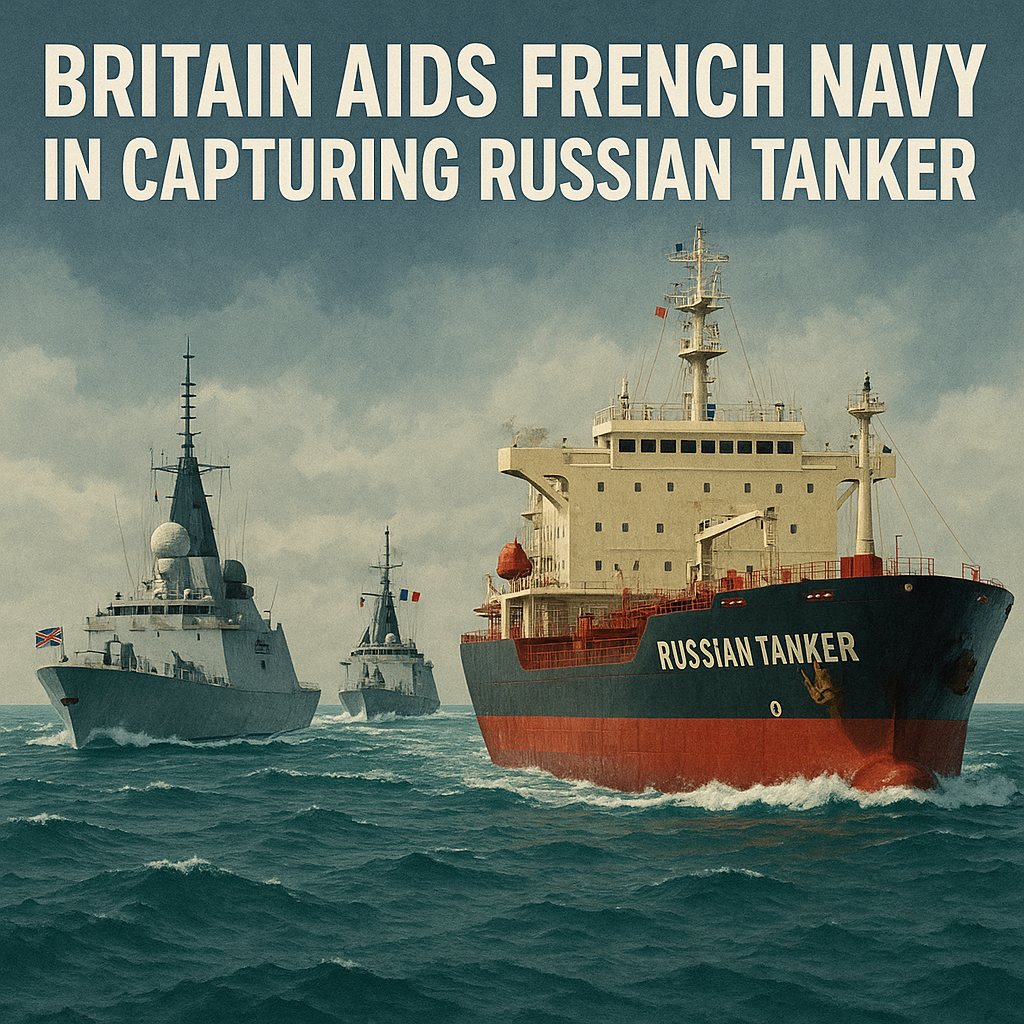
Britain Aids French Navy in Capturing Russian Tanker
Britain Aids French Navy in Capturing Russian Tanker
In a significant maritime operation, Britain has joined forces with the French Navy to intercept a sanctioned Russian tanker, a move underscoring the ongoing geopolitical tensions following Russia’s invasion of Ukraine. This collaboration reflects both countries’ commitment to enforcing sanctions and tackling illicit maritime activities linked to Moscow.

The Operation’s Context
The intervention came as part of a broader effort to restrict Russian access to international shipping routes, particularly given the critical role that oil and gas exports play in the Russian economy. According to reports, the French Navy successfully captured the tanker, which had been operating under sanctions due to its links with the Kremlin. This initiative highlights the evolving nature of military cooperation amongst Western allies as they navigate new security challenges in a rapidly changing global landscape.

The vessel in question was allegedly involved in delivering oil that was sold contrary to established sanctions, a charge that adds gravity to the operation. Following the capture, the vessel was escorted to the French port of Brest for further investigation and legal proceedings, indicating a serious approach to upholding international law surrounding sanctions against Russia.

Divergent Perspectives
The UK and French governments have framed the joint operation as a necessary step to maintain the integrity of global trade and security. Officials argue that such actions are essential not only to enforce the sanctions but also to deter future violations that could embolden Russia in its aggressive foreign policy. A British government spokesperson noted, “We will continue to work alongside our allies to ensure that sanctions are enforced and those who attempt to undermine them held accountable.”
Conversely, Russian officials have denounced the interception, labeling it an illegal act of piracy. They argue that such aggressive tactics could lead to increased tensions and destabilization in international waters. The Russian Foreign Ministry expressed their discontent, suggesting that these actions are part of a broader narrative aimed at isolating Russia. They emphasize the importance of dialogue over confrontation, indicating that maritime law should protect sovereign vessels regardless of the geopolitical climate.
This clash of narratives highlights the complexities of international law and the challenge of enforcing sanctions on a global scale. While the UK and France appear resolute in their actions, Russia’s response illustrates its discontent and determination to evade such measures.
Broader Implications
The interception of the Russian tanker is a poignant reminder of the ongoing conflicts over resource control and maritime jurisdiction. As energy resources become increasingly weaponized in geopolitical conflicts, incidents like this will likely become more common. Analysts predict that nations may seek greater naval presence in strategic maritime regions to enforce compliance with international sanctions.
Furthermore, this incident could set a precedent for future operations. There are concerns as to whether this cooperative model will extend to other nations involved in similar conflicts or if it could provoke a more aggressive response from Russia. Such actions may potentially escalate tensions further in the region, with far-reaching consequences for global trade and security.
Moreover, the continued partnership between the UK and France could serve as a model for other nations facing similar dilemmas. As the world grapples with the consequences of sanctions and the ongoing war in Ukraine, cooperative military efforts like the intercept of the tanker may pave the way for new alliances focused on maintaining order and legality on the high seas.
Conclusion
Britain’s aid to the French Navy in capturing the Russian tanker epitomizes the intersection of maritime law, international relations, and realpolitik. This incident serves not only as a tactical move against perceived threats but also highlights the deepening complexities of enforcing sanctions in a volatile geopolitical environment. The diverging narratives from Western allies and Russian officials stress the ongoing tension between legitimate enforcement of international norms and resistance against perceived aggression. As these scenarios unfold, the world watches closely, questioning not just the future of naval operations, but also the intricate balance of power in an increasingly contentious global landscape.















