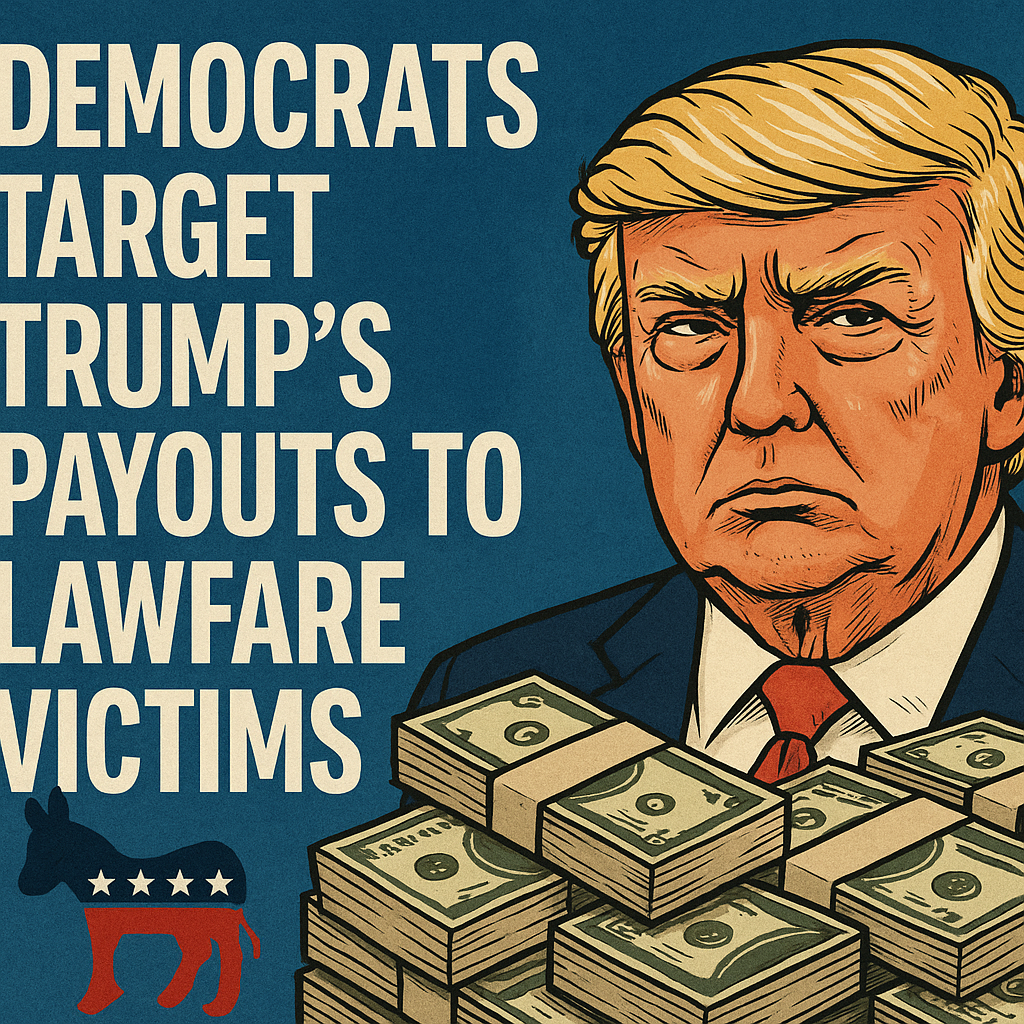
Democrats Target Trump’s Payouts to Lawfare Victims
Democrats Target Trump’s Payouts to Lawfare Victims
Recent political developments reveal a significant push by Democrats to challenge former President Donald Trump through initiatives aimed at redirecting funds that he has earmarked for those impacted by legal battles stemming from his actions during and after his presidency. This strategic positioning marks an intriguing intersection of law, politics, and social justice, raising questions about the boundaries of campaign financing and the implications for future elections.

The Basis of the Proposal
The Democratic strategy is rooted in the contention that Trump’s legal entanglements create an unfair landscape, particularly as they relate to his financial support for individuals involved in lawsuits against him, often termed “lawfare victims.” According to RT, Democrats assert that Trump is leveraging campaign funds to pay off legal fees for individuals who have positioned themselves against him, thus creating a narrative that undermines fair political competition.

This narrative draws on the broader context of Trump’s ongoing legal challenges, ranging from allegations of incitement related to the January 6 Capitol riots to various civil suits. Al Jazeera highlights that Trump’s supporters, viewing him as a victim of political persecution, continue to provide him with significant financial backing, deepening the divide in American politics.

Confronting the Legal and Ethical Questions
The core of this debate hinges on ethical considerations surrounding campaign donations and expenditures. Critics argue that utilizing campaign contributions to cover personal legal expenses creates a moral hazard. This was emphasized in a report from Sky News, which pointed out that this practice could blur the lines between personal liability and campaign financing. If a candidate can redirect contributions to mitigate their legal risks, it raises ethical questions about the integrity of the electoral process.
In contrast, Trump and his supporters assert that the former president’s actions are simply a reflection of his political persecution, with the funds being a legitimate use of campaign contributions, given the legal context in which they find themselves. Proponents insist that Trump’s cases are not merely personal but part of a broader political attack aimed at undermining his influence and ability to campaign effectively.
Political Ramifications
The political ramifications of this strategic targeting by Democrats could be profound. As the next election approaches, this battle over campaign funds could not only influence Trump’s ability to navigate his legal challenges but also impact the perceptions of voters. The narrative of Trump as a political martyr, hampered by legal troubles, may resonate with his base, potentially galvanizing support and driving donations.
Democrats, on the other hand, may seek to reshape this narrative into a broader discussion about accountability and transparency in campaign finance. Activists argue that such policies must reflect an effort to hold political figures accountable, regardless of their standing, therefore fostering a more equitable political environment.
Diverging Opinions on Campaign Financing
Opinions on whether Trump’s payout strategy to lawfare victims is ethically sound diverge sharply. Some commentators view it as a dangerous precedent that could encourage future candidates to exploit campaign funds for personal advantage. Others see it as a necessary function of securing legal representation in a politically charged atmosphere.
Moreover, discussions about campaign finance reform have grown in urgency, with many advocating for stricter regulations to prevent potential abuses. A call for transparency that mandates the clear delineation of campaign funds reduces ambiguity around their use and aims to foster trust in democratic processes.
As these debates unfold, it becomes evident that the implications will likely extend far beyond Trump himself, potentially influencing future legislation surrounding campaign financing and the treatment of political figures entangled in legal battles.
Conclusion
Democrats targeting Trump’s payouts to lawfare victims represents a complex intersection of legal, ethical, and political considerations. As both parties navigate this contentious terrain, the outcomes may well shape the broader electoral landscape and redefine the parameters of campaign finance in America. Voters will likely remain vigilant regarding these developments, aware that the stakes are high not merely for Trump but for the integrity of the political system itself.