
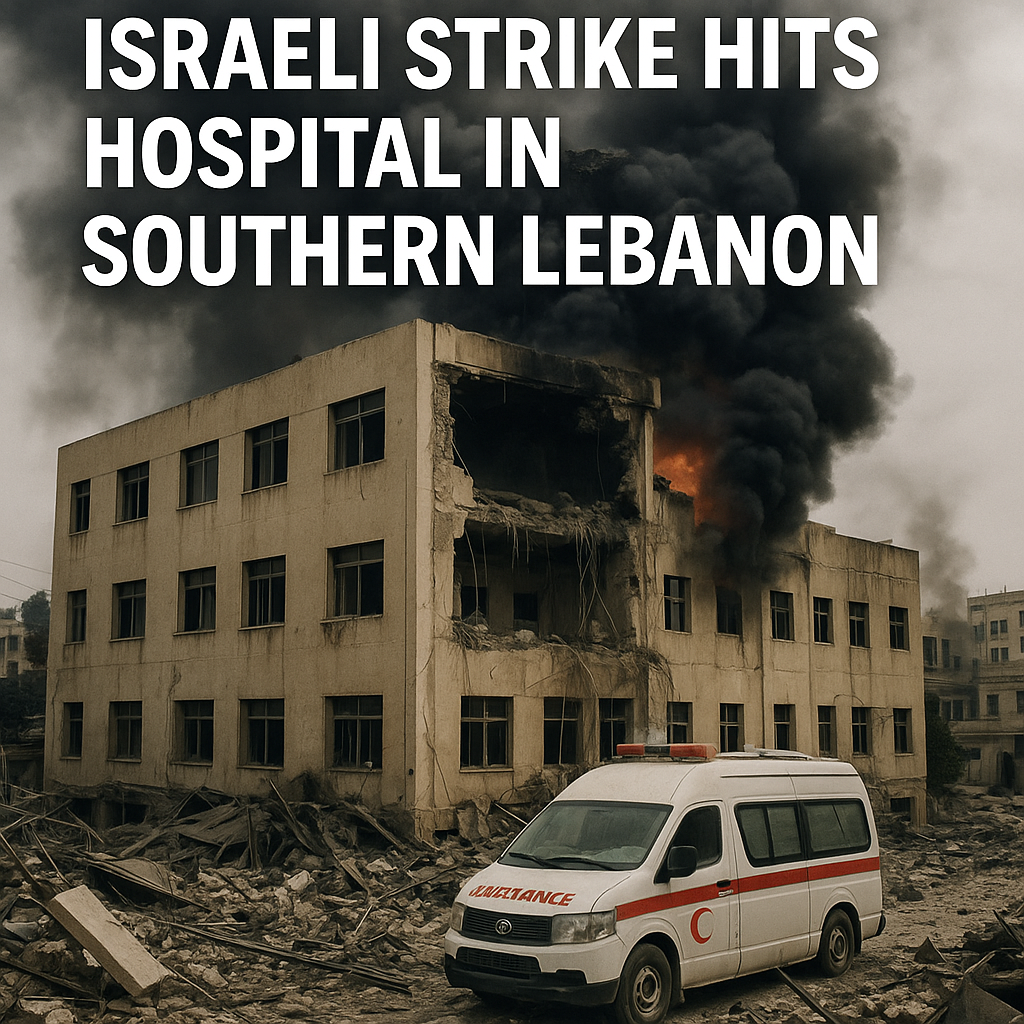
Israeli Strike Hits Hospital in Southern Lebanon
Israeli Strike Hits Hospital in Southern Lebanon
An Israeli strike in southern Lebanon has heightened tensions in an already volatile region. The incident, which targeted a hospital, raises questions about the implications for both Lebanese and Israeli citizens, as well as the broader geopolitical landscape in the Middle East.

Context of the Attack
The attack reportedly caused significant damage to the hospital, which serves as a critical medical facility for the local population. Eyewitness reports and various news outlets indicate that the strike occurred amid ongoing hostilities between Israel and Hezbollah, the Shiite militant group based in Lebanon. Israel has justified its military actions citing self-defense and stating that the strike was aimed at Hezbollah positions.

Hezbollah has also reacted strongly, condemning the attack and threatening retaliation. The group’s leadership expressed concern over the targeting of civilian infrastructure, emphasizing that hospitals should be safeguarded. While Israel maintains its stance of targeting military threats, critics argue that the principles of proportionality and distinction in warfare are being ignored, leading to unnecessary suffering for civilians.

Divergent Perspectives
Israeli Government’s Position
From the perspective of the Israeli government, the strike is part of an ongoing strategy to prevent escalations from Hezbollah. Officials argue that the group has amassed significant weaponry on its border, and strikes are necessary to preemptively dismantle perceived threats. An Israeli spokesperson indicated that the military’s actions were both targeted and designed to minimize civilian casualties, suggesting that military intelligence indicated the presence of Hezbollah operatives near the hospital.
Global Criticism and Humanitarian Concerns
Conversely, numerous global organizations and humanitarian activists express alarm over the implications of attacking medical facilities. International laws under the Geneva Conventions protect hospitals and medical personnel from military attacks unless they are being used for hostile purposes. Human Rights Watch and other entities have condemned the strike, urging for accountability and a reassessment of military strategies that lead to civilian harm. They argue that the repeated targeting of such infrastructure not only violates international law but also risks fueling further animosity and destabilization in the region.
What This Means for the Region
The escalation of military actions, particularly involving civilian infrastructure, significantly complicates peace efforts in the area. With both sides hardening their positions, the likelihood of dialogue diminishes. The attack has sparked a wave of protests within Lebanon, with citizens calling for accountability and criticizing the government’s inability to protect crucial facilities from external aggression.
Crossover Impact on Civilians
Humanitarian situations are likely to worsen in the aftermath of the strike. Hospitals are often reliant on both local and international support, and damage from such attacks can leave already stressed medical facilities overwhelmed. As healthcare professionals scramble to provide services amid ongoing conflict, the risks to civilian lives increase exponentially.
Furthermore, the psychological toll on affected populations can lead to long-term ramifications, affecting not just immediate recovery — which is hampered due to lack of facilities — but also leading to broader public health concerns. The question remains as to whether international organizations can step in effectively to assist in rebuilding and providing medical care in the interim.
Conclusion
In summary, the Israeli strike that hit a hospital in southern Lebanon represents more than just a single military action; it reflects the broader ongoing strife in the Middle East, where military strategies often clash with humanitarian principles. As each side asserts its justification for actions taken, the impact on everyday civilians continues to grow, raising pressing questions about accountability and the need for dialogue. Addressing these issues is paramount to finding a sustainable resolution and mitigating further humanitarian crises in the future.
As tensions persist, the world watches closely, hoping for restraint and an eventual peace that prioritizes the welfare of all civilians caught in the crossfire.















