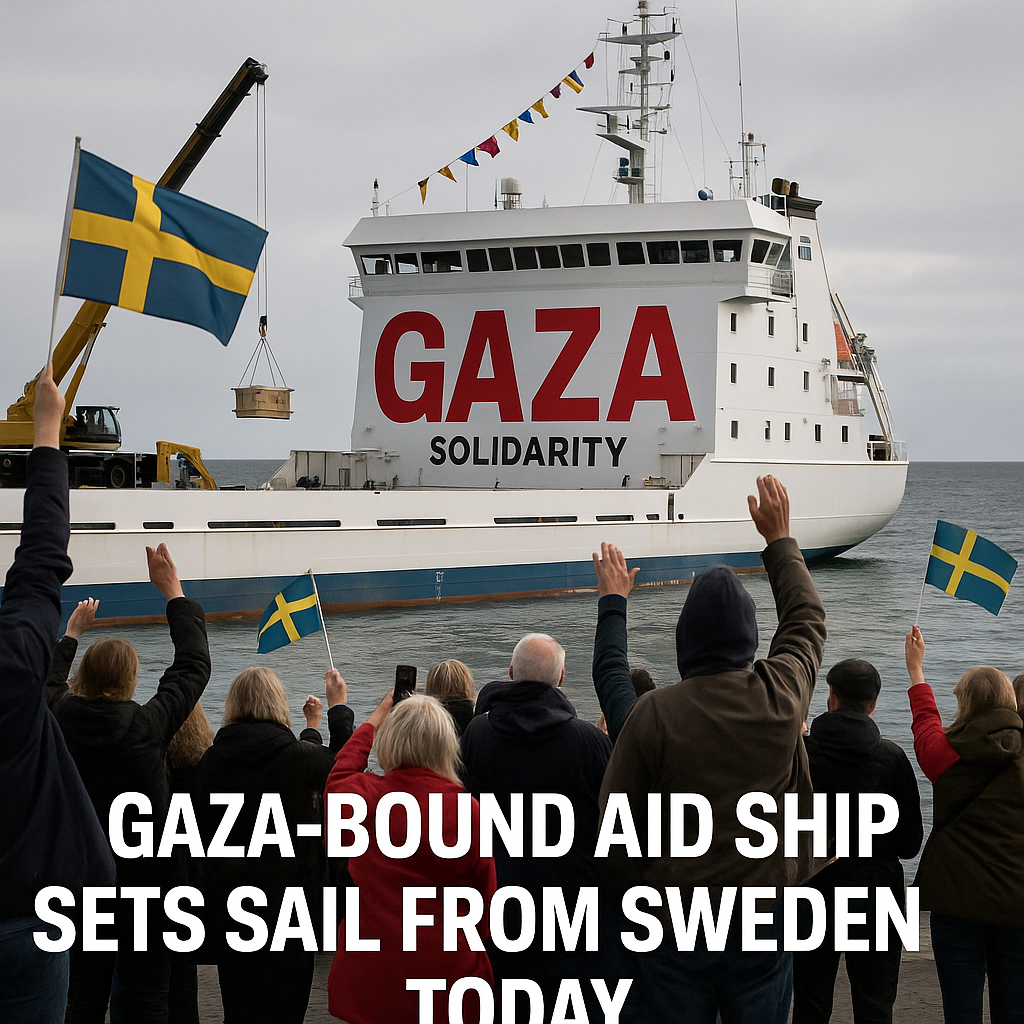
Gaza-Bound Aid Ship Sets Sail from Sweden Today
Gaza-Bound Aid Ship Sets Sail from Sweden Today
A Gaza-bound aid ship has embarked on its journey from Sweden, destined to provide much-needed humanitarian assistance to the beleaguered region. The implications of this voyage are significant, stirring a mix of hope and frustration among various stakeholders engaged in the ongoing Israeli-Palestinian conflict.

The Context of Humanitarian Aid
The situation in Gaza has been precarious, particularly following numerous military escalations and ongoing blockades. International organizations and humanitarian agencies have voiced a dire need for supplies, ranging from medical aid to food and clean water. The Swedish ship aims to fulfill some of this need, drawing on donations from citizens and advocacy groups.

However, the journey is not without its challenges. Israel has maintained a strict blockade on Gaza, arguing that such measures are necessary for its national security. Past attempts to breach this blockade—such as the infamous MV Mavi Marmara incident in 2010—were met with severe repercussions, including violence. This backdrop raises questions about the reception the ship will receive when it reaches its destination.

Diverse Perspectives on the Mission
Despite the noble intentions behind sending the ship, opinions about the efficacy and safety of such humanitarian missions vary significantly across different political and social spectrums. Proponents argue that the voyage symbolizes solidarity with the Palestinian people and serves as a vital lifeline amid worsening conditions. A spokesperson for the initiative highlighted that “this mission is about compassion and the right to aid, irrespective of political lines.”
Conversely, skeptics raise concerns about the potential for escalating tensions in the already strained region. Officials from Israel and some neighboring countries have suggested that such missions may inadvertently provoke conflict, citing that they could be misrepresented as provocations rather than humanitarian efforts. An Israeli government spokesperson affirmed that “while we support humanitarian aid, we cannot allow threats to our nation’s security through unregulated shipments.”
Challenges Ahead
As the ship makes its way across the Mediterranean, several uncertainties loom. The primary challenge is whether it will be allowed to dock in Gaza and deliver its cargo without interference. Reports indicate that the Israeli navy has been monitoring similar ships closely, prompting fears of possible detainment or other unrest.
Moreover, the political landscape surrounding Gaza remains fraught. Enduring divisions between Hamas, which governs Gaza, and the Palestinian Authority in the West Bank complicate the distribution of aid. Questions arise regarding how much of the supplies will actually reach those who need them the most versus being siphoned off for political gain.
The Role of Civil Society
One particularly noteworthy aspect of this mission is the role of civil society in fostering humanitarian efforts. The ship’s voyage has galvanized numerous non-profit organizations and volunteers who are dedicated to easing the suffering of ordinary Gazans. They see this as an opportunity not only to provide immediate relief but also to raise awareness about the ongoing humanitarian crisis.
Supporters within Sweden and across Europe have rallied to support the initiative, with various fundraising campaigns designed to ensure that the ship is adequately stocked. This grassroots approach delivers a counter-narrative to perceptions of inaction by larger governing bodies, demonstrating a commitment to social justice driven by individual and collective agency.
Conclusion: Navigating a Troubled Sea
While the aid ship’s departure from Sweden is laden with hope, it also encapsulates a microcosm of the complexities surrounding humanitarian aid in conflict zones. As it navigates toward Gaza, both the mission’s supporters and critics will be watching closely—each side firmly held by its convictions regarding the appropriateness and impact of such efforts.
In the end, the ship represents more than just cargo; it is a testament to the challenges and debates surrounding humanitarian efforts, international relations, and the ever-present quest for peace amidst turmoil. Whatever the outcome, the voyage serves as a stark reminder of the human capacity for empathy in the face of adversity, as well as the intricate web of political realities that shape our efforts to address such crises.