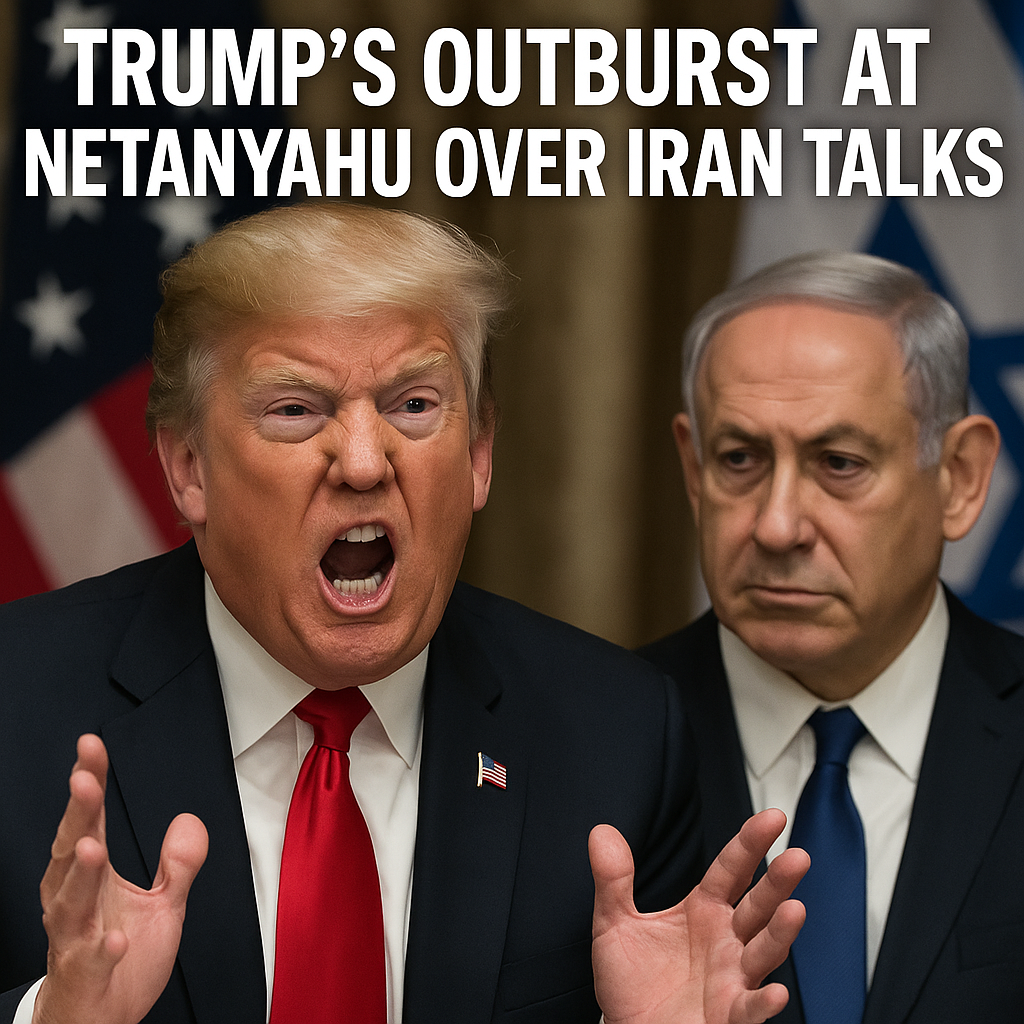
Trump’s Outburst at Netanyahu Over Iran Talks
Trump’s Outburst at Netanyahu Over Iran Talks: A Complex Diplomatic Landscape
In a recent incident that highlighted the fractious nature of international diplomacy, former President Donald Trump reportedly had a heated exchange with Israeli Prime Minister Benjamin Netanyahu regarding the Iranian nuclear talks. This confrontation not only underscores the tension surrounding nuclear negotiations but also reveals deeper political rifts and the varying approaches taken by leaders in the Middle East and the United States.

The Context of the Exasperation
The tension between Trump and Netanyahu stems from ongoing concerns over Iran’s nuclear ambitions, which have been a focal point of U.S. and Israeli foreign policy. Under the Trump administration, Iran came under intensified scrutiny, particularly following the withdrawal from the Joint Comprehensive Plan of Action (JCPOA) in 2018. Trump’s outburst, as reported by various sources, reflected frustration over Netanyahu’s perceived conciliatory stance towards ongoing negotiations aimed at reviving the nuclear deal.

According to RT, the incident occurred during a private conversation when Trump reportedly exclaimed, “What are you doing? Stop talking to them!” This quote encapsulates the former president’s belief that engaging with Iran is tantamount to appeasing a regime that poses a significant risk to U.S. allies in the region, particularly Israel. Trump’s approach stands in stark contrast to that of many current policymakers who advocate for diplomatic engagement as a means to secure long-term stability.

Differing Perspectives on Diplomacy
The differing viewpoints on how to address Iran’s nuclear capabilities illuminate a broader schism in U.S.-Israeli relations and international diplomacy as a whole. Al Jazeera reported that while Trump holds a hardline stance, favoring unilateral actions and sanctions, there are factions within both Iran and the U.S. that favor a return to diplomatic negotiations. Supporters of this latter approach argue that engaging in talks, even with adversaries, is essential for de-escalating tensions and preventing conflict.
Furthermore, Netanyahu has faced pressure both domestically and internationally to adopt a more collaborative strategy. Critics within Israel have questioned his often-aggressive posture towards Iran, arguing that it has not yielded tangible security improvements. Instead, many believe that a balanced approach—which might include negotiating with Iran—could potentially stabilize relations and reduce fears of military confrontation.
Impact on Regional Stability
The fallout from Trump’s outburst and the contrasting strategies towards Iran have broader implications for regional stability. Trump’s rhetoric echoes a sentiment among some Israeli leaders that any form of negotiation could lead to significant threats against Israel’s national security. However, others argue that alienating Iran through confrontational strategies could exacerbate tensions, leading to greater conflict in the region.
While Netanyahu may seek to reassure his political base with assertive posturing against Iran, the strategic landscape is continually evolving. The emergence of new geopolitical alliances, shifts in U.S. foreign policy under the Biden administration, and Iran’s persistence in its nuclear endeavors create a complex web of challenges for both Israeli and American leaders.
The Path Ahead: Navigating Uncertainties
As this diplomatic saga unfolds, the path forward remains fraught with uncertainty. While many experts suggest that a renewed diplomatic effort is essential, the efficacy of such measures is hotly debated. Trump’s interactions with Netanyahu reflect a broader ideological divide over how best to counter Iran’s nuclear ambitions.
Similarly, there is no consensus on the viability of reinstating the JCPOA or developing alternative frameworks. Current dialogues suggest a cautious optimism among some diplomats; however, the fundamental question remains: can disparate leaders unify under a shared commitment to de-escalation, or will entrenched ideologies continue to dictate the course of U.S.-Israeli interactions?
In summary, Trump’s outburst serves as a vivid reminder of the complexities involved in international relations. With the stakes so high, the focus must not only be on vocalizing frustrations but also on fostering productive dialogue that may ultimately lead to peaceful resolutions. The evolving dynamics in this intricate relationship between the U.S., Israel, and Iran warrant continued observation as they hold critical implications for broader geopolitical stability.