
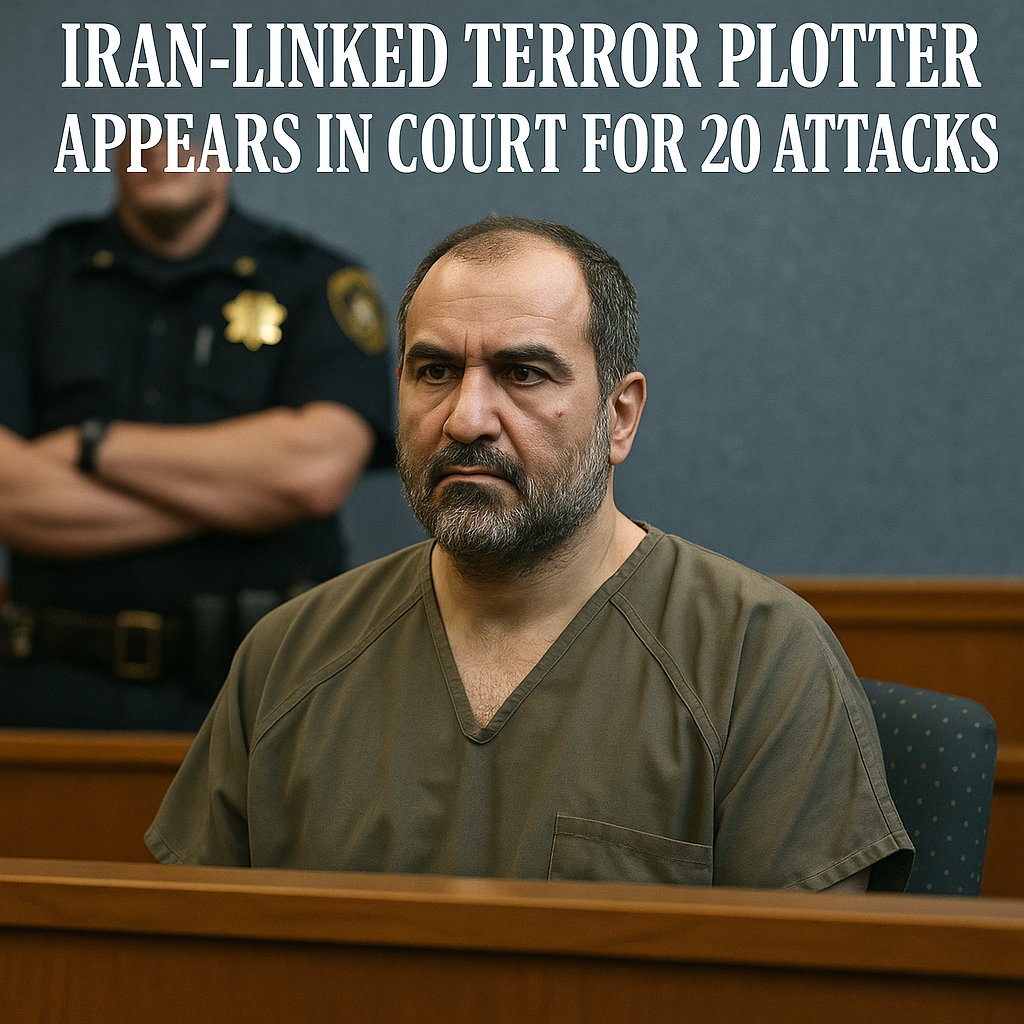
Iran-linked Terror Plotter Appears in Court for 20 Attacks
Iran-Linked Terror Plotter Appears in Court for 20 Attacks
A recent court appearance has brought renewed attention to an alleged terror plot linked to Iran, where a suspect faces charges for planning up to 20 attacks across Europe and Canada. This complex case reveals a tension-point in international relations, particularly regarding security, sovereignty, and the broader implications of state-sponsored terrorism.

The Allegations and Charges
According to reports, the individual in question is accused of orchestrating a series of terror attacks aimed at various targets. The charges have raised alarm among European security agencies and have sparked a media frenzy that underscores existing geopolitical frictions. The suspect reportedly has connections to Iranian intelligence and is alleged to have received training and support from Iranian operatives.

The scope of the planned attacks, which is said to range from the targeting of diplomatic installations to potential civilian sites, raises critical questions about the level of involvement by Iranian authorities. While not all sources conclusively link the Iranian government to these plots, some experts indicate they reflect a troubling pattern of Iranian state-sponsored actions against perceived adversaries.

Diverse Perspectives on the Issue
Taking a broader view, reactions to these allegations are far from uniform. On one end, Western sources have framed the plots as evidence of a growing Iranian threat that necessitates heightened vigilance and counter-terrorism measures. For instance, a Sky News report emphasizes the urgent need for coordinated intelligence operations to prevent such incidents, arguing that they pose a direct risk to public safety.
Conversely, some alternative media outlets express skepticism regarding the overarching narrative. They suggest that allegations against individuals with ties to Iran often serve as a convenient scapegoat in the context of escalating tensions between Iran and Western nations. Such reports call for a cautious approach, arguing that not all narratives championed by mainstream media reflect a balanced view of the geopolitical landscape. They advocate for a critical appraisal of evidence and urge caution against jumping to conclusions that could exacerbate existing biases.
Implications for International Relations
The implications of this case extend beyond immediate security concerns. It serves as a bellwether for understanding Iran’s role in international affairs. Analyst viewpoints reveal a consensus that the timing and nature of the allegations indicate a deliberate effort to influence diplomatic relations in the wake of changing power dynamics, particularly in light of ongoing negotiations around Iran’s nuclear program.
Moreover, if proven true, the alleged conspiracy could complicate diplomatic relations between Iran and several Western countries. It also invites deeper scrutiny on how state-sponsored terrorism is defined and addressed in international law. As the global community grapples with terrorism’s multifaceted nature, cases like this could foster discussions around sanctions, military interventions, and international cooperation aimed at combatting state-sponsored violence.
While the court proceedings unfold, the strategic implications of these events are crucial for policymakers. They must balance the pressing need for national security with a nuanced understanding of the geopolitical factors at play.
Conclusion: Complexity Remains
As the case continues to develop with more hearings scheduled, the avoidance of oversimplification is paramount. While one perspective frames the allegations as part of a broader challenge posed by Iran, others remind us of the intricate web of motives and historical grievances that can influence such narratives. The upcoming legal determinations may not only shape the future for the individual implicated but also resonate within the sphere of global diplomacy for years to come.
In summary, this incident underscores the complexities surrounding state-sponsored terrorism and international relations, where evidentiary claims must undergo rigorous scrutiny to navigate the fraught waters of public safety and geopolitical stability.















