
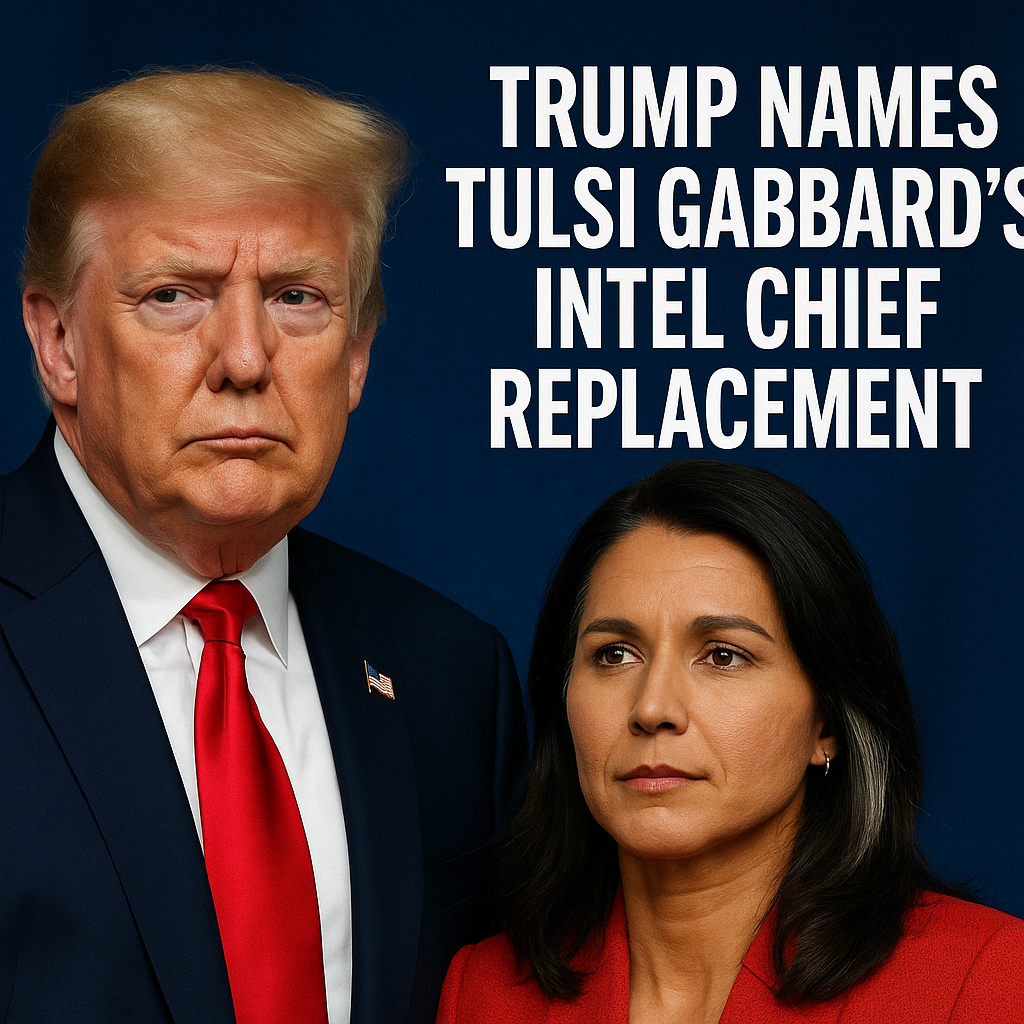
Trump Names Tulsi Gabbard’s Intel Chief Replacement
Trump Names Tulsi Gabbard’s Intel Chief Replacement
Former President Donald Trump recently announced his choice for a key intelligence position, naming the replacement for Tulsi Gabbard’s outgoing Director of National Intelligence (DNI) chief, Jason Pulte. This move has sparked discussions among political analysts and commentators about the implications for U.S. intelligence and Trump’s ongoing influence in Republican circles as he runs for the presidency again in 2024.

Implications of the Appointment
The appointment of Jason Pulte reflects Trump’s sustained dedication to populist and unconventional political strategies. Pulte, who has deep ties to counterintelligence and experience in the public sector, is seen as a strategic choice that aligns with Trump’s interest in intelligence reform and a more aggressive stance on national security issues. According to a report from RT, Pulte’s selection indicates a significant pivot towards a more aggressive intelligence posture, which is particularly important as the U.S. navigates increasingly complex global challenges.

Conversely, analysts from Al Jazeera have pointed out that this move could signal Trump’s desire to solidify his base by appointing individuals who reflect his controversial viewpoints. Tulsi Gabbard, who previously held the position, has made headlines for her critical views on the military-industrial complex and has often diverged from typical Democratic narratives. By appointing someone like Pulte, Trump may aim to appease more hawkish factions within his party while also maintaining an appeal to Gabbard’s followers, a strategic choice that could help consolidate his electoral base heading into the 2024 elections.

Reactions from Political Analysts
Political reactions to Pulte’s appointment reflect a divided sentiment. While some Republican insiders laud the decision, framing it as a necessary corrective to what they perceive as failed intelligence policies under previous administrations, others express caution. For instance, critics argue that such appointments may fuel partisan divides on intelligence matters, which ideally require bipartisan support.
According to Sky News, some experts worry that Trump’s focus on loyalty over experience in hiring key national security personnel could undermine the efficacy of the nation’s intelligence community. As discussions swirl around the appointment, questions about Pulte’s readiness to lead at such a high level remain prevalent among policymakers and intelligence veterans alike.
Additionally, many commentators believe that unless there are structural changes in how intelligence agencies operate, the transition from Gabbard’s leadership to Pulte’s will not fundamentally change the challenges these organizations face. The debate continues on whether such appointments should prioritize experience or enforce a loyalty-first rule, particularly in a politically charged landscape.
The Future of U.S. Intelligence
The ramifications of this appointment extend beyond immediate political motifs. As the world faces unprecedented threats—from cybersecurity attacks to geopolitical tensions—it raises critical questions about the future direction of U.S. intelligence. Analysts argue that Pulte’s capability to facilitate modernization and innovation in intelligence will be pivotal.
Moreover, as highlighted by RT, there is an urgent call within certain circles for intelligence operations to adapt to new forms of warfare that go beyond traditional military engagement. With rising concerns about disinformation and cyber warfare, the responsibilities of the DNI are transforming, demanding a leader who not only understands traditional defense paradigms but can also navigate the cyber realm effectively.
In conclusion, while Trump’s selection of Jason Pulte as Tulsi Gabbard’s intelligence chief replacement comes amid a backdrop of political ambition and national security considerations, its efficacy remains contingent upon Pulte’s ability to meld experience with innovative approaches in the ever-evolving intelligence landscape. As the U.S. moves closer to the 2024 elections, the implications of this appointment warrant careful scrutiny and ongoing discussion.















