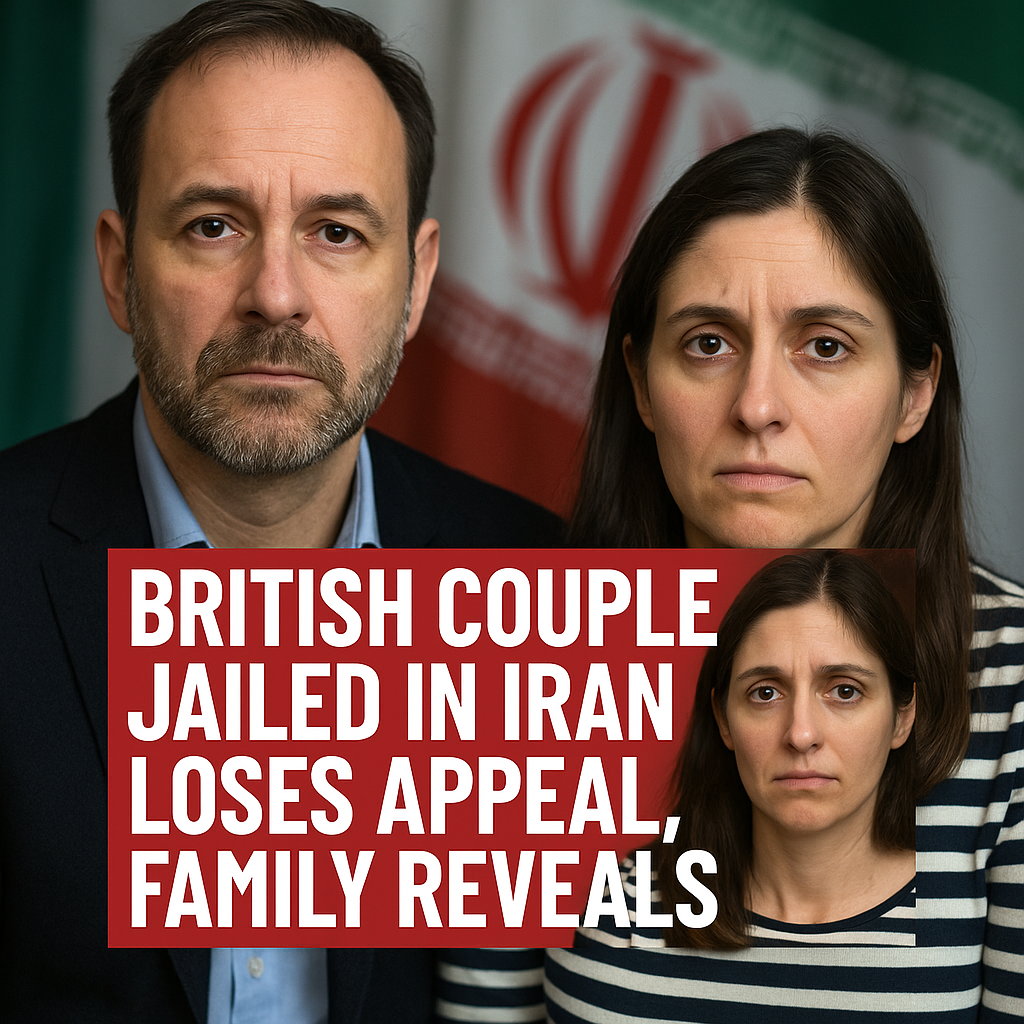
British Couple Jailed in Iran Loses Appeal, Family Reveals
British Couple Jailed in Iran Loses Appeal: A Disturbing Development
In a troubling turn of events, a British couple recently lost their appeal against a lengthy prison sentence in Iran. This development has drawn significant media attention, raising concerns regarding justice in Iran and the treatment of foreigners within its borders.

The Case Overview
The couple, who had been driving in Iran when they were detained, were sentenced to 10 years in prison on espionage-related charges—a claim they vehemently denied. Their family has voiced strong opposition to the judgment, describing the legal processes as unjust and lacking transparency. “Their ordeal has been nothing short of a nightmare,” a family spokesperson commented, emphasizing the emotional toll on their loved ones.

The couple had sought legal recourse, aiming for a fair trial. However, reports suggest that the appeal process was fraught with difficulties. According to Sky News, the family has been frustrated with delays and a perceived lack of support from the British government. Legal analysts have pointed out that Iran’s judicial system often falls short of international standards, particularly in cases involving foreigners.

Despite the gravity of the situation, there seems to be little clarity regarding the exact nature of the charges against the couple. Observers note that Iran frequently uses accusations of espionage to detain foreign nationals, sometimes leveraging their cases for diplomatic negotiations.
International Reactions and Implications
The couple’s sentencing and failed appeal have ignited international discussions about Iran’s treatment of detainees and the implications for foreign relations, particularly between the UK and Iran. Al Jazeera reported statements from various human rights organizations, highlighting concerns over political prisoners in Iran. They argue that cases like this one are symptomatic of the broader human rights issues within the country.
From a diplomatic standpoint, the situation has complicated existing tensions. Critics argue that Iran’s actions may reflect a strategy to exert pressure on Western nations amidst ongoing geopolitical disputes, particularly following the breakdown of nuclear negotiations. In these contexts, the fate of individuals like the British couple can become collateral damage in larger political games.
Furthermore, the couple’s experience has led to increased scrutiny of how foreign governments handle citizens detained in Iran. Advocacy groups are urging the UK government to take a more proactive stance in addressing these issues. Former diplomats have suggested that creating a strategic approach to liaise with Iran over the treatment of detainees could be beneficial for future cases.
Perspectives on the Appeal Process
While the case has garnered widespread sympathy, it speaks to a more complex reality regarding Iran’s judiciary. Legal experts have pointed out that the appeal process can be deeply impacted by political considerations. In many instances, rulings may not solely reflect the individuals involved, but rather larger international dynamics. This ambiguity raises significant concerns about the safety and rights of foreign nationals in Iran.
On the flip side, some analysts argue that the portrayal of Iran as a uniquely oppressive regime may overlook the broader context of legal uncertainties faced by individuals worldwide. Certainly, the complexities of international law and human rights can sometimes blur the lines in cases of alleged misconduct. Yet, the prevailing consensus remains that the allegations against the couple lack substantiated evidence, thus rendering their imprisonment particularly troubling.
A Call for Action
The couple’s plight has ignited calls for urgent action. Family members and advocates are now pushing for increased diplomatic efforts, arguing that a more robust response is essential to ensure their safe return home. As one relative poignantly put it, “We cannot let fear dictate the fate of innocent individuals caught in a geopolitical mess.”
In conclusion, the loss of the appeal illustrates not only the challenges faced by the couple but also highlights the broader implications for international relations and human rights. As dialogues surrounding this troubling case continue, it becomes increasingly essential for governments and organizations to strive for justice and protection of individuals—regardless of their nationality—within Iran’s complex landscape.