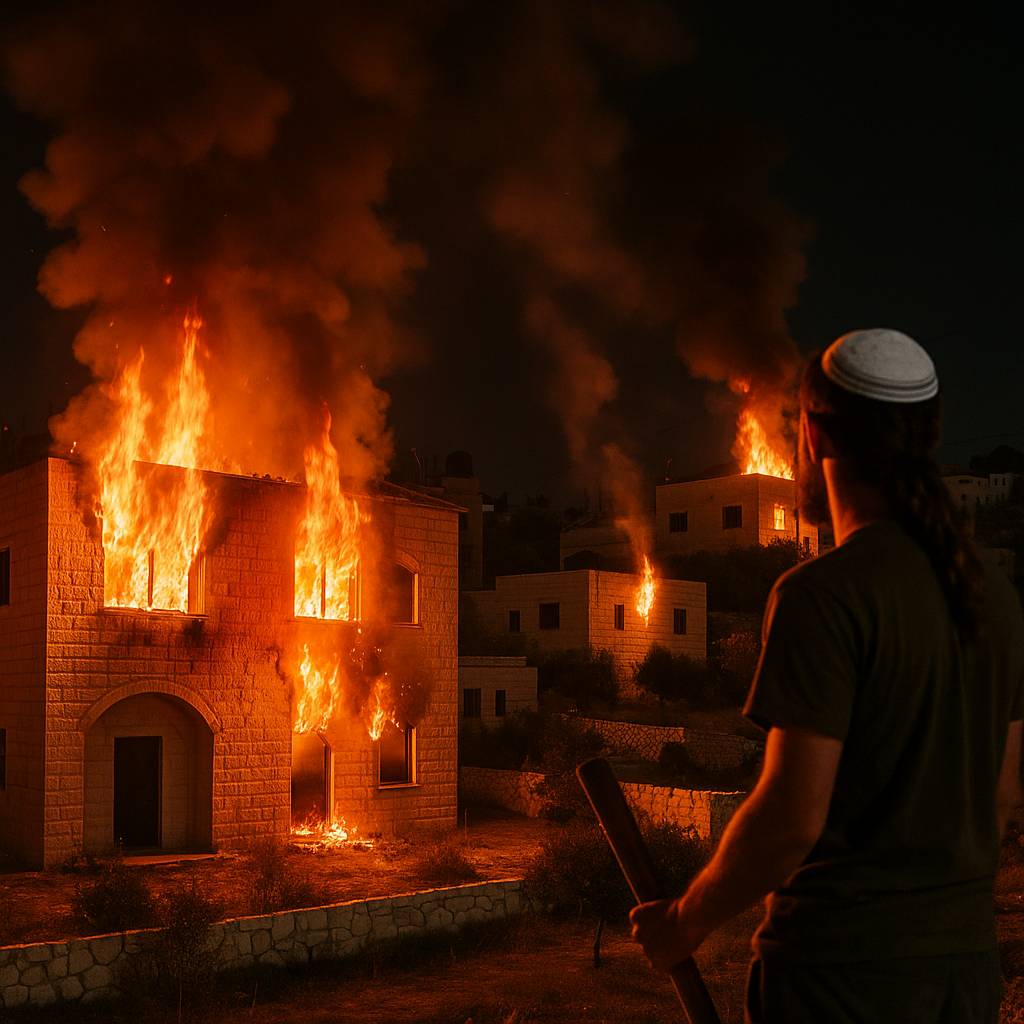
Israeli Settlers Torch Palestinian Homes Near Ramallah
Rising Tensions: Israeli Settlers Torch Palestinian Homes Near Ramallah
In a disturbing escalation of violence, recent reports indicate that Israeli settlers have set fire to Palestinian homes in a village near Ramallah, exacerbating an already fraught situation in the West Bank. This incident, part of the ongoing conflict over land and resources, raises complex questions about the dynamics between settlers, Palestinians, and the broader implications for peace in the region.

Background of the Conflict
The Israeli-Palestinian conflict has deep historical roots, stemming from territorial disputes, cultural claims, and national identities. Settlements in the West Bank, considered illegal under international law, have progressively expanded over the years despite repeated calls for restraint. Recent developments suggest that tensions are again reaching a boiling point.

The areas surrounding Ramallah have been witness to frequent clashes and incidents of violence, driven by a mix of ideological fervor, security concerns, and deep-seated grievances. Reports from Al Jazeera reveal that, following a spate of violence, Israeli settlers targeted the Palestinian village of Burqa, destroying homes and inciting fear among residents. Eyewitness accounts describe scenes of chaos as families fled their homes, highlighting the human cost of these escalations.

Diverse Perspectives on the Incident
Various news outlets have covered this incident, presenting diverging perspectives that reflect the complexity of the situation. For instance, Al Jazeera emphasizes the plight of Palestinian residents affected by the arson, indicating that such acts serve to terrorize and displace communities already struggling under occupation. Their coverage presents moving testimonials from locals, underscoring the emotional and psychological toll of these attacks.
Conversely, publications like RT suggest that the broader context of security concerns for settlers plays a significant role in these events. They report that Israeli officials often describe such incidents as provocations that arise amidst a backdrop of Palestinian violence. This narrative posits the settlers as defending their communities against perceived threats, though it raises ethical questions about the justification of retaliatory violence and vigilantism.
The Impact of Violence on Peace Prospects
The burning of homes not only devastates individual lives but also poses serious challenges to peace negotiations. The United Nations and various human rights organizations have condemned such violent incidents, calling them obstacles to achieving a lasting resolution to the conflict. The destruction of property can lead to further cycles of retaliation, making diplomatic solutions ever more elusive.
In light of these incidents, the international community faces increasing pressure to intervene. Calls for accountability have intensified, with activists advocating for a reevaluation of policies supporting Israeli settlements. While some argue that more robust measures are needed to safeguard Palestinian rights, others express concerns about exacerbating tensions further.
Understanding Uncertainties and Future Implications
As this tragic event unfolds, uncertainties remain regarding its broader implications. Analysts are divided on whether it signals a step toward heightened hostilities or if it will serve as a catalyst for renewed diplomatic efforts. The internal politics within Israel, along with fluctuating regional dynamics, add layers of complexity that make predictions challenging.
In this context, both sides continue to accumulate grievances that fuel mistrust and animosity. Without a comprehensive approach that addresses the root causes of these conflicts, the cycle of violence is likely to persist, leaving a path littered with lost homes and shattered lives.
Conclusion
The recent torching of Palestinian homes by Israeli settlers near Ramallah highlights the multifaceted nature of the Israeli-Palestinian conflict. While the immediate consequences are heartbreaking, understanding the underlying tensions and differing perspectives is crucial for any meaningful discourse on peace. As international attention turns toward the affected communities, it is essential that all voices are heard in the quest for a resolution that ensures justice and security for both Palestinians and Israelis.