
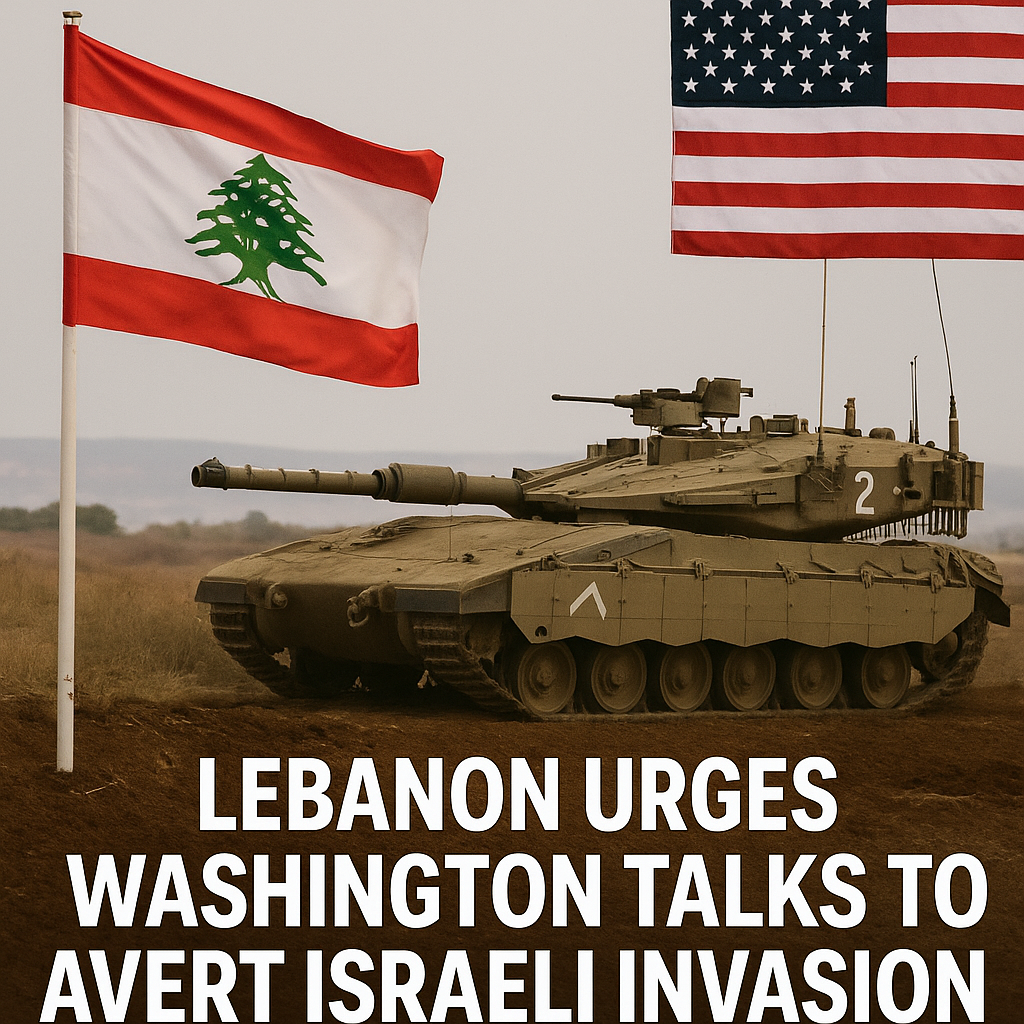
Lebanon Urges Washington Talks to Avert Israeli Invasion
Lebanon Urges Washington Talks to Avert Israeli Invasion

In a tense geopolitical climate, Lebanon has expressed its urgent desire for diplomatic talks with Washington to prevent a potential Israeli invasion. The complex interplay between regional power dynamics, national security, and international diplomacy underscores the stakes involved.

The Current Context
Recent developments have heightened fears of an Israeli military operation in southern Lebanon, following increased tensions along the border. Reports from various news sources indicate that the Israeli Defense Forces (IDF) have been conducting significant military exercises and repositioning forces near the Lebanese border, which has raised alarms in Beirut.

Lebanon’s Foreign Minister, Abdallah Bou Habib, has emphasized the importance of engaging with U.S. officials to convey these concerns. He articulated a hope that a dialogue could pave the way for conflict de-escalation. According to Al Jazeera, Bou Habib reported that Lebanese leadership views Washington as a key player in the regional balance of power and a potential mediator in translating concerns into actionable policies.
Diverse Perspectives on U.S. Involvement
The Lebanese government’s call for U.S. intervention has not gone unnoticed in the international arena. Voices from various quarters offer differing perspectives on whether such talks would yield a beneficial outcome.
Support for Diplomatic Engagement
Supporters of U.S.-Lebanon dialogue argue that Washington holds considerable leverage over Israel regarding its military actions. Their stance is that ongoing occupation and aggression must be countered with diplomatic pressure, particularly from the U.S., which has historically maintained strong relations with Israel. Proponents contend that effective diplomacy may lead to protective measures for Lebanon and a greater understanding of the broader implications of Israeli actions on regional stability.
As highlighted in an analysis from Sky News, dialoguing with the U.S. could potentially lead to assurances for Lebanon, promoting restraint on Israeli military initiatives. They assert that involvement from the U.S. could act as a moderating influence in the current hostile environment.
Skepticism About U.S. Mediation
Conversely, some analysts express skepticism regarding the efficacy of U.S. mediation in the Israeli-Hezbollah-Lebanon equation. Critics point to the long history of U.S. foreign involvement in the region, which often has been perceived as biased toward Israeli interests. According to RT, there are concerns that U.S. intervention might inadvertently escalate tensions rather than mitigate them, especially if perceived as favoring one side over the other.
Moreover, detractors of the proposed talks argue that Lebanon should rely more on its own military capabilities and alliances, questioning whether Western mediation aligns with national interests. The context of previous diplomatic efforts has led to doubts about the sincerity of American involvement, given that solutions to crises in the region have historically been influenced by broader geopolitical agendas.
The Road Ahead
The path forward remains uncertain. Lebanon finds itself at a crossroads, with increasing pressure to secure its borders and a stable environment for its citizens. The potential for an Israeli incursion prompts immediate responses from its leadership, who fear the humanitarian and security ramifications of such actions. As the Lebanese population expresses apprehensions over military escalations, the government’s outreach to Washington represents a significant act of diplomacy in a fraught situation.
In light of conflicting viewpoints, engaging the U.S. could either provide a lifeline or deepen divisions, depending on how negotiations unfold. A successful diplomatic engagement necessitates not only an acknowledgment of Lebanon’s concerns but also realistic commitments that ensure its protection.
Conclusion
Lebanon’s plea for dialogue with Washington is rooted in the urgent need to prevent a potential Israeli invasion. While hopes for diplomatic intervention reflect a desire for peace, the contrasting opinions on the effectiveness of U.S. mediation highlight the complexity of the situation. As Lebanon navigates this precarious landscape, the outcome of Washington’s involvement remains to be seen, with significant implications for the region’s stability. The balance of power in the Middle East continues to be a delicate dance, and Lebanon’s strategy will be crucial in the coming days.















