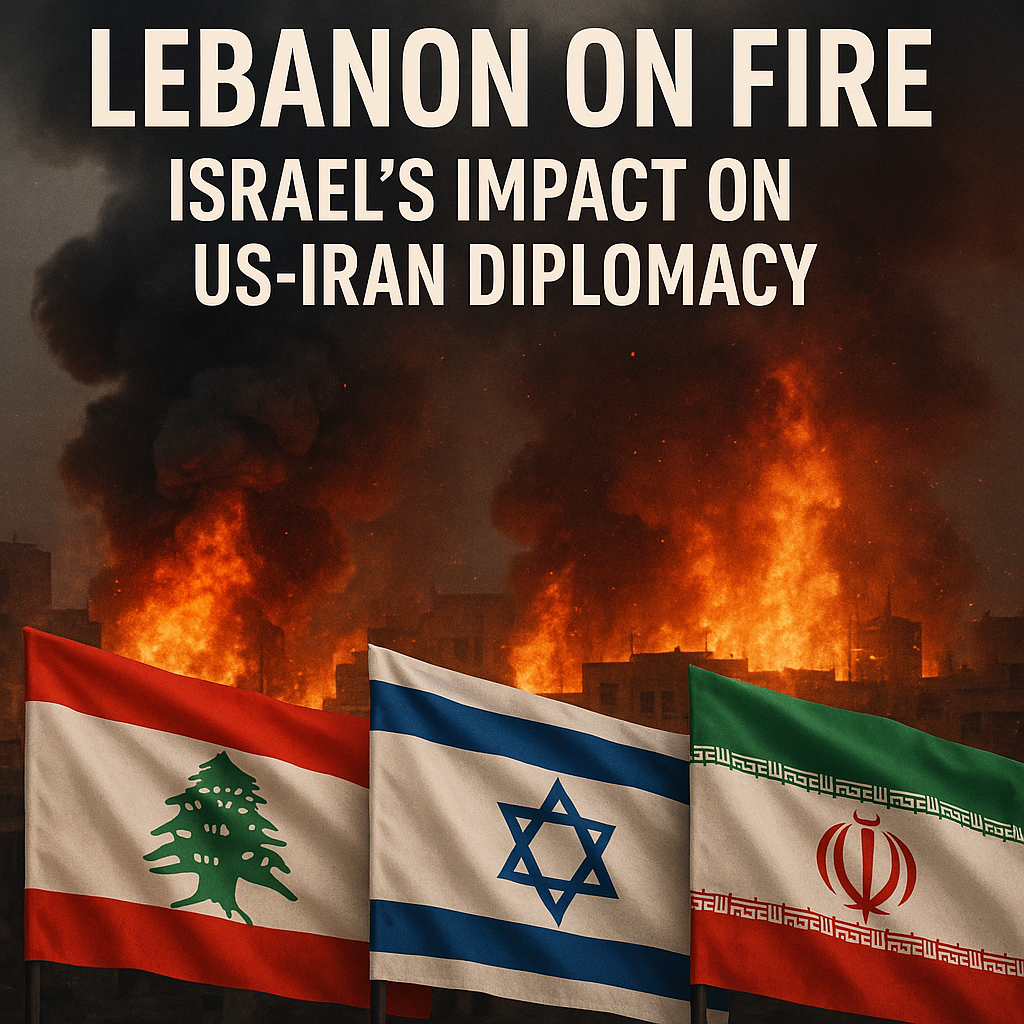
Lebanon on Fire: Israel’s Impact on US-Iran Diplomacy
Lebanon on Fire: Israel’s Impact on US-Iran Diplomacy
The situation in Lebanon has escalated dramatically, fueled by ongoing tensions between Israel and its surrounding neighbors, and the rippling effects can be felt as far as the negotiation tables between the U.S. and Iran. As protests erupt in Lebanon and military operations intensify, the implications for U.S.-Iran relations are becoming increasingly complex and fraught with uncertainty.

The Current Landscape: Lebanon’s Turmoil
Lebanon is currently grappling with significant unrest, exacerbated by Israeli military actions along its borders and the ongoing fallout from international diplomatic maneuvering. Reports indicate that the Lebanese populace is experiencing heightened anxiety due to rocket attacks from Israel targeting regions associated with Hezbollah, a group deemed a terrorist organization by many Western nations. This escalation has led to widespread protests, as Lebanese citizens express their frustration not only toward external aggression but also in response to domestic political and economic crises.

In response to Israel’s military actions, Hezbollah has been vocally supportive, pledging to protect Lebanese sovereignty. The directive by Hezbollah is painting Israel as an aggressor, which resonates strongly with a population already experiencing hardships from a collapsing economy and an ongoing energy crisis.

Meanwhile, the U.S. finds itself standing somewhat ambiguously; it has supported Israel’s right to defend itself, while simultaneously urging for restraint to avoid further destabilization in an already troubled region. This nuanced stance places the U.S. in a delicate position as it tries to navigate the complexities of Middle Eastern geopolitics.
The Ripple Effects on US-Iran Diplomacy
As tensions in Lebanon continue to rise, they simultaneously present new challenges and windows of opportunity for US-Iran diplomatic efforts. The presence of Hezbollah—backed by Iran—adds yet another layer to this conflict and highlights how regional alliances and enmities can directly influence international negotiations.
Historically, U.S. relations with Iran have been strained, with the two nations frequently at odds over nuclear capabilities, regional influence, and support for proxy groups. The latest developments in Lebanon could harden U.S. positions and lead to a more aggressive stance on Iran, especially without clear parameters on how Tehran’s involvement with Hezbollah affects its nuclear ambitions. Conversely, if the U.S. seeks to stabilize the situation, it may have to consider more engaging diplomacy with Iran.
Iran’s support for groups like Hezbollah is often framed in its broader strategy to increase its influence in the region, posing a dilemma for U.S. policymakers. Reports indicate that Iran views its involvement as essential for deterrence against Israel, thus making any U.S.-Iran talks increasingly sensitive, given the current flare-ups in Lebanon.
Navigating a Complex Diplomatic Terrain
The interrelated dynamics of Israel’s actions, Lebanon’s internal strife, and U.S.-Iran diplomacy create a labyrinthine scenario that requires careful navigation. Analysts recognize that both the U.S. and Iran are keenly aware of how Lebanon could serve as a flashpoint for broader regional conflict.
Many experts suggest that a miscalculation could lead to war, while others feel that there is still room for diplomatic solutions, albeit precarious. The Biden administration faces increasing pressure to take action, especially as domestic constituencies push for clearer U.S. commitments regarding both Israeli security and Iranian regional influence.
The ramifications of failure or success in U.S.-Iran diplomacy will have widespread implications, not just in Lebanon but throughout the Middle East. As protests continue in Lebanon, the solution does not lie solely in military might but rather in regional dialogue that includes all parties involved.
It remains a question of whether current diplomacy can withstand the high stakes created by Israel’s actions and the very real potential for escalated conflict, not just with Hezbollah, but throughout the region.
Conclusion: A Diplomatic Tightrope
The situation can only be described as a diplomatic tightrope, with Lebanon now caught in the crossfire of broader geopolitical strife. As protests surge and military actions escalate, the U.S. and Iran face the challenge of navigating their respective influences in a highly volatile landscape. The choices made in the coming weeks and months will be crucial in determining not just the fate of Lebanon but the stability of the entire region. While the potential for conflict looms large, opportunities for dialogue and engagement remain, albeit limited. The outcome of this situation could well redefine the fabric of Middle Eastern diplomacy for years to come.