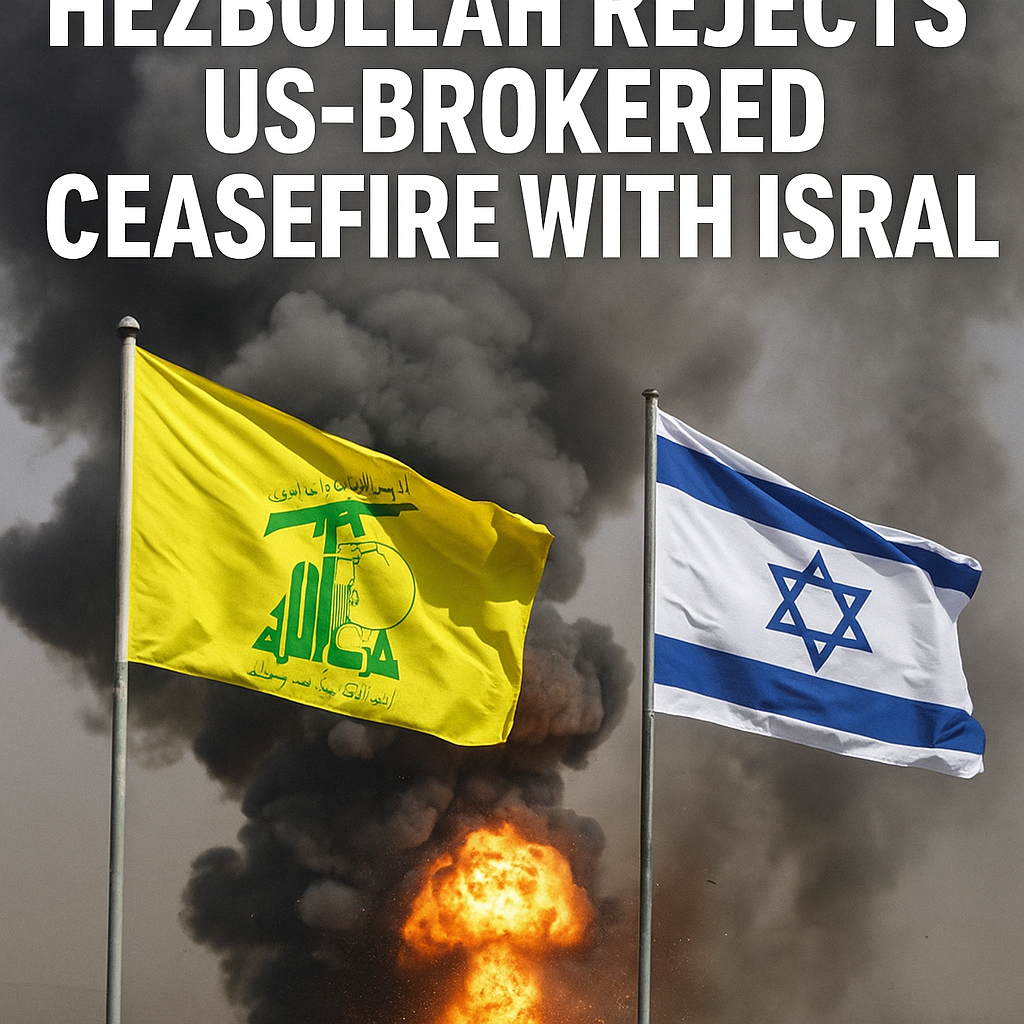
Hezbollah Rejects US-Brokered Ceasefire with Israel
Hezbollah’s Stance on US-Brokered Ceasefire with Israel
Hezbollah’s recent rejection of a US-brokered ceasefire with Israel has intensified discussions surrounding Middle Eastern geopolitics and regional stability. Hezbollah, the Lebanon-based militant group, has firmly stated that any ceasefire deal needs to reflect its interests and those of the Lebanese population, showcasing a complex interplay of regional and international diplomacy.

The Context of the Rejection
In recent events, tensions have escalated between Israel and Hezbollah, culminating in heightened military skirmishes. The US, recognizing growing instability in the region, proposed a ceasefire aimed not only at alleviating immediate violence but also as a step towards longer-term peace talks. However, Hezbollah’s leadership has dismissed the proposal, arguing that a ceasefire negotiated under U.S. auspices does not address fundamental regional imbalances that have historically marginalized Lebanese perspectives.

Hezbollah’s spokesperson outlined that the ceasefire, as presented, lacks the necessary commitments addressing Israeli military actions against Lebanon. The group highlighted that negotiations must consider “the reality on the ground” and prioritize national sovereignty, suggesting that any ceasefire should not merely serve American interests but ensure justice and security for Lebanon.

Diverging Perspectives on the Ceasefire
The response from international observers varies significantly. Some analysts argue that Hezbollah’s rejection of the ceasefire reflects a longer-standing strategy of resistance against Israeli policies, underscoring a commitment to regional dominance that transcends ceasefire agreements. For them, the refusal symbolizes a tactical move to maintain relevance and power amid shifting political dynamics in the Middle East.
On the other hand, proponents of the ceasefire assert that it presents an opportunity for peace that should not be overlooked. They argue that even partial agreements can serve as foundations for further negotiations, positing that rejecting this offer may only exacerbate existing tensions and civilian suffering on both sides. This perspective advocates for compromise and calls upon Hezbollah to reconsider its stance for the greater good of regional stability.
Implications for Regional Stability
Hezbollah’s decision to reject the ceasefire raises critical questions about the broader implications for the Lebanese populace and the region at large. With Lebanon already grappling with economic turmoil and social unrest, the continuation of hostilities could exacerbate humanitarian crises. Civilians, already burdened by financial distress and infrastructural deficits, may face increased violence that further destabilizes their daily lives.
Moreover, the rejection opens corridors for potential escalation. Analysts caution that without diplomatic interventions, the likelihood of a miscalculation could lead to wider conflicts involving regional actors such as Iran, who has historically backed Hezbollah. The interconnectedness of the Iranian influence in Lebanon and Iranian-U.S. relations plays a significant role in shaping the geopolitical landscape, making Hezbollah’s decision not merely a local concern but a focal point of regional security.
A Complex Path Forward
In light of the ongoing complexities surrounding Hezbollah’s rejection of the US-brokered ceasefire, it is evident that the path forward is fraught with challenges. While the ceasefire proposal aims to quell immediate violence, it must be accompanied by broader dialogue that acknowledges the multifaceted grievances of all parties involved.
The situation remains uncertain, with potential for both escalation and diplomacy. Observers call for international stakeholders to engage in constructive discussions that not only seek to end hostilities but also foster an environment conducive to long-term peace. Whether Hezbollah will reconsider its position remains to be seen, but the realities on the ground cannot be ignored.
As conflicting motives and pressures shape the trajectory of Middle Eastern politics, it becomes increasingly crucial for all parties—local and international—to advocate for solutions that address historical injustices while promoting the security and dignity of all affected populations. The rejection of the ceasefire highlights the urgent need for a nuanced approach towards peace that transcends immediate military concerns and engages deeply with the voices of those most impacted by the ongoing conflict.