
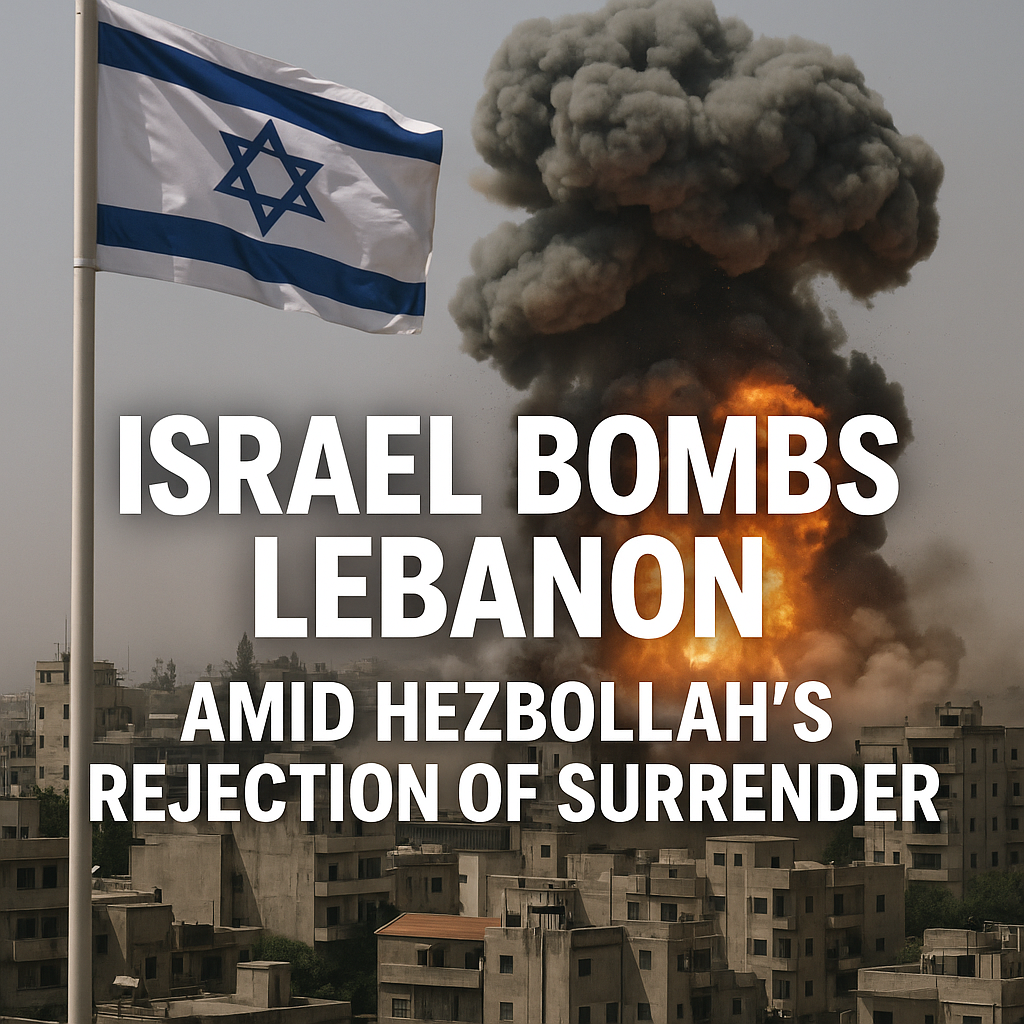
Israel Bombs Lebanon Amid Hezbollah’s Rejection of Surrender
Escalating Tensions: Israel Bombs Lebanon Amid Hezbollah’s Rejection of Surrender

In a significant escalation of hostilities, Israel has conducted airstrikes in southern Lebanon, targeting locations linked to Hezbollah. This attack comes in response to Hezbollah’s outright rejection of a demand for the group to surrender, stemming from ongoing tensions in the region. The conflict, reinforced by complex historical grievances, geopolitical stakes, and evolving military strategies, underscores the volatility that permeates Israel-Lebanon relations.

Background of the Conflict
The latest violence is a continuation of a long-standing feud dating back decades. The roots trace back to Israel’s occupation of southern Lebanon, which lasted until 2000, and intermittent flare-ups thereafter attributed to Hezbollah’s militant activities and Israel’s security concerns. Following the recent escalation, both sides are poised on the brink of intensifying their military operations.

Reports from multiple news outlets depict a clear narrative: Hezbollah, backed by Iran and acting as a principal actor in the Lebanese resistance against Israel, has maintained its position of defiance. Hezbollah spokespersons have framed the rejection of any surrender ultimatum as an assertion of their sovereignty and resistance ethos.
On the other hand, the Israeli government, facing internal pressures and security concerns, is adamant that military action is necessary to neutralize perceived threats. Israel’s Prime Minister stated that the strikes were a necessary defensive measure, emphasizing Israel’s commitment to national security and the necessity of acting preemptively against any potential aggression.
Impact of Recent Strikes
The repercussions of Israel’s airstrikes are manifold, affecting both military and civilian spheres. The immediate military consequence includes the deterioration of any ongoing diplomatic discussions aimed at easing tensions. Observers note that airstrikes will likely escalate retaliatory actions from Hezbollah, potentially drawing in broader implications for the region, including the involvement of Iranian forces or other allied militias.
Civilians in the targeted areas, particularly in southern Lebanon, are experiencing the brunt of the conflict. Reports indicate substantial damage to infrastructure, homes, and livelihoods, provoking concerns over humanitarian conditions. The UN has expressed alarm over escalating violence and urged both sides to exercise restraint and uphold civilian protections as enshrined in international law.
Diverging Perspectives on the Conflict
Opinions about the conflict diverge sharply across geopolitical lines. From a Western perspective, notably echoed by news agencies like Sky News and Al Jazeera, there is overwhelming concern regarding Hezbollah’s military capabilities and their implications for regional stability. Analysts assert that without diplomatic intervention, further escalation could lead to a broader conflict involving neighboring countries and possibly destabilizing the fragile political landscape of Lebanon.
Conversely, many in the Middle East view Hezbollah’s role as a necessary counterbalance to Israeli aggression. Supporters underscore that the group has historically functioned as a resistance movement against what they perceive as Israeli occupation and incursions into Arab territories. Thus, Hezbollah’s rejection of surrender is seen not simply as a tactical decision but as a manifestation of broader anti-imperialist sentiments and national pride.
The Road Ahead: Diplomacy or Escalation?
The path forward remains deeply uncertain. Both Israel and Hezbollah are entrenched in their respective positions, fueling fears of a sustained conflict that could spiral out of control. The urgent need for diplomatic intervention is apparent; however, trust deficits, exacerbated by historical grievances and recent escalations, pose significant challenges.
In addressing this pivotal moment, regional powers and international stakeholders must prioritize dialogue and conflict resolution strategies. While military options may appear attractive for both sides in the short term, history suggests that sustained conflict leads only to humanitarian crises and prolonged instability.
The complex interplay of military strategy, regional politics, and civilian impact raises fundamental questions about the future of Israel-Lebanon relations. The situation underscores a critical juncture where the choices made today could shape the geopolitical landscape for years to come. It is a reminder that in conflicts marked by historic animosities and deep-seated grievances, the most challenging step may often be toward peace rather than war.















