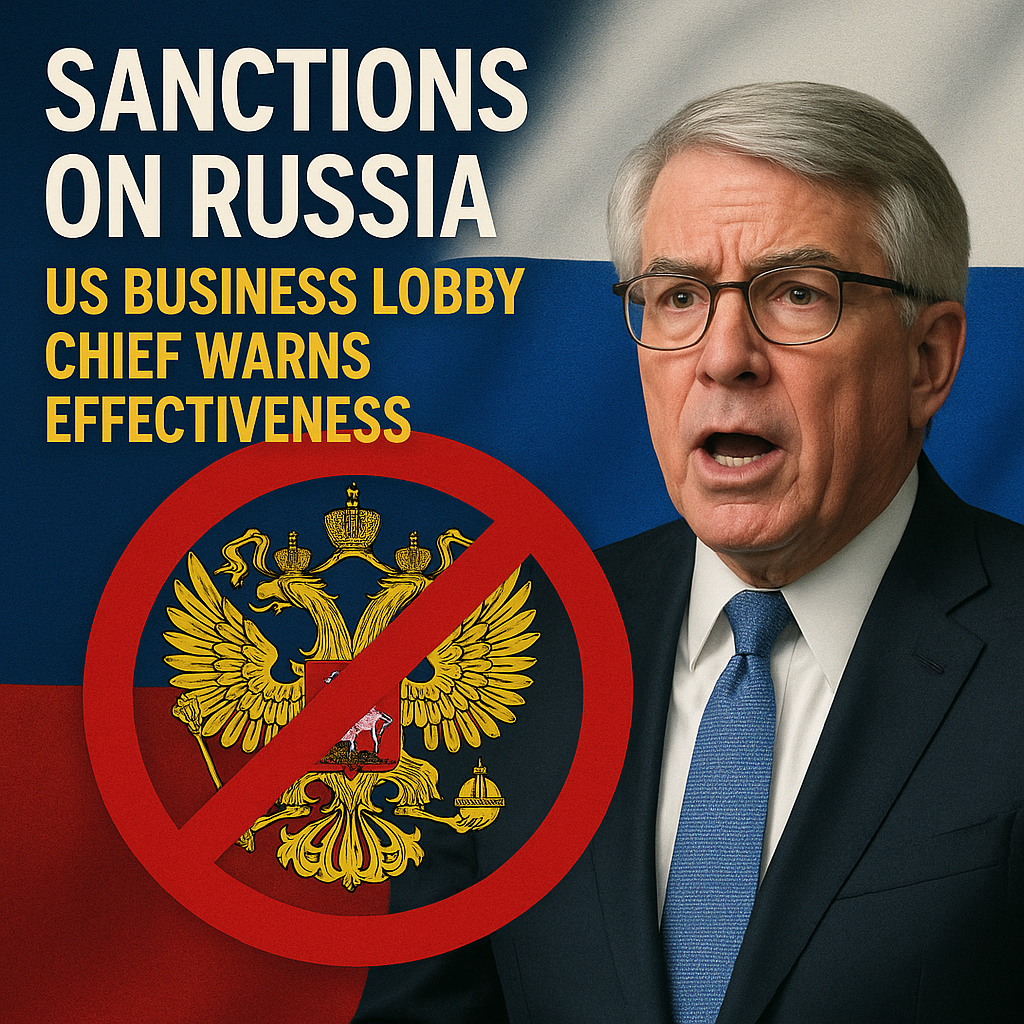
Sanctions on Russia: US Business Lobby Chief Warns Effectiveness

Sanctions on Russia: Effectiveness Under Scrutiny
Sanctions on Russia, particularly in response to its ongoing geopolitical actions, have sparked intense debate regarding their effectiveness. As various sectors scrutinize the impact of these measures, the head of the U.S. Business Lobby has expressed doubts, suggesting that the sanctions may not be achieving their intended goals.

The Business Lobby’s Perspective
According to recent reports, the U.S. Business Lobby Chief has voiced concerns that the existing sanctions could potentially backfire, undermining the economic fabric they aim to restrain. These sentiments reflect a growing apprehension among industry leaders who worry that prolonged sanctions could stifle partnerships and collaborative opportunities in the global market.


The chief’s remarks highlight a crucial point: the sanctions, while intended to pressure Russia economically, may also hinder American businesses eager to engage in international trade. Many sectors, particularly those reliant on exports and investments, face an uphill battle against increasing isolationism fueled by these measures. The risk is that businesses may look elsewhere for opportunities, diminishing U.S. influence abroad.


– Diverse Economic Impact: Industry sectors like agriculture, energy, and technology are particularly vulnerable. Companies that once thrived on trade with Russia now grapple with lost revenue streams and unpredictability in their business models.
– Shifting Alliances: Moreover, there are growing fears that by imposing sanctions, the U.S. might inadvertently accelerate Russia’s partnerships with non-Western countries—countries that may be more than willing to fill the economic void left by American businesses.
Varied Perspectives on Sanction Effectiveness
While the business perspective raises valid concerns about the ramifications of sanctions, many analysts and political leaders contend that these measures are essential for isolating Russia and pressuring its leadership. Critics of the business lobby’s viewpoint point to the role of sanctions in shifting international norms. They argue that, despite some economic pain, sanctions are designed to inflict sufficient hurt that it challenges the status quo of Russian aggression.
Economic analysts emphasize that sanctions have historically played a significant role in international relations. They argue that, over time, sanctions can lead to significant behavioral changes. For instance, previous sanctions against Iran ultimately brought the country to the negotiating table on its nuclear programs.
– Historical Context: The effectiveness of sanctions often depends on the unity among countries imposing them. Broad, coordinated sanctions involving multiple nations are typically more successful than unilateral measures.
Ongoing Uncertainties and Future Considerations
The complexities surrounding the efficacy of sanctions extend into geopolitical dynamics. As the situation evolves, uncertainties linger about how much pain Russia can weather before reconsidering its strategic objectives. Analysts caution that while immediate impacts may be difficult to ascertain, the long-term consequences could take years to materialize.
It is important to acknowledge that consensus on the topic remains elusive. Some experts argue that sanctions may only serve as a temporary solution, underestimating the resilience of the Russian economy or the potential for internal dissent to rise without external pressures. Others insist that continued application of sanctions, coupled with diplomatic efforts, could yield better results in the long run.
– Potential Adjustments: Moving forward, discussions are likely to focus on refining sanctions to better target sectors that can destabilize Russia without overly harming global economic relations. Adjustments could include specifying sectors for sanctions or alternative measures that promote engagement rather than isolation.
In summary, the debate surrounding sanctions on Russia illustrates the tension between economic interests and geopolitical strategy. The warnings from the U.S. Business Lobby Chief call for a nuanced understanding of the interplay between policy and commerce. As the dialogue continues and the geopolitical landscape shifts, the question remains: Are sanctions the best tool for instigating change, or do they risk entrenching the very adversaries they aim to contain?