
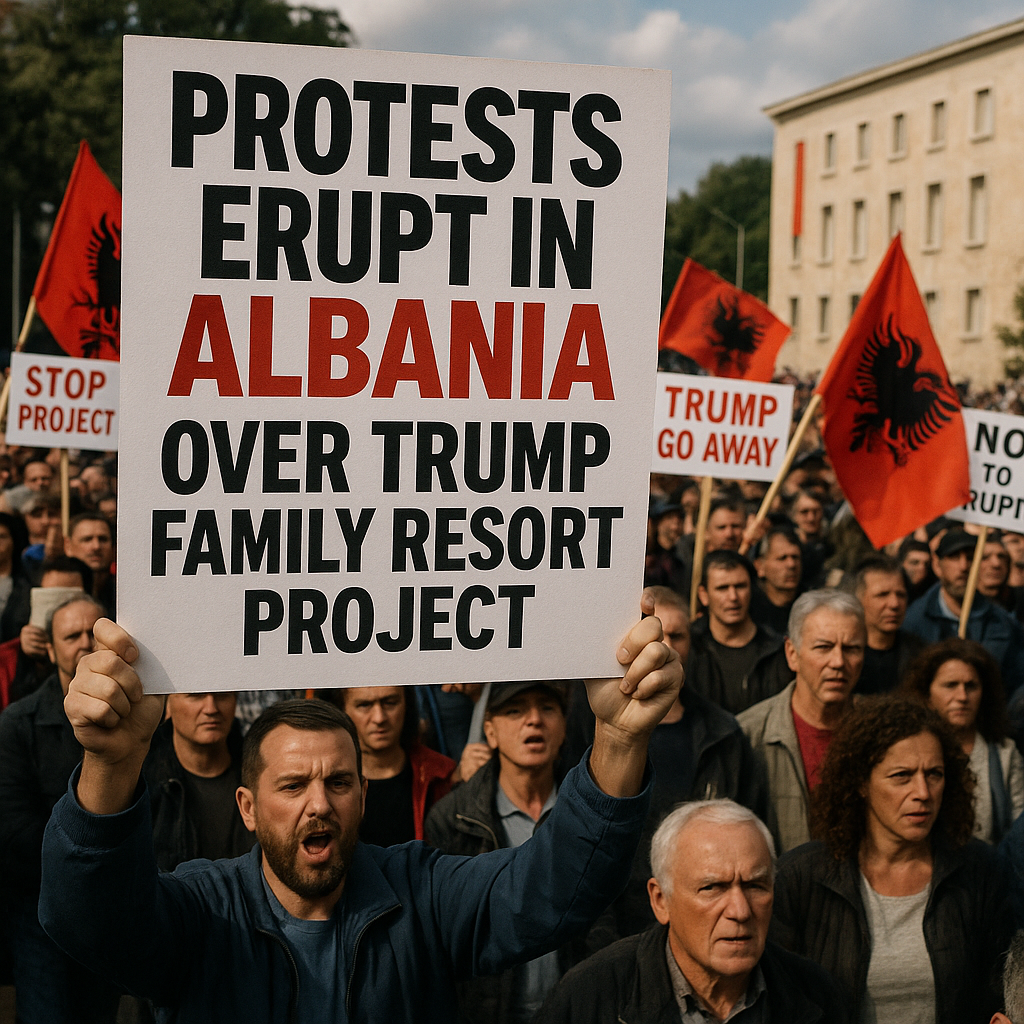
Protests Erupt in Albania Over Trump Family Resort Project
Protests have erupted across Albania in response to a proposed resort project by the Trump family, highlighting deep divisions within the nation regarding foreign investment and tourism development. The project, situated along Albania’s picturesque coastline, has sparked not only unrest but also a complex dialogue on national identity, environmental concerns, and the economic benefits of such ventures.

The Roots of Discontent: Conservation vs. Development
At the heart of the protests lies a clash between preserving Albania’s natural landscape and the promise of economic growth through tourism. Many demonstrators argue that the development of a large-scale resort could lead to irreversible harm to the local environment, particularly given the country’s stunning coastal ecosystems and flora.

Environmental advocates express concern that the project will exacerbate the already significant issues of coastal erosion and habitat destruction. They argue that such developments could put immense pressure on local resources and threaten the biodiversity that many foreign tourists seek. The protests saw thousands of participants, many of whom carried signs highlighting slogans like “Preserve our coast!” and “Tourism should not destroy nature!”

Conversely, proponents of the Trump family’s resort project argue that it could serve as a cornerstone for economic rejuvenation in a country still grappling with the aftershocks of transition from a communist regime to a market economy. With tourism representing a critical component of Albania’s GDP, this venture is touted as a means to create jobs, spur local businesses, and attract further foreign investment. Supporters claim that the influx of tourism could facilitate infrastructure development and cultural exchanges, benefiting the nation overall.
The contrasting views underscore Albania’s ongoing struggle to balance the benefits of economic development against the need for ecological preservation—a debate that is reminiscent of many other countries navigating similar crossroads in an era of climate consciousness.
Political Ramifications and Public Sentiment
The protests have not gone unnoticed by political figures, illuminating the growing tensions between the citizens and their leaders. Critics assert that government officials are prioritizing short-term economic gains over long-term sustainability, potentially jeopardizing both environmental integrity and public trust. Calls for greater transparency regarding the project’s impact assessments have emerged, with opponents demanding clarity and accountability from officials involved in facilitating the deal.
Public sentiment appears divided. While many citizens rally against the resort’s construction, a notable segment of the population remains supportive or indifferent, believing that a prosperous Albania could emerge from increased tourism revenue. This dichotomy is reflected in the political dynamics, with some political factions leveraging the protests to criticize the current administration’s handling of foreign investments.
In a recent statement, a government spokesperson emphasized the project’s potential, claiming, “The development will bring expertise and global standards to the Albanian tourism sector.” However, this perspective is met with skepticism by many who fear that such investments may not necessarily translate into local benefit, especially in terms of job quality and ecological sustainability.
Navigating Uncertainty: Looking Towards the Future
As protests continue and discussions evolve, the future of the Trump family resort project remains uncertain. Recent reports suggest that while construction plans are still on the table, negotiations and community consultations are an aspect that may need to be prioritized to quell public concern.
In this context, it is vital for both advocates and opponents of the project to engage in meaningful dialogue that encompasses the multifaceted implications of such developments. Finding a common ground where development and conservation can coexist could foster an environment conducive to progress.
Furthermore, the Albanian government faces a pivotal challenge: how to effectively manage foreign investments while placating an increasingly vocal public that demands transparency and preservation of their natural heritage. The outcome of this situation may not only influence the fate of a single resort project but could set significant precedents for how Albania navigates the intersection of foreign investment, tourism, and environmental stewardship in the years to come.
As the situation develops, observers will be keenly watching how both the protests and the project unfold, reflecting broader trends in global discussions around tourism and environmental sustainability. The resolution of this conflict could very well define not only the immediate landscape of Albania’s coast but also its future relationship with international investors and its own citizens.















