
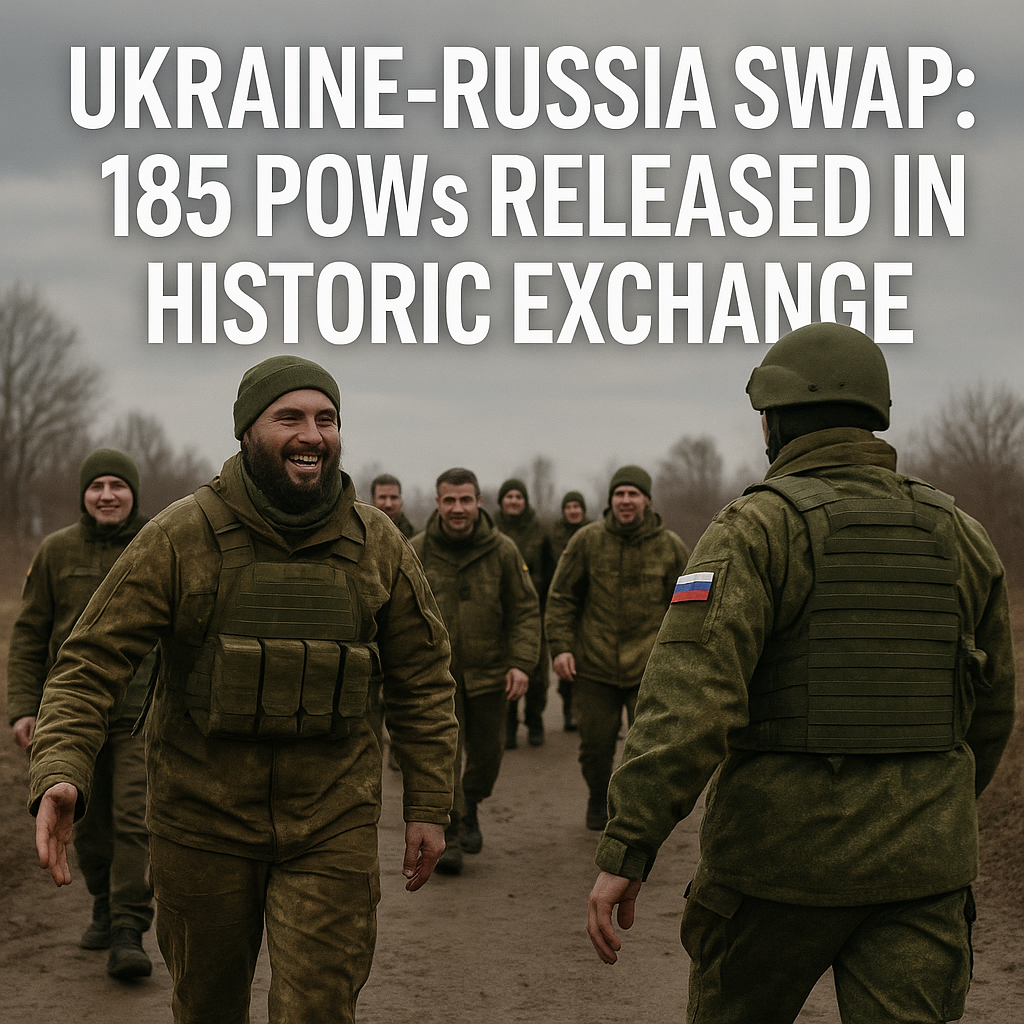
Ukraine-Russia Swap: 185 POWs Released in Historic Exchange
Ukraine-Russia Swap: 185 POWs Released in Historic Exchange

In a landmark event for both the Ukraine and Russia conflict, a significant prisoner swap took place, involving the release of 185 prisoners of war (POWs) from each side. The exchange has been characterized as historic, reigniting discussions about humanitarian efforts amidst ongoing tensions. This event is pivotal not only for the individuals involved but also for the broader geopolitical landscape shaped by this enduring conflict.

The Background and Context of the Exchange
The context behind this prisoner exchange is deeply rooted in the protracted conflict that began in 2014 with Russia’s annexation of Crimea and escalated with the full-scale invasion of Ukraine in February 2022. In the midst of military confrontations, both sides have captured numerous combatants, complicating matters of legality, human rights, and wartime ethics.

According to Al Jazeera, the latest exchange is reportedly one of the largest since the onset of the war, highlighting a significant step towards potential negotiations. It took place against a backdrop of persistent discussions about peace talks, suggesting that both sides might be looking for openings to facilitate dialogue.
In stark contrast, Russian state media like RT emphasizes the legal implications of such exchanges, arguing that POWs retained by either side are subject to international law protections, raising concerns about their treatment. The swap thus showcases contrasting narratives; while one side views it as a humanitarian gesture, the other portrays a legalistic approach to handling prisoners, reflective of deeper mistrust between the parties.
Humanitarian Considerations Following the Exchange
From a humanitarian standpoint, this prisoner swap represents a critical moment for the families of the POWs involved. Both Ukraine and Russia have faced domestic and international pressure regarding the treatment of captured soldiers. Many advocates have called for more frequent and structured swaps to alleviate the suffering of families separated by war.
Reactions from family members and advocacy groups underline the emotional depth of this moment. A family member of a Ukrainian POW expressed that “every day of waiting is filled with uncertainty and despair,” underscoring the need for more exchanges to heal those affected by the conflict. On the Russian side, a spokesperson highlighted the humanitarian aspect, stating that returning soldiers home offers a form of closure for the families.
Implications for Future Negotiations
While this exchange marks a noteworthy episode in the ongoing war, its implications for peace talks remain uncertain. Both sides have expressed willingness to negotiate, yet the recurring cycles of violence have sown seeds of skepticism. Observers note that while such swaps demonstrate a certain level of cooperation, they do not eliminate the fundamental issues at the heart of the conflict.
Diverse viewpoints continue to emerge. According to a report from Sky News, analysts caution that while this is a positive development, a single prisoner exchange does not signify a broader conciliatory trend. The fundamental geopolitical disagreements and military objectives remain largely unchanged. In contrast, other sources argue that these types of exchanges could lay the groundwork for deeper dialogue surrounding ceasefires or peace settlements, especially with winter approaching, amidst concerns about increased fighting.
The Road Ahead: Challenges and Opportunities
The recent POW swap between Ukraine and Russia provides a modicum of hope, reflective of larger humanitarian aspirations in a conflict marred by loss. Nevertheless, a single exchange raises several overarching questions about the path forward. Will this herald more extensive negotiations? Or will it remain an isolated incident in the tumultuous narrative of the conflict?
As the war continues to unfold, the perspectives on the efficacy of such exchanges will likely evolve. There remains a palpable desire on both sides for more clarity and consistency in how POWs are treated and exchanged. Ultimately, this historic event serves as a reminder that amid the chaos of war, the human element must not be overlooked.
In conclusion, while each release brings joy to some, it also serves as a reminder of the ongoing conflict’s brutality. The pathway to lasting peace in Ukraine seems long and fraught with uncertainties, but initiatives like this provide a glimmer of hope for dialogue and resolution in a seemingly insurmountable situation.















