
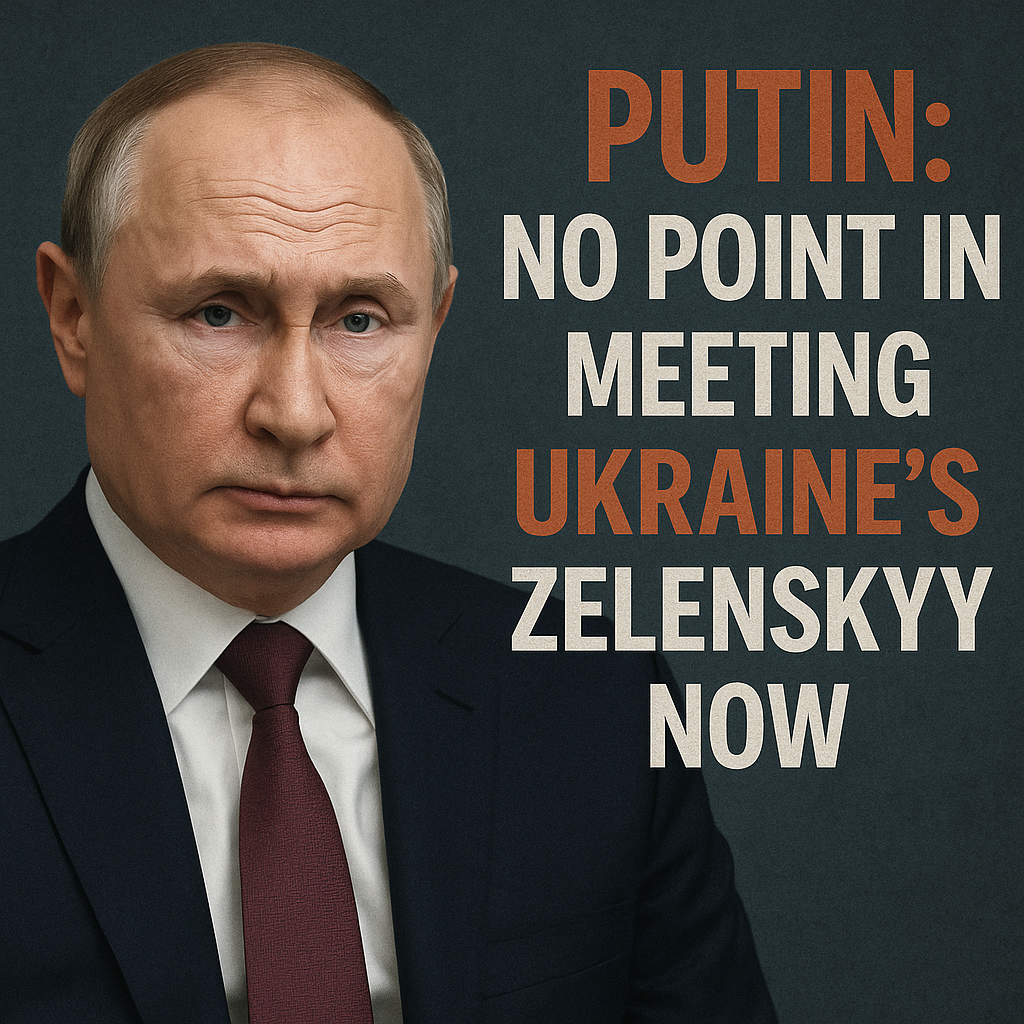
Putin: No Point in Meeting Ukraine’s Zelenskyy Now
The Stalemate in Ukraine: Putin’s Refusal to Meet Zelenskyy
In a recent declaration, Russian President Vladimir Putin expressed that there is currently “no point” in meeting with Ukrainian President Volodymyr Zelenskyy. This statement adds yet another layer to the already complex relationship between Russia and Ukraine, which has been fraught with conflict since 2014. As international stakes rise, the implications of such a refusal go beyond mere diplomatic etiquettes.

Context of the Refusal
Putin’s statement comes amidst ongoing discussions in international forums about the possibility of peace talks between the two nations. Just days prior, Zelenskyy had reiterated the need for dialogue to bridge the growing divide. However, Kremlin spokesperson Dmitry Peskov clarified that any meeting “could be productive” only under conditions deemed favorable by Russia. This highlights a significant divide in leadership perspectives: where Zelenskyy emphasizes dialogue and negotiation, Putin appears to prioritize military advantage and geopolitical positioning.

Experts suggest that Putin’s refusal may stem from a combination of strategic calculations and internal pressures. For instance, several analysts argue that the Russian leadership is currently focused on its military objectives in Ukraine and does not consider negotiation to be in its best interest. Additionally, the ongoing war has amplified nationalistic sentiments, making it politically risky for Putin to appear conciliatory.

Diverging Perspectives on the Path Forward
The international community is divided on how to proceed. Some voices advocate for continued support of Ukraine, emphasizing the sovereignty of nations and the need for resistant policies against aggression. Reports from various sources suggest that many Western countries are prepared to bolster military aid to Ukraine in response to Russia’s obstinacy.
Conversely, some experts warn of the human and economic costs of prolonged conflict. They argue that further escalation could lead to catastrophic consequences, not just regionally but globally. The sentiment is echoed in discussions among European diplomats, who express concern over the potential for a drawn-out conflict impacting energy supplies and security across the continent.
In this intricate chess game, Zelenskyy’s government has remained open to diplomatic solutions, with leaders emphasizing the importance of peace talks. Their approach suggests a belief in the power of negotiation even when faced with daunting opposition. However, Putin’s dismissal of such possibilities casts a long shadow over these aspirations.
Broader Implications
The tension between these two leaders encapsulates a broader struggle in international relations, particularly concerning the reality of power dynamics in post-Cold War Europe. The stakes are amplified by NATO’s involvement and the shifting alliances that characterize current geopolitical landscapes.
As conflict continues, the civilian toll grows, and humanitarian concerns mount. Organizations like the United Nations have repeatedly highlighted the dire situation for those caught in the conflict, advocating for both ceasefire agreements and humanitarian access to affected areas.
With Putin asserting that any meeting would only take place on Russian terms, the potential for de-escalation seems increasingly improbable. This complicates not only the situation in Ukraine but also Russia’s standing in the international community, as more nations and organizations consider their stances on the conflict.
Conclusion: The Road Ahead
As it stands, Putin’s rejection of a meeting with Zelenskyy signifies a refusal to engage on neutral grounds, opting for a strategy that prioritizes military objectives and national pride. This mindset poses challenges for both peace and stability in Ukraine and the region at large. The question remains: what will it take for the two leaders to find common ground amidst the ruins of war?
Until both sides re-evaluate their approaches to dialogue and compromise, uncertainty will loom. The international community continues to watch closely, aware that the fabric of European security and the lives of countless civilians hang in the balance.















