
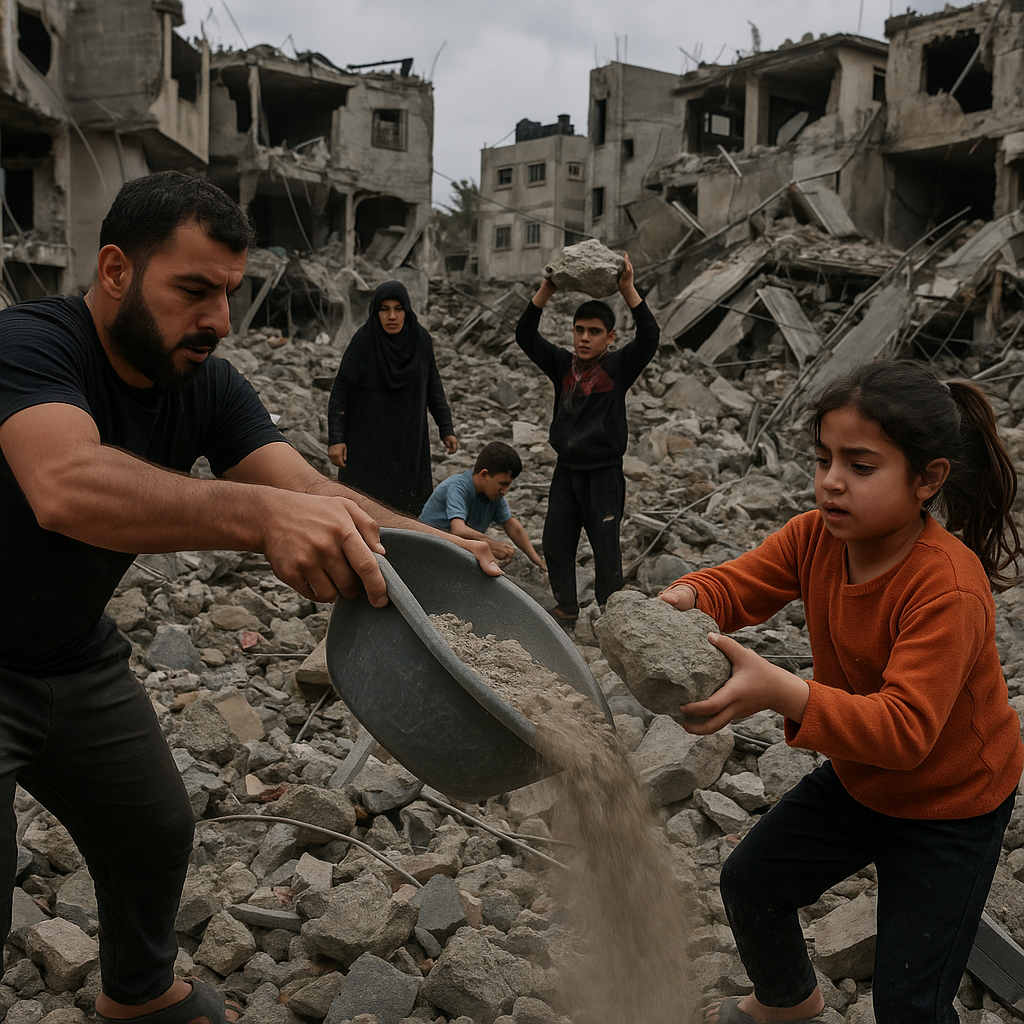
Gaza Families Clear Rubble After Overnight Israeli Strikes
Families in Gaza Unite to Clear Rubble After Overnight Strikes
In the aftermath of recent Israeli strikes in Gaza, families have come together to sift through the rubble of their homes and neighborhoods, attempting to find remnants of their past lives. This ongoing conflict has raised concerns and discussions regarding the humanitarian fallout, particularly the impact on civilian infrastructure and the emotional burden faced by families in the region.

The Immediate Aftermath of Strikes
Reports indicate that the overnight strikes have exacerbated an already dire humanitarian crisis in Gaza. As families begin the labor-intensive task of clearing debris, images of their efforts reveal a mixture of resilience and despair. Many residents are not only working to salvage belongings but also to support one another amid the chaos. The visible devastation underscores the broader implications of the conflict, highlighting how civilians bear the brunt of these military exchanges.

The international community has expressed concern over the escalation of violence. For instance, a report from Al Jazeera noted that over 100 homes were damaged in the recent bombardments, which targets were allegedly a response to rocket fire from Gaza towards Israeli territories. This perspective illustrates the cycle of violence that perpetuates further suffering, particularly among the non-combatant populace.

Diverse Perspectives on the Conflict
While many emphasize the plight of the affected families, opinions differ on the root causes and potential resolutions to the ongoing crisis. Analysts from RT have pointed to the historical context of the Israeli-Palestinian conflict, suggesting that long-standing grievances regarding territory and governance fuel such military actions. In this light, the strikes can be viewed as part of a broader strategy in a conflict that has deep roots, with losses on both sides conditionally justified by security narratives and retaliatory motives.
Conversely, advocates for human rights have criticized the disproportionate impact of military operations on civilians. They argue that such strikes violate international humanitarian law and call for urgent humanitarian assistance to Gaza. Sky News has reported the need for a renewed approach to peace negotiations, stressing that sustainable solutions must prioritize the safety and dignity of all civilians caught in the crossfire.
The Human Element: Stories of Resilience
As families sift through the debris, personal accounts emerge that highlight both loss and determination. Many are not just victims of conflict; they are individuals with hopes and dreams, and their stories add a complex layer to the narrative surrounding the conflict. Some families have reported finding treasured mementos among the rubble, such as photographs, children’s drawings, and heirlooms, intensifying the emotional toll the destruction inflicts.
Furthermore, community solidarity plays a crucial role in recovery efforts. Neighbors often unite to assist those who have lost everything, fostering a sense of kinship in the face of adversity. This collective effort not only aids in the physical rebuilding but also promotes mental resilience against the backdrop of ongoing trauma.
A Call for Reflection and Action
The situation in Gaza serves as a stark reminder of the urgent need for comprehensive solutions that address the humanitarian crises resulting from military actions. Many voices in the international community advocate for increased dialogue and conflict resolution strategies that prioritize human lives over military interests. With the stakes high and emotions raw, finding common ground remains a challenge.
Understanding the complexity of the Israeli-Palestinian situation requires acknowledgment of the multifaceted issues at play. The contrasting viewpoints highlight how the narrative surrounding military actions, civilian impacts, and socio-political dynamics can vary dramatically depending on perspective.
As families in Gaza continue their arduous task of clearing rubble and rebuilding their lives, it is essential for the global community to engage earnestly with the layers of this conflict. Advocacy for peace, sustainable humanitarian assistance, and a commitment to addressing root causes could pave the way for a more hopeful future, not just for those in Gaza but for all affected by this enduring struggle.















