
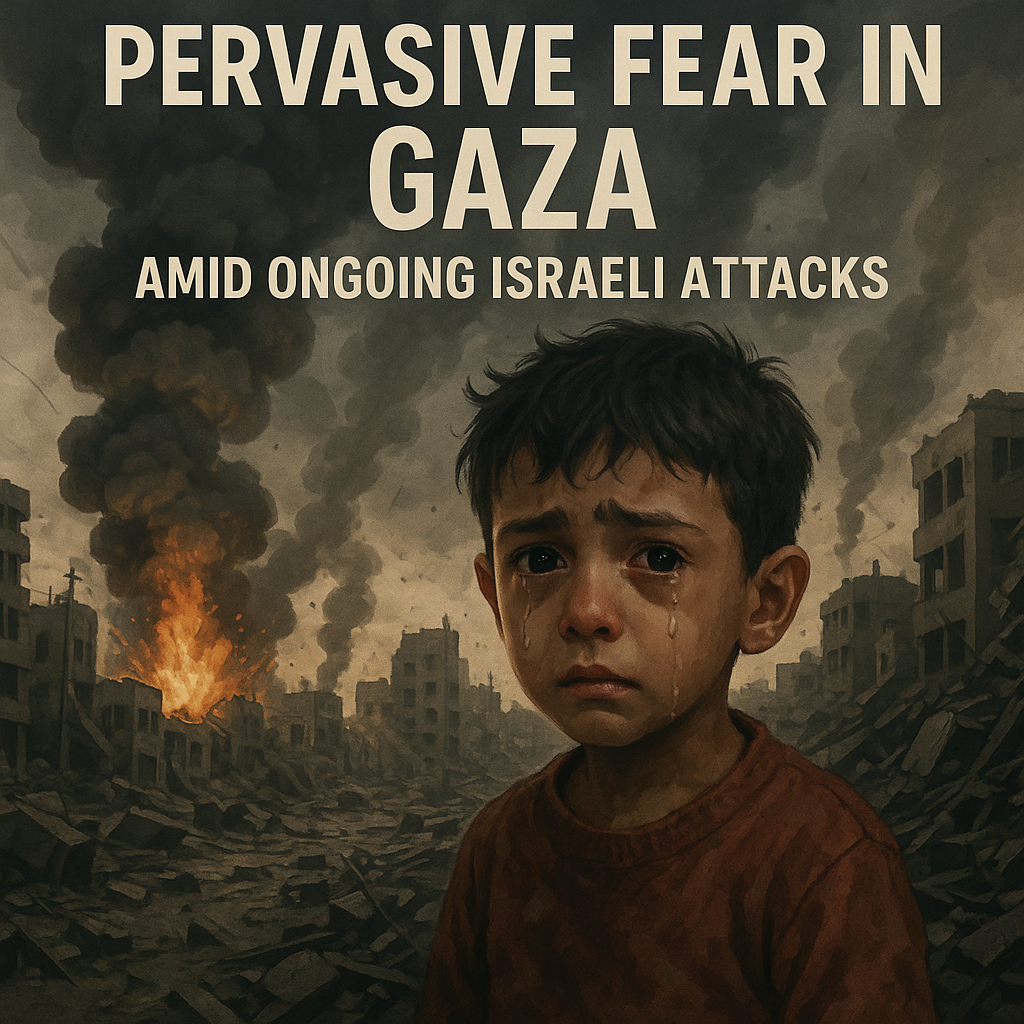
Pervasive Fear in Gaza Amid Ongoing Israeli Attacks
Pervasive Fear in Gaza Amid Ongoing Israeli Attacks
The pervasive fear gripping Gaza has escalated as Israeli attacks continue, even against the backdrop of a ceasefire declared by both sides. This complex situation reflects the struggles of civilians caught in the crossfire of a decades-long conflict, where insecurity takes on both physical and psychological dimensions.

The Human Cost of Conflict
Reports have painted a harrowing picture of life in Gaza, with many residents expressing trauma and anxiety as the sounds of airstrikes echo through their neighborhoods. According to Al Jazeera, while some officials might declare ceasefires, the reality on the ground does not support these assertions. The continuous strife has left many Gazans grappling with uncertainty over their safety and future.

The humanitarian situation remains precarious. Essential services have been disrupted, healthcare facilities overwhelmed, and basic goods scarce. The fear that each day could bring another wave of violence looms large, leading to a community experiencing heightened stress and trauma. Psychological support systems, already strained, are deeply challenged by the relentless nature of these attacks.

Conversely, reports from sources like RT suggest that the Israeli government portrays its military actions as necessary for national security and combating terrorism from groups operating within Gaza. This narrative emphasizes the ongoing threats Israel faces, contributing to its readiness to engage in military operations despite potential civilian casualties. Such viewpoints exemplify the complexities generating fear among both Gazans and Israelis, revealing how narratives can simultaneously reflect security concerns and humanitarian atrocities.
Divergent Perspectives on Safety and Security
The divergence in perspectives regarding safety reflects broader geopolitical implications that complicate the situation. While many in Gaza live under an atmosphere of pervasive fear due to military actions, Israeli citizens express their anxiety through concerns about rocket attacks and the potential for escalated violence in response to perceived threats. Sky News highlights that these sentiments contribute to a cycle of fear, where both parties feel justified in their defensive measures. For Gazans, the fear emerges from an existential dread, while for Israelis, it evolves from a concern for immediate security.
One critical factor shaping these narratives is the representation and framing of the conflict by various media outlets. While Al Jazeera focuses on the humanitarian aspects and the psychological toll on Gazans, other channels may emphasize strategic military viewpoints, which can lead to a skewed understanding of the dire circumstances experienced by civilians.
As the situation continues to evolve, the reactions from international communities could also play a significant role in shaping a pathway toward resolution. Calls for de-escalation have resonated globally, yet stark divisions remain concerning what measures should be enacted to achieve lasting peace. The lack of a unified perspective among global powers complicates the formulation of a coherent strategy aimed at alleviating humanitarian crises in Gaza.
Navigating Uncertainty and Hope
Despite the chaos, voices of hope occasionally emerge from the rubble. Many Gazans engage in community efforts to provide support for one another, emphasizing resilience amidst adversity. While the fear is a dominant narrative, acts of solidarity and shared humanity remind observers that even in dire circumstances, hope can persist.
The future remains uncertain, characterized by fluctuating tensions and sporadic violence that keep the population on edge. Efforts at peace remain fraught with complexities, particularly when conflicting narratives dominate. As the international community continues to call for dialogue and understanding, the challenge lies in addressing and synthesizing the fears of both sides to embark on a peace that genuinely considers the well-being of the civilian population.
In conclusion, the pervasive fear in Gaza amid ongoing Israeli attacks underscores a far more intricate narrative than a mere conflict between two sides. Understanding this complexity requires acknowledging the lived experiences of those affected, weighing emotional and psychological realities against political and military strategies. The hope for peace hinges on the ability of global leaders and ordinary citizens alike to foster dialogue that transcends fear and cultivates understanding.















