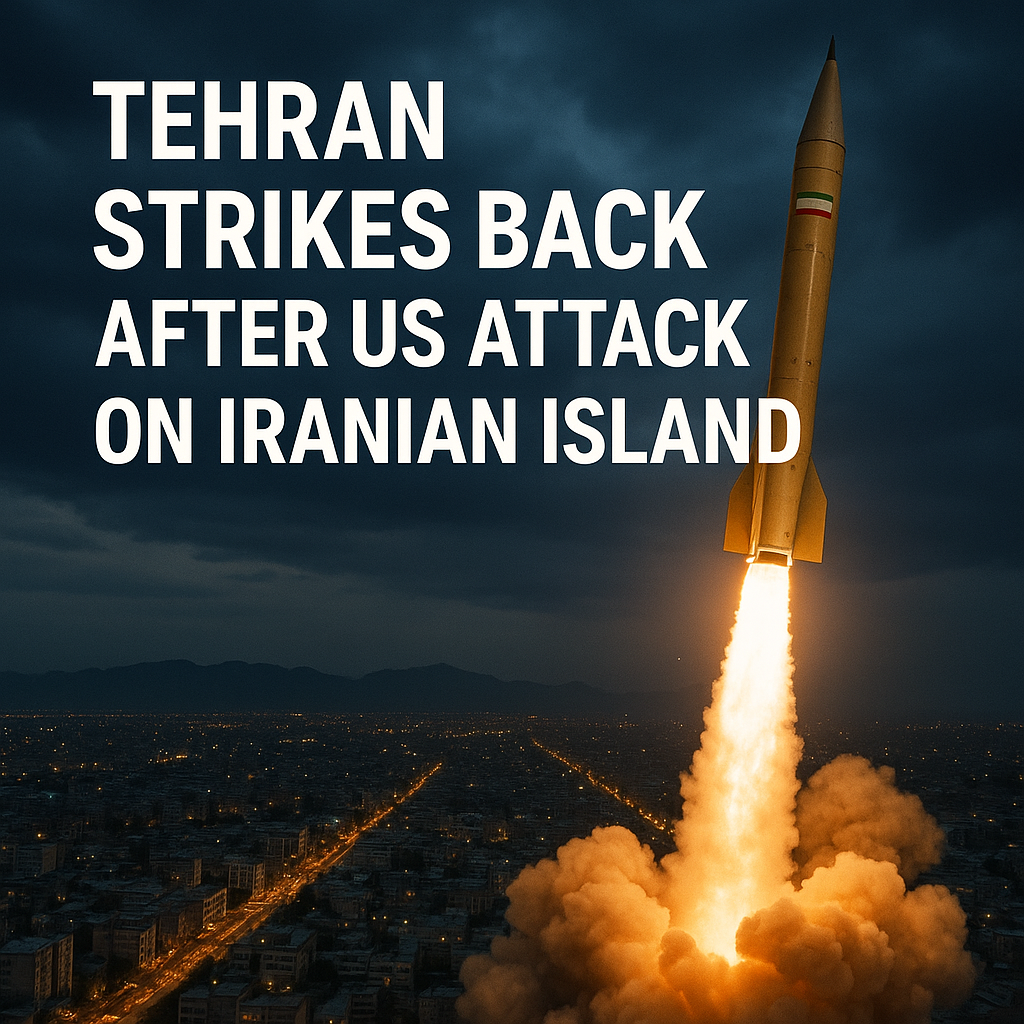
Tehran Strikes Back After US Attack on Iranian Island
Tehran’s recent response to a U.S. airstrike on Qeshm Island underscores the escalating tensions in the region, revealing a complex interplay of military posturing and political maneuvering. As the U.S. seeks to assert its influence, Iran appears determined to reassert its sovereignty and push back against external aggression.

Background of the Conflict
The U.S. conducted an airstrike on Qeshm Island, a strategic location in the Strait of Hormuz, claiming it targeted military installations linked to Iranian operations. This strike not only reflects a growing trend in U.S. foreign policy towards preemptive actions but also serves as an indicator of the deteriorating relations between the two nations. Al Jazeera reported that the U.S. justified the attack as a preventive measure against potential threats emanating from Iranian forces.

Iran’s immediate reaction came swiftly, with government officials stating that such acts of aggression would not go unanswered. In a press briefing, Iranian military spokespersons vowed to take “appropriate measures” to protect their territorial integrity and national interests. This rhetoric aligns with historical patterns seen in Iranian responses to U.S. actions, emphasizing a commitment to deter foreign intervention.

Iran’s Strategic Military Response
Iran’s strategy involves a multifaceted approach that not only includes military retaliation but also diplomatic maneuvering. According to reports from RT, the Iranian military conducted drills in response to the airstrike, showcasing its missile capabilities and troop readiness. This not only demonstrates a commitment to defense but also serves as a public relations strategy to bolster national pride amidst external threats.
Furthermore, Iran’s actions seem to resonate with its allies in the region. A broad coalition that includes groups in Lebanon and Iraq has voiced their solidarity with Tehran, emphasizing the need for collective resistance against U.S. policies. Analysts point out that this united front seeks to counteract the perceived unilateral actions taken by the U.S. and its allies in the Middle East.
Diplomatic Implications and Regional Dynamics
The airstrike on Qeshm Island has broader implications for regional stability. With the U.S. actively engaging in military operations, Iran’s response could affect the fragile balance of power in the Middle East. The crisis raises questions about the future of diplomatic negotiations surrounding Iran’s nuclear program, especially as talks have repeatedly stalled over mutual distrust on both sides.
Experts from various news sources note that the likelihood of an escalation into a larger conflict is a real concern. As tensions continue to mount, both Tehran and Washington find themselves in a highly precarious situation. Each side risks miscalculation, which could lead to an armed confrontation that neither party genuinely desires.
A critical aspect of this situation is the potential for other regional players to manipulate the conflict for their own ends, creating a more fractious environment. Some reports indicate that while the U.S. seeks to isolate Iran diplomatically, nations such as China and Russia have taken a nuanced approach, offering support to Iran in various forms. This interplay illustrates the geopolitical complexity surrounding the conflict, extending well beyond the immediate U.S.-Iran dynamic.
Concluding Thoughts
In conclusion, Iran’s robust response to the U.S. airstrike on Qeshm Island is a manifestation of the ongoing, multi-layered conflict rooted in historical grievances and modern-day geopolitical strategies. While Tehran’s military drills send a clear message of deterrence, the region’s stability hangs in the balance as both sides navigate a landscape fraught with the potential for escalation.
As diplomatic dialogues remain stalled, the path forward seems uncertain. The actions taken by both the U.S. and Iran will undoubtedly shape the dynamics of international relations in the Middle East for the foreseeable future. Understanding this complexity is crucial, as simplistic narratives may overlook the nuanced realities facing both nations. As events unfold, the global community watches closely, hoping for a resolution that prioritizes peace and stability over military confrontation.