
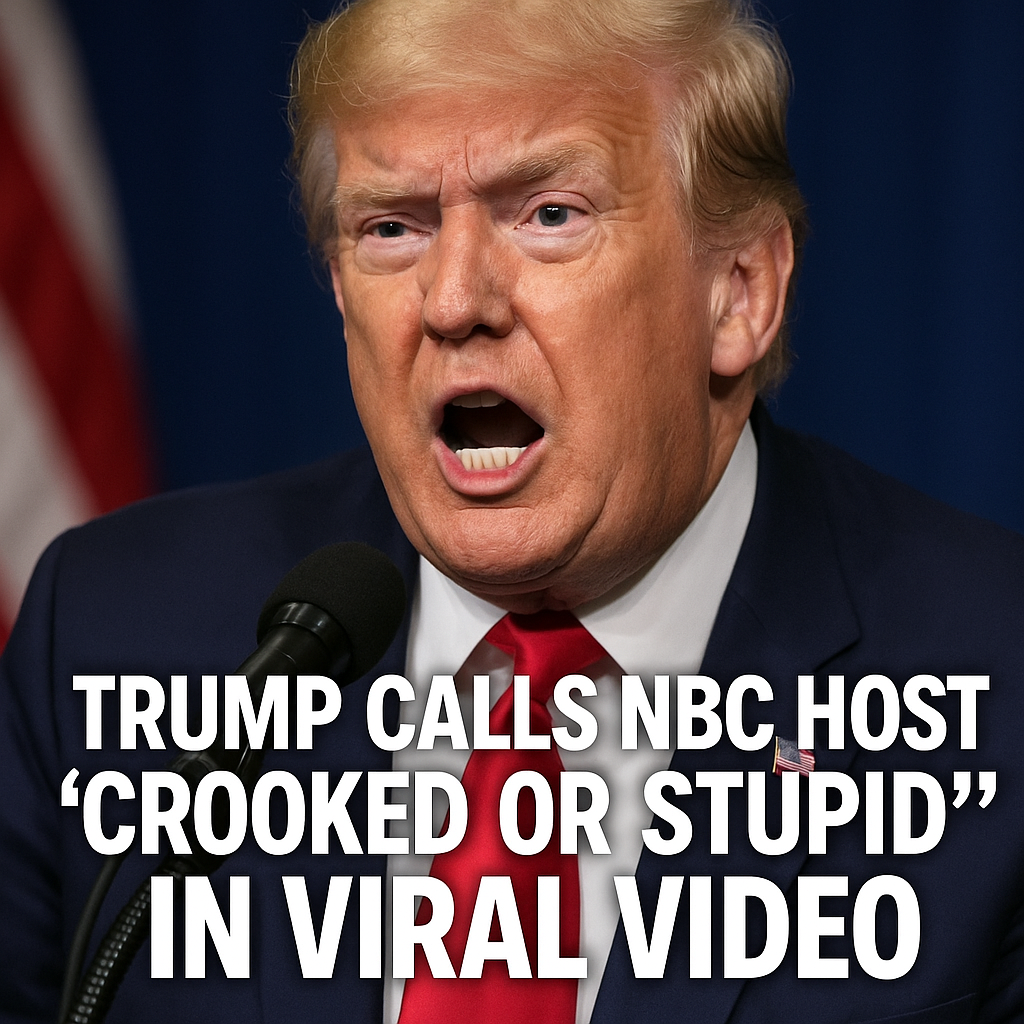
Trump Calls NBC Host Crooked or Stupid in Viral Video
In a recent incident that has captured widespread attention, former President Donald Trump’s contentious exchange with NBC host Meet the Press’s Kristen Welker has sparked significant debate. This dramatic interaction, where Trump referred to Welker as both “crooked” and “stupid,” encapsulates the growing tension between political figures and the media landscape.

The Context of Trump’s Comments
The confrontation took place during an interview ahead of the upcoming 2024 presidential elections. Trump, known for his tempestuous relationship with journalists, has consistently accused the mainstream media of bias. In the aftermath of the interview, clips of his remarks circulated rapidly on social media, igniting public discourse.

Trump’s comments can be seen as part of his broader strategy to establish dominance in narrative control. He often dismisses unfavorable media coverage as inaccurate or intentionally misleading, a tactic designed to rally his base while undermining the credibility of journalists. According to political analysts, this incident may signal Trump’s intent to further polarize opinions as the election season heats up.

Media Reactions and Public Perception
The reaction to Trump’s remarks has been polarized, with different media outlets interpreting the confrontation through varying lenses. For instance, sources like Al Jazeera highlighted the age-old tension between Trump and the press, portraying the incident as a reflection of Trump’s ongoing battle against perceived media bias.
Conversely, RT News offered a more sympathetic perspective, arguing that the media often mischaracterizes Trump’s words and intentions. This discrepancy in coverage emphasizes the challenge in assessing the impact of such incidents objectively.
Public reaction has also been sharply divided. Supporters of Trump often view his comments as a necessary pushback against a biased media environment, feeling he is unafraid to speak his mind. Critics, however, argue that such rhetoric damages public trust in journalism, setting a dangerous precedent for political discourse.
The Implications for Political Discourse
The incident raises important questions about the role of the media in political life and the responsibilities of public figures. Statements like Trump’s can rally supporters, but they also contribute to a culture of skepticism toward journalism as an institution. This skepticism is particularly troubling in an era where misinformation can spread rapidly.
– The Role of Media: The press is tasked with keeping politicians accountable, but confrontations like this may compel journalists to adopt more defensive postures, potentially stunting critical dialogue. Critics argue that when media figures become targets, it can lead to self-censorship or biased reporting in an attempt to avoid confrontation.
– Public Trust: The fallout from such statements can further erode the already fractured trust between the public, politicians, and the media. Trust in journalistic integrity is critical for a functioning democracy, and persistent allegations of media bias can result in disengagement from political processes among citizens.
While Trump’s remarks might resonate with a segment of the populace, it is critical to understand their broader implications within the media landscape. While some laud him for “calling it like it is,” others fret about the consequences of legitimizing disparaging comments toward journalists.
Conclusion: A Divided Landscape
In concluding the discussion around Trump’s recent statements, it becomes apparent that the relationship between politics and the media is more complex than ever. While Trump’s attacks might energize his base, they also lay bare a crucial divide in the society’s perception of journalism’s role in democracy. As the 2024 elections approach, the ramifications of such incidents will be significant in shaping the discourse, reinforcing the need for a media landscape that strives for both accountability and accuracy in reporting.















