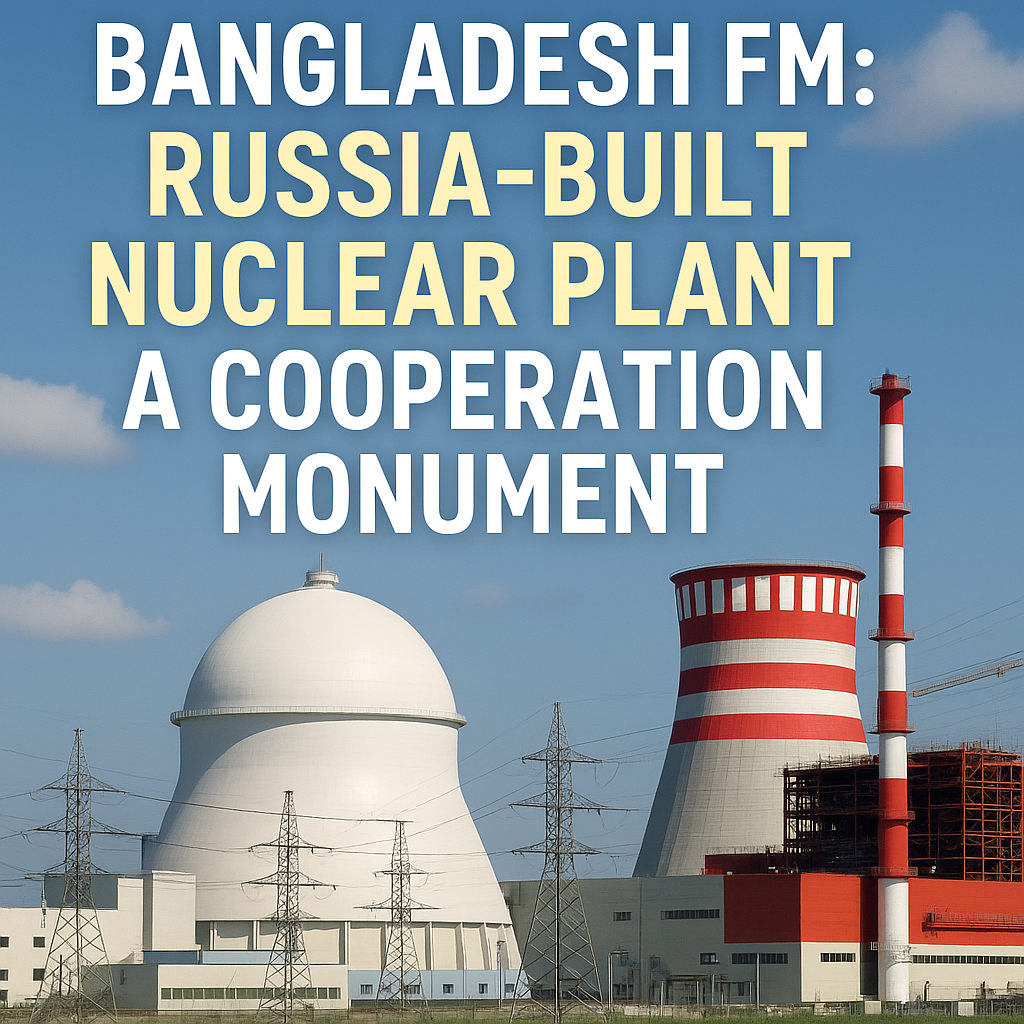
Bangladesh FM: Russia-Built Nuclear Plant a Cooperation Monument
Bangladesh FM: Russia-Built Nuclear Plant a Cooperation Monument
In a recent statement, the Foreign Minister of Bangladesh praised the Russia-built nuclear power plant in the country as a “monument of cooperation” between the two nations. This development has sparked a wide range of reactions, highlighting both the potential benefits and concerns associated with the project.

A Symbol of Strategic Partnership
The construction of the Rooppur Nuclear Power Plant, which is being developed with assistance from Moscow, represents a significant turning point in Bangladesh’s energy landscape. The plant is expected to generate 2,400 megawatts of electricity upon completion and is viewed as a cornerstone in meeting the country’s growing energy demands. Bangladesh FM A.K. Abdul Momen emphasized that this project is not just about energy; it symbolizes “the strengthening of ties” between Bangladesh and Russia, reinforcing a history of cooperation that dates back decades.

Supporters of the plant argue that it could significantly reduce the country’s reliance on fossil fuels, thereby decreasing carbon emissions and promoting sustainable energy use. With Bangladesh facing power shortages, which have hampered economic growth and development, the timely completion of this project could help alleviate these issues. Furthermore, the minister underscored the importance of this plant for achieving Bangladesh’s goal of reaching middle-income status by 2026, linking energy security directly to economic progress.

Concerns and Criticisms
While the Bangladesh government presents the nuclear plant as a transformative project, there are notable concerns that facilitate a more nuanced conversation around the benefits and risks. Critics cite safety concerns associated with nuclear energy, particularly in a country prone to natural disasters like floods and cyclones. The 2011 Fukushima disaster in Japan remains a sobering reminder of the potential hazards linked with nuclear power, further compounded by Bangladesh’s geographic vulnerabilities.
Additionally, there are apprehensions regarding Bangladesh’s dependence on Russia, given the latter’s geopolitical stance and the ongoing conflict in Ukraine. Critics argue that this reliance could have long-term implications for the country’s energy independence and diplomatic relations. The situation has raised questions about whether it is prudent for Bangladesh to deepen ties with Russia amid global concerns over its actions on the world stage.
Diverse Global Perspectives
Responses to Bangladesh’s nuclear power initiative reflect a split somewhere between optimism and caution. Some analysts believe the collaboration with Russia might enhance Bangladesh’s energy sector capabilities and bring in much-needed investment. They argue that nuclear energy, if executed with proper regulations and safety measures in place, could serve as a viable solution to the nation’s pressing energy issues.
Conversely, human rights groups and international policymakers caution against the blind embrace of foreign partnerships in sensitive sectors like nuclear energy. They argue that the project could divert attention from renewable energy investments, such as solar and wind, which may be more in line with global trends toward sustainable and clean energy solutions.
Moreover, there have been discussions concerning the management framework surrounding the nuclear plant, prompting concerns over transparency and governance. As the project unfolds, its alignment with international safety and environmental standards will be closely scrutinized by the global community.
Final Thoughts
The Rooppur Nuclear Power Plant stands as a testament to the evolving dynamics of international relations, demonstrating both the possibilities and challenges of energy collaboration. While the Bangladeshi government continues to advocate for the project’s role in fostering long-term partnerships, lingering doubts about safety, environmental impact, and geopolitical consequences persist. As such, the successful implementation of this nuclear plant will require not only a clear commitment to energy modernization but also rigorous safety oversight, public transparency, and an ongoing dialogue about the broader implications of nuclear power in Bangladesh’s future.