
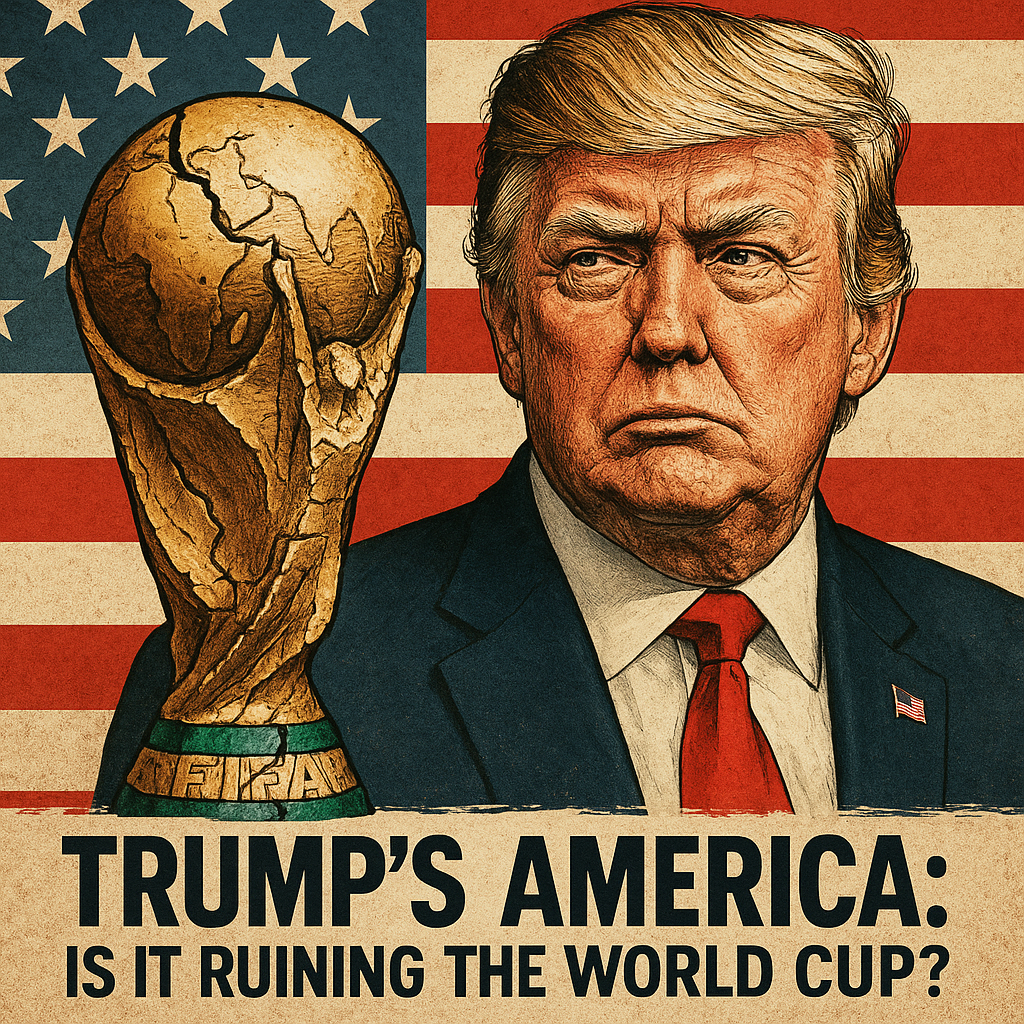
Trump’s America: Is It Ruining the World Cup?
Trump’s America: Is It Ruining the World Cup?
As the world gears up for the much-anticipated 2022 FIFA World Cup, discussions abound about the impact of political dynamics, particularly those stemming from Trump’s America. The convergence of sports and politics has historically evoked both support and skepticism, with the World Cup being no exception. The pressing question remains: To what extent are American policies and rhetoric affecting this global sporting event?

The Political Landscape Affecting Sports
The World Cup has always been a melting pot of international relations, but Trump’s America introduced new layers of complexity. Policies focusing on nationalism, immigration, and trade have shifted the landscape within which global events operate. Critics argue that Trump’s approach has fostered a more divided atmosphere, potentially affecting fans’ experiences and teams’ performances.

Some commentators suggest that the rhetoric of “America First” has polarized opinions on the U.S. Here’s a notable example: France’s Le Monde reported on how, amid rising anti-American sentiment worldwide, international sporting events like the World Cup could become platforms for expressing dissatisfaction with U.S. foreign policy. This sentiment is echoed in various parts of the globe, where American influence is often viewed through a contentious lens.

On the other hand, proponents of Trump’s policies argue that a tone of strength and nationalism can invigorate American teams and players. They point to the notion that a more assertive America can encourage unity and focus within its national teams. However, this view often overlooks how the broader geopolitical consequences reverberate beyond the soccer field.
Economic Ramifications
Economic considerations also emerge as a critical factor in the discourse surrounding Trump’s America and the World Cup. The current administration has taken a hard stance on trade agreements that many international partners rely on. As a result, countries affected by these policies may view the U.S. less favorably during international events.
For instance, the ongoing tariffs on various goods have sparked trade wars, which could lead to boycotts or reduced enthusiasm towards U.S.-hosted sporting events. Al Jazeera highlighted how such economic tensions could color the perceptions of visitors to the tournament. The potential for alienating fans based on economic or political policies underscores the concept that sports are not an island free from the vicissitudes of geopolitics.
Fan Reactions and Cultural Implications
As the World Cup is set to draw a diverse international crowd, the cultural implications of Trump’s America cannot be ignored. Fans are increasingly vocal about their beliefs, and social media amplifies these sentiments, making it hard for sports organizations to remain neutral.
Subsequent to the Trump presidency, a wave of activist movements surged, prompting many fans to carry their protest into the stadiums. Some individuals have stated via platforms like Twitter that they feel disillusioned by American leadership and its implications for the global sporting community. RT News reported instances where demonstrators have protested against U.S. involvement in global events, linking sports to larger socio-political contexts. This phenomenon may deter some spectators from attending, leading to empty seats in stadiums and a muted atmosphere.
Moreover, some international teams have expressed their hesitance to engage with American sponsors and media, given their apprehensions about the current political climate. Such distancing can have direct effects on the World Cup’s brand, viewership, and economic success.
The Challenge of Neutrality
Despite the complexities of politics in sports, FIFA officials are keen on maintaining neutrality. The organization has stated its commitment to uniting nations through sports. However, the realities on the ground tell a different story. The very existence of controversies stemming from U.S. policies can create environments where even football becomes a battleground for political expressions, as various groups leverage the World Cup platform to voice their concerns.
The challenge lies in balancing the enthusiasm of a global sporting event with the weight of political actions. The World Cup’s vibrancy could be overshadowed by a sentiment of division that emerges from the geopolitical stage, making Trump’s America a pivotal factor influencing how this historic event unfolds.
Conclusion: Uncertainties and Future Perspectives
In conclusion, while the debate surrounding Trump’s America and its role in the World Cup illustrates a multitude of viewpoints, there is no clear-cut answer to the impact it has. The interplay between national identity, geopolitical tensions, and economic ramifications creates an intricate web that influences how both fans and teams approach the event.
As the world eagerly awaits the tournament, one thing is certain: the intersection of politics and sports will remain a focal point in discussions. The question remains—will the World Cup be a unifying event that transcends politics, or will it reflect the divisions that characterize the times? Only time will tell, but the shadows of Trump’s America looms large over this global affair, leaving many uncertain about what lies ahead.















