
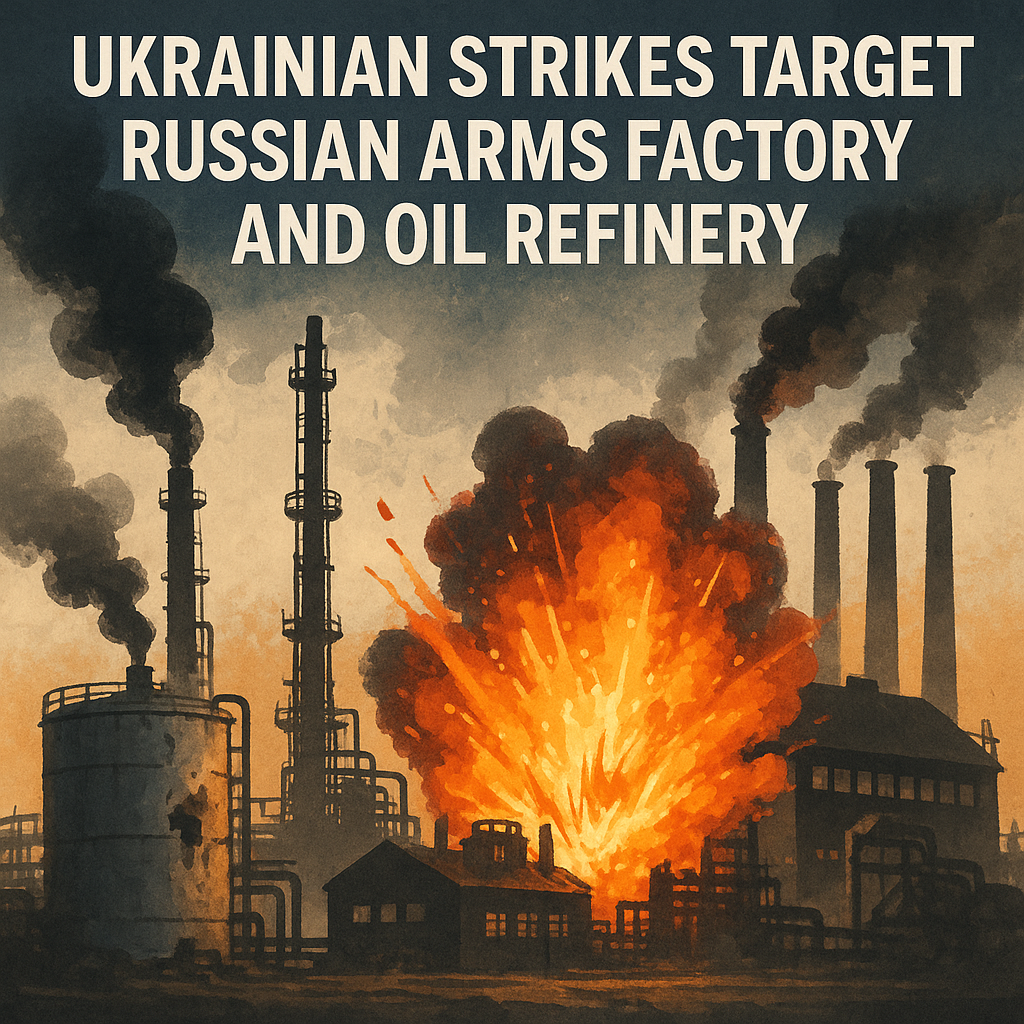
Ukrainian Strikes Target Russian Arms Factory and Oil Refinery
Ukrainian Strikes Target Russian Arms Factory and Oil Refinery
Recent Ukrainian military actions have drawn global attention, particularly with their strikes targeting critical infrastructure deep within Russian territory. Specifically, strikes have been reported against an arms factory and an oil refinery, marking a significant escalation in the ongoing conflict between Ukraine and Russia.

Escalation of the Conflict
As tensions flare, these strikes have been characterized by Ukrainian officials as necessary measures to weaken Russia’s military capabilities. According to reports from Sky News, the Ukrainian military has asserted that such operations are aimed at dismantling supply chains critical to Russian warfare efforts. The targeting of an arms factory—traditionally considered a military asset—was not merely a surprise assault; it signifies Ukraine’s strategic intent to disrupt Russia’s ability to sustain its operations along the front lines.

Multiple sources also indicate that attacks on critical energy infrastructure, such as oil refineries, serve a dual purpose: they not only aim to hinder Russia’s military capabilities but also seek to affect its economy, potentially leading to long-term repercussions for Moscow.

However, this tightening of military tactics raises questions about the ethical implications of conducting military operations on foreign soil. Critics of Ukraine’s actions have voiced concerns over the potential for civilian casualties and the risk of escalating retaliatory strikes from Russia, which could further destabilize the region. The balance between military necessity and humanitarian considerations remains a significant moral challenge in wartime strategy.
The Response from Russia and International Reactions
In response to the Ukrainian strikes, Russia has signaled its resolve to retaliate. Official statements from Kremlin sources emphasize a commitment to safeguarding Russian sovereignty and responding appropriately to what they deem acts of aggression. Russian authorities have indicated that the strikes will provoke a reassessment of their military strategies, potentially leading to increased fortifications along the borders and more assertive military posturing.
The international community’s reaction has been mixed. On one hand, U.S. officials and NATO allies have refrained from directly condemning Ukraine’s strikes, suggesting they acknowledge Ukraine’s right to defend itself. Some analysts argue that such actions could galvanize international support and military aid to Ukraine, reinforcing its position in the ongoing conflict.
Conversely, some nations have expressed concern over the potential for escalation. Al Jazeera has reported that calls for de-escalation have been renewed by countries seeking to mediate conversations between Ukraine and Russia. The fear is that heightened military actions could spiral into a broader confrontation, complicating efforts for peace in the region.
Complexities of Warfare and Diplomacy
This situation embodies the complexities of modern warfare, where traditional battlefield elements intersect with geopolitical strategies. As Ukraine continues to balance defensive strategies with proactive strikes, it navigates a landscape fraught with risks. Critics argue that aggressive operations could alienate potential allies or provoke further aggression from Russia. On the other hand, proponents assert that such strikes are indispensable for Ukraine to reclaim territories and diminish Russian offensive capabilities.
While public opinion in Ukraine largely supports defensive actions that target military assets, there is a lingering anxiety over the broader implications. As highlighted in multiple analyses, the uncertainty surrounding Russia’s next moves complicates the situation. Would the Kremlin escalate its attacks in response, or reassess its strategy in light of international pressures?
As the conflict unfolds, the stakes remain high, and the need for dialogue continues to grow. The path forward may require a blending of military strategy with diplomatic engagements to explore possibilities for resolution, even amid ongoing hostilities.
Conclusion
The recent Ukrainian strikes against a Russian arms factory and oil refinery are emblematic of a shifting approach in the ongoing conflict. While these actions may serve immediate tactical purposes, they also engender broader implications that could reverberate far beyond the battlefield. As both sides recalculate their next moves, the specter of escalation looms large, necessitating a delicate balance between military objectives and the pressing need for diplomatic engagement. With the situation continually evolving, it is essential to monitor developments and their impact on regional stability and international relations.















