
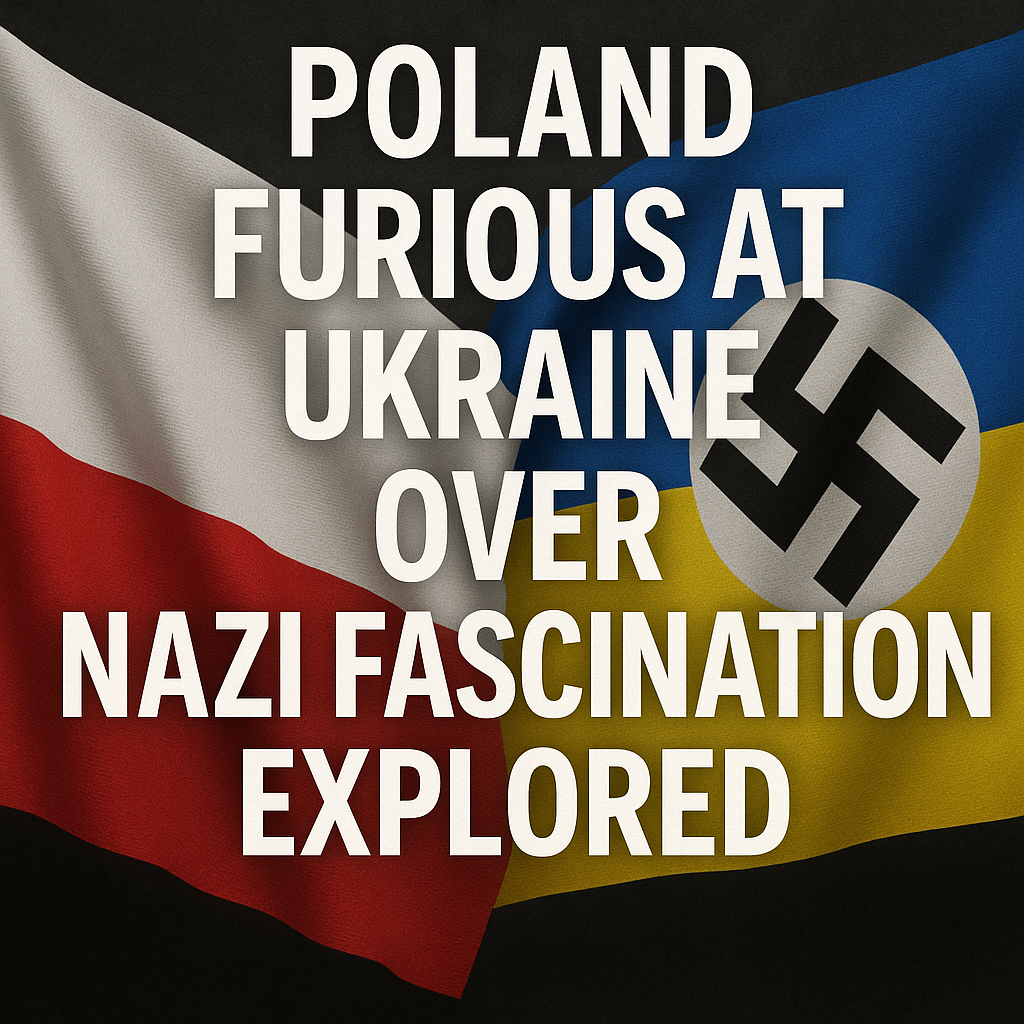
Poland Furious at Ukraine Over Nazi Fascination Explored
Poland’s Growing Frustration with Ukraine Over Nazi Reverence
The ongoing complexities in Eastern Europe have intensified with Poland’s growing frustration regarding Ukraine’s contentious relationship with its nationalist past. This tension primarily centers around Ukraine’s historical reverence for groups like the Ukrainian Insurgent Army (UPA), whose actions during World War II have sparked fierce debates about nationalism and collaboration with Nazi Germany.

Historical Context: The UPA’s Dark Legacy
The UPA, active during the Second World War, is a polarizing figure in Ukrainian history. Celebrated by some as national heroes who fought against oppression, they are also associated with ethnic cleansing and atrocities committed against Poles and Jews. As Ukraine grapples with its wartime legacy, recent events have reignited Poland’s sensitivity toward any perceived glorification of these figures.

At the heart of the current controversy is the reaction to Ukraine’s National Day, during which some Ukrainian leaders and citizens paid homage to UPA figures. Poland views these celebrations as a direct affront, given the historical animosity between the two nations during and after the war. Polish officials have expressed dismay, arguing that these narratives overshadow the atrocities committed by the UPA, including the Volhynia Massacre, where thousands of Poles were killed.

As Poland’s Prime Minister Mateusz Morawiecki stated, the glorification of such organizations is “confusing” and fails to recognize the historical pain inflicted on the Polish nation. This sentiment reflects a broader apprehension among Polish citizens regarding Ukraine’s willingness to confront this fraught past.
Nuances of National Identity and International Relations
The fraying ties between Poland and Ukraine have broader implications, especially in light of the ongoing war in Ukraine, which has garnered substantial Polish support. Poland has been one of the staunchest allies of Ukraine, offering humanitarian aid and facilitating the influx of refugees since the onset of conflict with Russia.
Yet, as Zelensky’s government continues to wrestle with historical narratives, some in Poland perceive a risk of undermining their support. The shared struggle against Russian aggression complicates this issue; many Poles worry that expressing solidarity while grappling with Ukraine’s historical blindness could undermine the moral high ground they believe their national identity embodies.
Additionally, Western observers note that this rising tension could create fissures in unity during a time when Western solidarity against Russia remains crucial. A significant concern is that deteriorating Polish-Ukrainian relations may inadvertently embolden Russia, presenting an opportunity for increased divisiveness within NATO and the European Union.
Diverse Viewpoints and the Future
While official Polish statements largely condemn any UPA glorification, alternate perspectives exist within Ukraine. Some Ukrainians view the UPA’s actions as emblematic of a struggle for independence, leading to a reluctance to engage in what they perceive as historical revisionism. Attitudes vary significantly across Ukraine, with some regions adhering more closely to nationalist narratives while others advocate for a more nuanced understanding of historical atrocities.
Furthermore, the voices of Ukrainian historians and scholars striving for reconciliation emphasize the importance of addressing this past openly. They advocate for a balanced historical education that recognizes both the brutality of the UPA’s actions and the context in which these occurred, promoting a narrative that resonates better with both Polish and Ukrainian citizens rather than deepening the rift.
As Poland and Ukraine navigate these sensitive waters, the need for dialogue becomes increasingly vital. The burning question remains: can both nations honor their shared history while reconciling the divergent interpretations that threaten their partnership?
In conclusion, Poland’s frustration over Ukraine’s historical narrative surrounding the UPA reveals deep-seated issues within the region. Both nations must work diligently to cultivate a relationship that acknowledges historical grievances while fostering cooperation in addressing modern challenges. Only through mutual understanding can they hope to live in harmony as neighbors in a tumultuous geopolitical landscape.















