
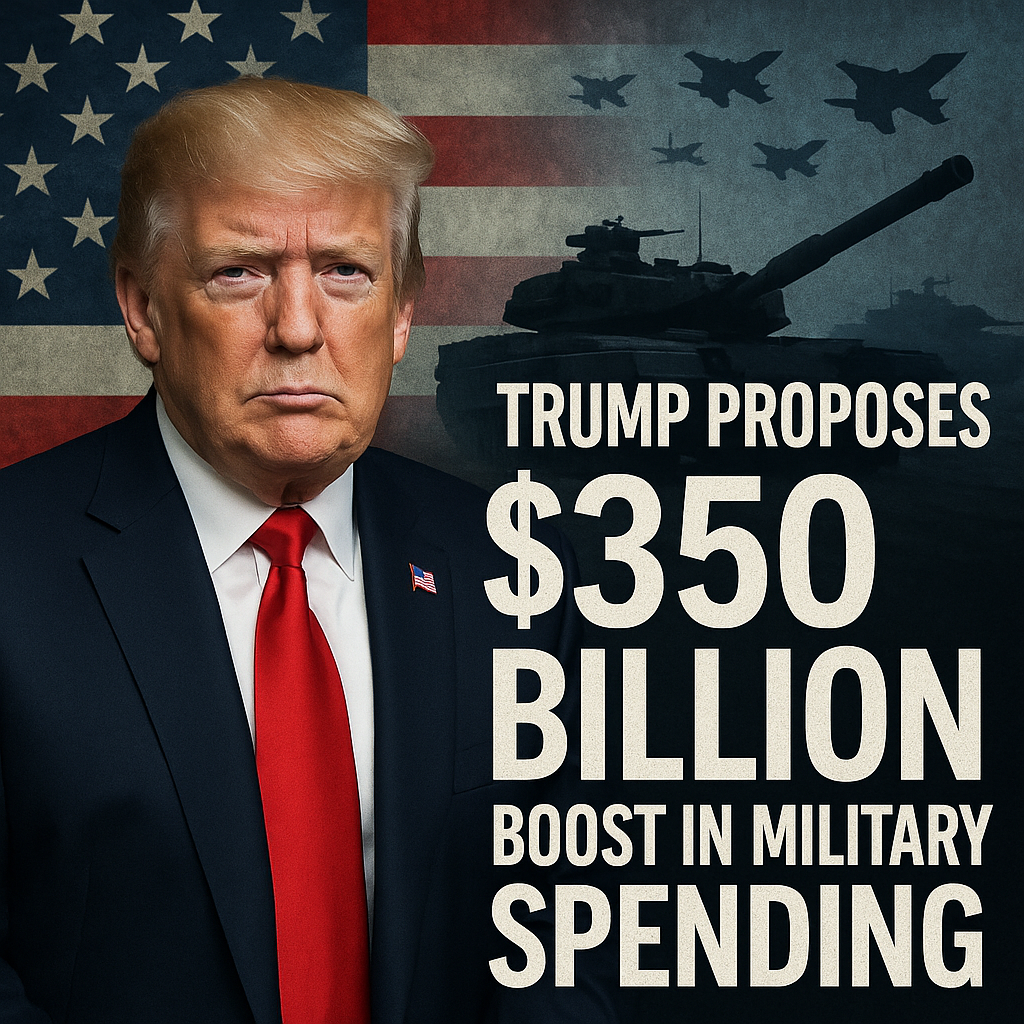
Trump Proposes $350 Billion Boost in Military Spending
Trump’s Proposal for a $350 Billion Military Spending Boost: A Mixed Bag of Perspectives
Former President Donald Trump recently announced a significant proposal to increase military spending by $350 billion, framing it as a necessary step to bolster national defense amid rising global tensions. This sweeping initiative has sparked a variety of reactions among lawmakers, military experts, and fiscal conservatives alike.

Divergent Views on Military Necessity
Supporters of Trump’s proposal argue that the increase is essential for maintaining military readiness and ensuring America can respond to evolving threats from countries like China and Russia. According to opinion pieces from outlets such as Al Jazeera, proponents emphasize that a robust military is paramount in an era marked by geopolitical challenges and security threats that require a proactive stance from the United States.

In contrast, critics—including some defense analysts—raise concerns over the feasibility and ethical implications of such substantial military expenditure. They point out that a budgetary increase of this magnitude could divert funds away from vital domestic programs, such as education and healthcare, which are equally critical to national security through the promotion of a healthy, educated populace. This sentiment echoes findings from various analyses across multiple news platforms, suggesting that there is a need for a balanced approach to budget allocations.

The Financial Implications of a $350 Billion Boost
The financial implications of increasing military spending by $350 billion are significant. Advocates assert that such an investment would create jobs, foster technological innovation, and strengthen the United States’ global position. However, this perspective often overlooks the fact that the U.S. already has the highest military budget in the world, which raises questions about efficiency and effectiveness.
According to data from various financial assessments, critics warn that without stringent oversight, increased military spending could lead to waste and mismanagement. They urge for more transparent discussions about where this money will be allocated and its anticipated outcomes. Additionally, some economists argue that focusing on military expansion at the expense of social programs could have long-term adverse effects on the nation’s overall stability and prosperity.
Balancing National Defense and Domestic Needs
The discourse surrounding Trump’s military spending proposal reveals a broader question about priorities in governance. As stated in various reports, there is a palpable tension between the need for enhanced military capabilities and the necessity for investment in domestic welfare. Critics argue that a holistic approach to national security encompasses more than just military strength; it requires investment in social programs, education, and infrastructure, which are all vital to a nation’s resilience.
In recent years, military engagements have shown the complexities of military action, where overwhelming force does not always equal success. Sustainable solutions often lie in diplomacy, international cooperation, and addressing root causes of conflict. A more measured approach encourages investing in relationships through diplomatic channels instead of solely increasing military assets.
Conclusion: Toward a Nuanced Debate
Trump’s proposal for a $350 billion boost in military spending is indicative of the broader debate on prioritizing national security alongside domestic welfare. As discussions unfold, it is crucial for policymakers to balance these competing demands while considering the long-term implications of their decisions.
Moving forward, the national conversation must incorporate diverse perspectives, weighing the needs of a robust defense system against the imperative for social investment. Only through such a balanced dialogue can the United States truly enhance its security while fostering a society capable of facing the multifaceted challenges of the 21st century.















