
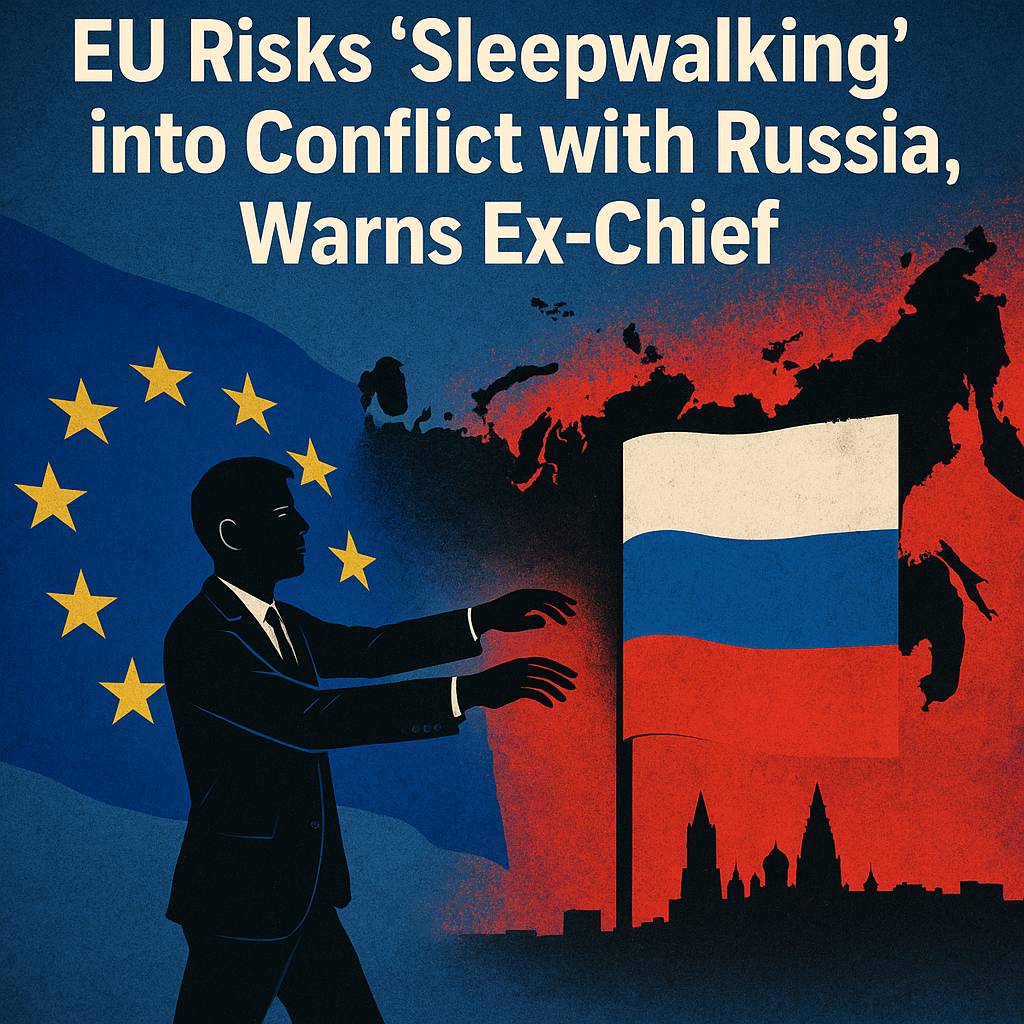
EU Risks ‘Sleepwalking’ into Conflict with Russia, Warns Ex-Chief
The European Union is facing a precarious situation as warnings intensify about potential conflicts with Russia. Recent commentary from former officials and geopolitical analysts suggests that the EU could be ‘sleepwalking’ into a confrontation with Moscow. This concern resonates amid rising tensions and ongoing geopolitical maneuvers that could have far-reaching implications.

Rising Tensions in Eastern Europe
The scenario that some analysts are painting is unsettling. Citing the historical context and recent developments, the former German Chancellor Gerhard Schröder has voiced concerns about the EU’s foreign policy approach towards Russia. According to RT, he highlights that the EU may be unprepared for the complexities of the current geopolitical landscape. With the ongoing conflict in Ukraine and the EU’s reaction to it, doubts are surfacing about their long-term strategy.

The conflict in Ukraine has ignited fears not just about territorial integrity but also about the potential for broader conflict. Amidst economic sanctions and military support for Ukraine, former leaders worry that the EU’s aggressive posturing may provoke Russia further, leading to unforeseen consequences. As tensions rise, so do debates about whether the EU is genuinely safeguarding its interests or potentially escalating conflict.

Differing Visions Within the EU
Contrasting perspectives emerge within the halls of the EU. Some member states argue for a robust military response and unwavering support for Ukraine, emphasizing that a strong stance against Russian aggression is vital for European security. Others advocate for diplomatic engagement as a means to diffuse tensions, stressing that negotiation may prevail where military might could lead to unnecessary confrontation.
Al Jazeera’s coverage points to the division among member states on how to handle relations with Russia. Baltic nations, for example, often push for tougher measures, while countries like Hungary and Germany exhibit a more cautious approach, advocating for dialogue. This divergence in strategies raises questions about the EU’s coherence as a political entity and whether unanimity on foreign policy can be achieved in the face of such stark differences.
The Importance of Unity and Strategy
The potential for ‘sleepwalking’ into conflict underscores an imperative for clear and coherent strategy within the EU. Analysts argue that a unified foreign policy is crucial, not just in response to Russia, but as a model for future engagements with global powers. Without this unity and clarity, the risk for miscalculation grows substantially.
A robust European defense strategy may be required to counteract voices urging a less confrontational approach, emphasizing that protection of borders and allies must remain a priority. However, this approach is laden with the complexities of extending military commitments across different theaters. The divergent approaches within the EU reflect deeper ideological splits that could hinder a consolidated front.
Emphasizing Diplomatic Solutions
Adding another layer to the conversation, thinkers from various policy institutes argue for a return to diplomacy as a frontline strategy. The potential for peace negotiations and dialogue remains, even amid hostility. Critics of the hardline approach caution that military escalation could isolate Europe further and lead to a cycle of retaliation that benefits no one involved. By focusing on diplomatic solutions, the EU might not only avert conflict but also open channels for more meaningful, long-term stability.
Furthermore, a unified stance that incorporates diplomatic channels while preparing for contingencies is essential. This balance—between deterrence and dialogue—will shape the EU’s future interactions with Russia, determining whether they indeed ‘sleepwalk’ into conflict or navigate wisely through the evolving landscape.
Conclusion: Navigating a Complex Landscape
As the situation unfolds, Europe stands at a critical juncture. Each decision will require careful weighing of risks and consequences. The discourse around EU-Russia relations features a complex interplay of hardline and diplomatic strategies, each with its proponents and opponents. Awareness of these divergent viewpoints and a commitment to dialogue could prevent the EU from straying into avoidable conflict, changing the trajectory of European security for generations to come. Ultimately, thoughtful engagement might be the key to avoiding the dire outcome of unintentional escalation with Russia.















