
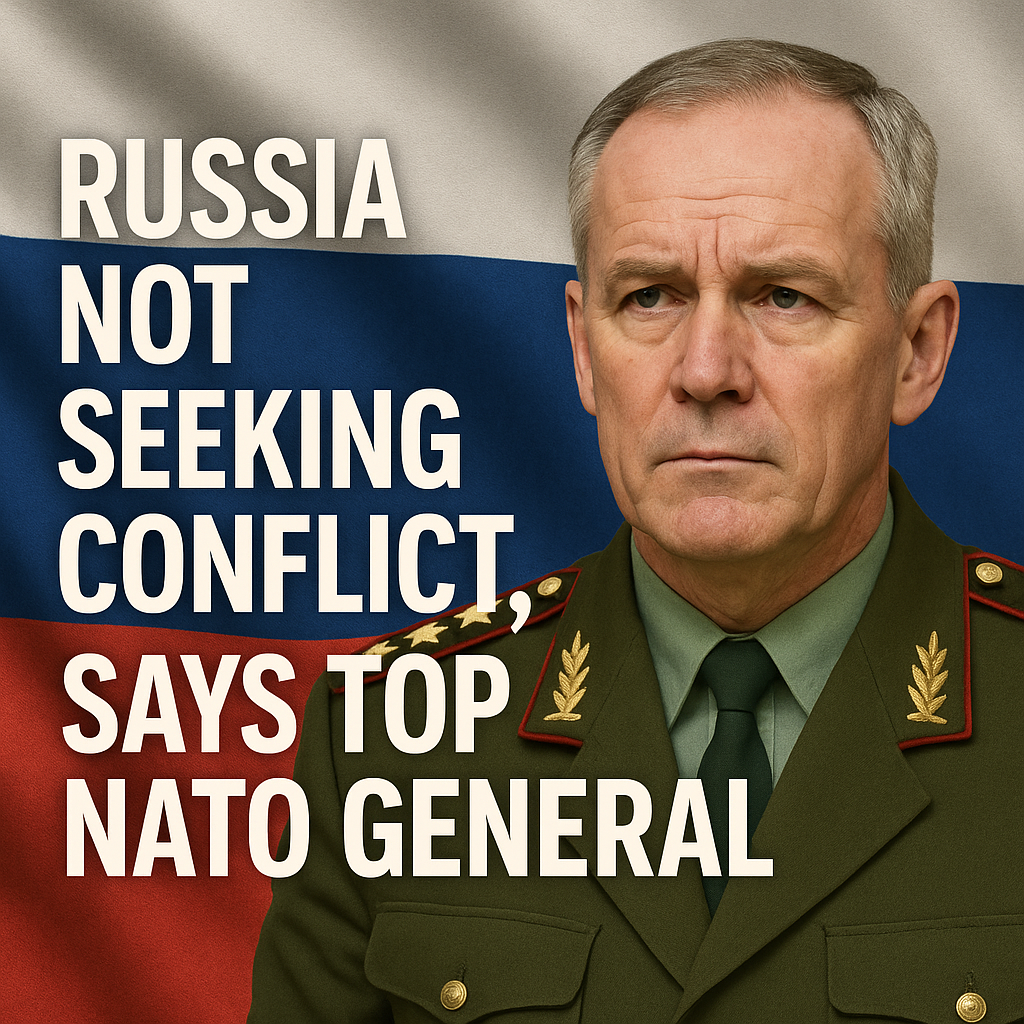
Russia Not Seeking Conflict, Says Top NATO General
Russia’s Stance: Not Seeking Conflict, According to NATO’s Top General
In recent statements, a high-ranking NATO general asserted that Russia is not aiming for conflict, a claim that adds another layer to the complex geopolitical landscape currently surrounding Eastern Europe. The declarations, emerging amidst heightened tensions caused by military movements and historical grievances, reflect a nuanced stance that invites both skepticism and optimism among international observers.

Understanding the Context
The backdrop of this assertion is crucial for a comprehensive understanding. Russia’s military actions in Ukraine, which began in 2014 with the annexation of Crimea and escalated dramatically in 2022, have led to persistent tensions with NATO member states. This recent comment from NATO reflects a diplomatic effort to reduce animosity and highlight potential diplomatic avenues.

However, while NATO’s perspective emphasizes a non-confrontational approach from Russia, many experts argue that the Kremlin’s historical behavior suggests otherwise. A report from Al Jazeera highlights that while some NATO leaders may choose to interpret Russia’s actions through a lens of restraint, continued military build-ups along the Eastern frontiers demonstrate a readiness that contradicts a purely defensive posture.

Divergent Perspectives on Russia’s Intentions
NATO’s Optimistic Interpretation
According to the statements made by NATO’s top military official, the organization interprets Russia’s rhetoric and its current military stance as not indicative of an impending escalation. This viewpoint is echoed in various interviews and analyses, suggesting that Russia may be using military posturing as a bargaining tool rather than as a precursor to war.
Supporters of this perspective argue that diplomatic channels, such as back-channel communications and strategic dialogues, are ongoing and aim to de-escalate tensions. The NATO general’s remarks could be seen as part of a broader strategy to encourage negotiation rather than confrontation, underscoring the alliance’s commitment to finding common ground.
Skepticism and Counterarguments
Conversely, skepticism abounds regarding Russia’s true intentions. Critics assert that the persistent military mobilization and aggressive foreign policy represent a deliberate strategy rather than mere posturing. An article from RT emphasizes that even though official statements may downplay aggressive ambitions, the Kremlin’s military exercises and troop deployments convey a different narrative, raising alarms among neighboring countries.
In this context, it’s essential to note that many Eastern European nations remain wary of Russia. They perceive NATO’s statements as overly optimistic and potentially blind to underlying threats. Historical precedence, particularly Russia’s annexation of Crimea and its involvement in various regional conflicts, fuels this apprehension. This tension challenges the notion that a simple desire for peace can dictate the actions of a nation whose historical strategy often appears expansionist.
The Uncertain Path Forward
As the situation evolves, the implications of these conflicting perspectives become even more critical. While NATO’s top general’s assertions may foster hopes for diplomacy, the realities on the ground present a more complex picture. Multiple factors, including economic sanctions, political pressures, and military strategies, intersect to create an intricate web of international relations that resists simple categorization.
The absence of a clear consensus on whether Russia is genuinely pursuing peace or preparing for further conflict continues to create volatility in the region. As both NATO and Russia navigate this fraught landscape, the potential for miscommunication or misinterpretation remains high.
Conclusion: Navigating Diplomatic Waters
Given the contrasting viewpoints—NATO’s assertion of Russia’s non-aggression versus the skepticism regarding its militaristic posture—it’s evident that international relations are characterized by intricate dynamics. The statement from NATO’s top general presents an opportunity for dialogue; however, it also necessitates a cautious approach.
Moving forward, it is essential that NATO and Russia engage in transparent and substantive discussions, recognizing the ingrained historical complexities that inform their interactions. Understanding each other’s narratives is crucial for reducing the risk of escalation and fostering a more stable future for Eastern Europe and beyond.















