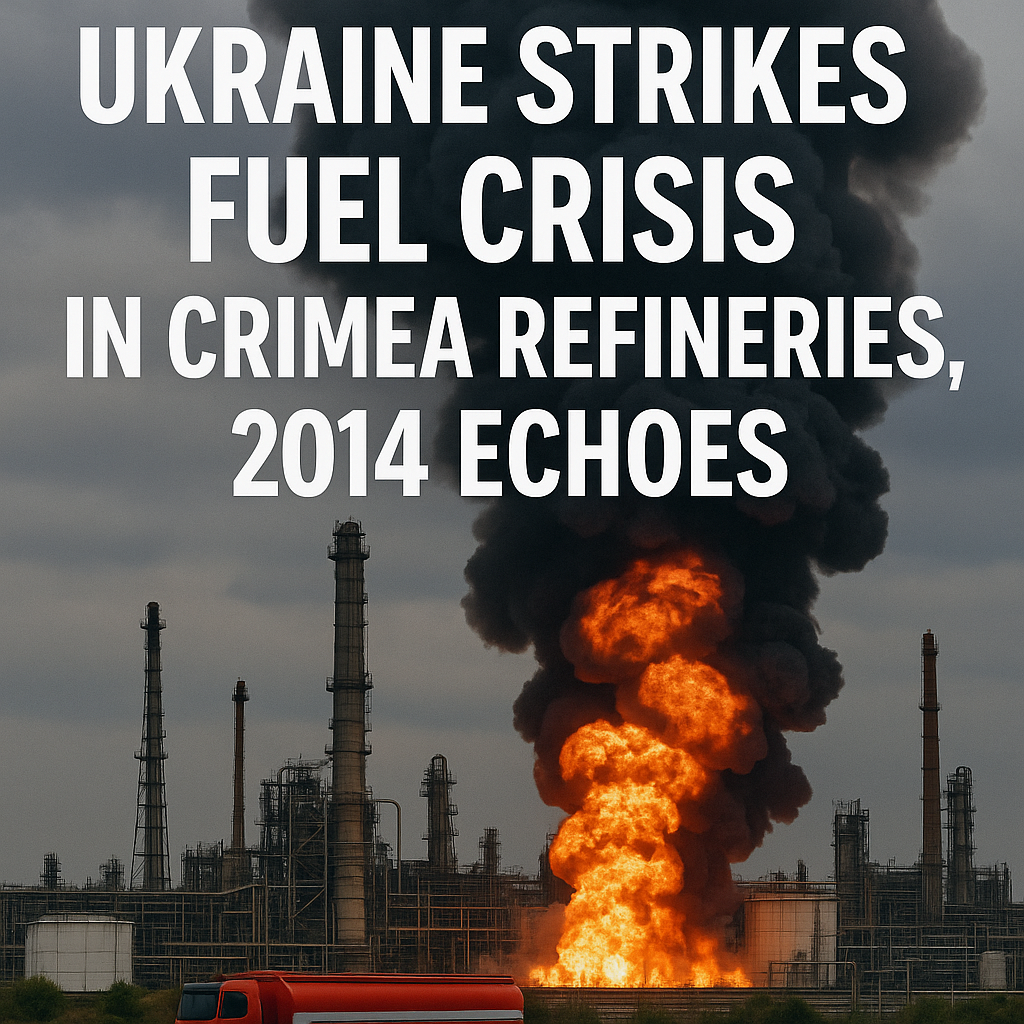
Ukraine Strikes Fuel Crisis in Crimea Refineries, 2014 Echoes
Ukraine Strikes Fuel Crisis in Crimea Refineries, 2014 Echoes
In recent weeks, Ukraine’s military operations have escalated significantly, leading to strikes on key fuel infrastructure in Crimea. These attacks have resulted in the worst fuel crisis the peninsula has faced since 2014, prompting a complex series of responses and a renewed examination of the long-standing conflict between Ukraine and Russia.

Impact of the Strikes on Crimea’s Fuel Infrastructure
The strikes targeted multiple refineries and fuel depots, crippling the supply chain that supports both civilian and military vehicles on the peninsula. Ukraine has justified these actions as a part of its broader strategy to weaken Russian capabilities amidst ongoing tensions. By disrupting fuel supplies, Kyiv aims not only to diminish logistics for Russian forces but also to send a clear message of resistance.

Reports indicate that the scarcity of fuel has already led to long queues at gas stations, with many residents experiencing difficulties in securing basic transportation needs. According to Sky News, the situation is comparable to the crisis that emerged in 2014, when Russia annexed Crimea, prompting international sanctions and sanctions on energy supplies.

Meanwhile, Al Jazeera has highlighted that the latest strikes have exacerbated existing tensions, with Russian authorities scrambling to secure alternative supply routes to mitigate the impact of the crisis. The situation raises questions about the sustainability of fuel resources in Crimea, where infrastructure has historically been a focal point during conflicts.
Diverging Perspectives on the Crisis
Different sources provide varied interpretations of the crisis and its implications for the region. Pro-Russian outlets, such as RT, depict Ukraine’s actions as reckless provocations that risk further igniting hostilities. They argue that targeting civilian infrastructure violates international norms and could lead to catastrophic humanitarian consequences. Some analysts suggest that the strikes could galvanize public support in Russia, rallying citizens around their government in a moment of perceived vulnerability.
Conversely, Ukrainian perspectives emphasize the necessity of these military actions in the face of ongoing aggression. Supporters argue that crippling fuel supplies can diminish Russia’s warfighting capabilities and provide a necessary impetus for international allies to deepen their support for Ukraine. This viewpoint aligns with the broader sentiment that Ukraine must proactively defend itself and its sovereignty, even if it means causing disruptions that mirror historical conflicts.
Echoes of the Past: 2014 and Beyond
The current fuel crisis has drawn striking parallels to the events of 2014, which was marked by the annexation of Crimea and subsequent armed conflict in Eastern Ukraine. Analysts reflect on how the geopolitical landscape has dramatically shifted since then but also recognize that certain dynamics remain stubbornly consistent. The undercurrents of nationalism, territorial integrity, and the role of external powers all echo the sentiments of the past, leading many observers to question whether history is repeating itself.
Despite these similarities, the response from the international community has evolved. While sanctions were the primary response in 2014, today’s situation includes a mix of sanctions and military aid, as NATO countries continue to bolster Ukraine’s defense capabilities. This shift indicates a growing recognition of the need for a robust response to Russian aggression, reflecting lessons learned from the earlier phase of the conflict.
Conclusion: A Complicated Web of Responses
The fuel crisis in Crimea serves as a crucial juncture in the ongoing conflict between Ukraine and Russia. As military strikes lead to tangible consequences for civilians on the peninsula, the international community must navigate a complex web of responses that balance support for Ukraine while considering the potential for escalating violence. As evident from the diverse perspectives surrounding this issue, the situation is anything but clear-cut. Moving forward, addressing the humanitarian implications of the conflict will be as essential as stabilizing geopolitical tensions, underscoring the urgent need for a path to peace that recognizes the multifaceted nature of this enduring crisis.