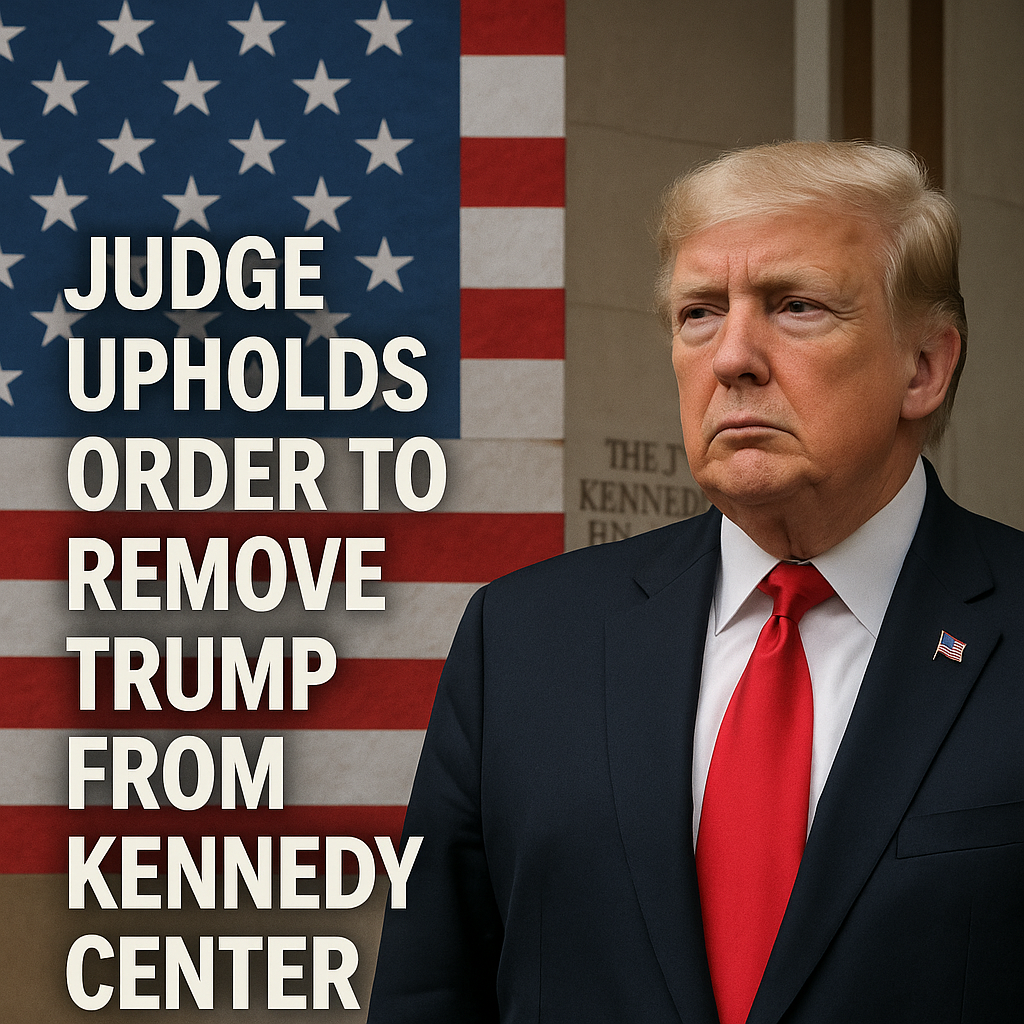
Judge Upholds Order to Remove Trump from Kennedy Center
Judge Upholds Order to Remove Trump from Kennedy Center
In a significant legal ruling, a judge has upheld an order mandating the removal of former President Donald Trump’s name from the Kennedy Center for the Performing Arts. This decision is part of a broader conversation regarding the legacy of public figures and the institutions that honor them.

The Rationale Behind the Removal
The Kennedy Center, a prestigious arts organization in Washington, D.C., initially chose to honor Trump by naming its concert hall after him in 2017. This decision was met with a mixed response. Trump supporters praised the acknowledgment of his presidency, while critics argued that his policies and rhetoric contradicted the values that the arts community traditionally champions. The judge’s recent ruling emphasizes that public institutions must reflect the integrity and ethical considerations held by the communities they serve.

According to legal experts, the ruling is grounded in the First Amendment and the idea that federal institutions should not appear to endorse any political figure, especially one as polarizing as Trump. By upholding the order, the court is essentially saying that public art spaces should aim to foster unity rather than division.

Public Reactions and Implications
Reactions to this ruling have been far from uniform. Many applauded the decision as a necessary step in upholding the integrity of public institutions. One critic of Trump’s legacy mentioned, “Honoring a figure tainted by controversies undermines the very essence of what the Kennedy Center stands for.” This perspective highlights a growing sentiment that public spaces must prioritize shared values over individual recognition.
Conversely, Trump’s supporters view the removal as a politically motivated act that undermines the achievements of his presidency. One vocal advocate argued, “This is an attempt to erase history and silence the voices of those who supported him.” This position illustrates the deepening partisan divide in contemporary discourse surrounding public figures and their legacies.
Moreover, the debate raises questions about how society chooses to memorialize historical figures, particularly those whose legacies are contentious. Should institutions prioritize moral and ethical considerations, or should they remain neutral and honor historical significance?
A New Precedent for Public Spaces
The ruling sets a notable precedent regarding the way in which legacies are treated in public institutions. If federal courts are willing to intervene in matters of naming rights and institutional honorifics, it opens the door for further challenges concerning the names of other controversial figures. As public opinion evolves, institutions may frequently find themselves in the position of reassessing past honors based on current societal values.
In response to this ruling, other arts and cultural institutions may also re-evaluate their associations. Many are now weighing the implications of honoring figures whose actions, once celebrated, may not align with contemporary values. While some institutions may begin removing names or symbols that evoke division, others may choose to keep them as part of an Educational and contextual conversation about history.
This ongoing discussion about remembrance and recognition in public spaces highlights the complexities surrounding how we view the past and the figures who shaped it. The balancing act between honoring history and ensuring that public spaces reflect current societal values will indeed be a pivotal issue in years to come.
Conclusion: Navigating a Polarized Landscape
The judge’s ruling to uphold the order to remove Trump’s name from the Kennedy Center serves as a catalyst for broader discussions about public accolades, memory, and legacy in today’s polarized culture. While it reinforces the idea that institutions should reflect collective values, it also highlights the tensions between differing viewpoints on what those values should encompass.
As society continues to grapple with the legacies of its leaders, the outcome of this case may influence other institutions in their decision-making processes moving forward. Ultimately, these developments underline a fundamental question: how do we, as a society, choose to honor those who have played pivotal roles in our shared history, especially when opinions about their impact can be so deeply divided?