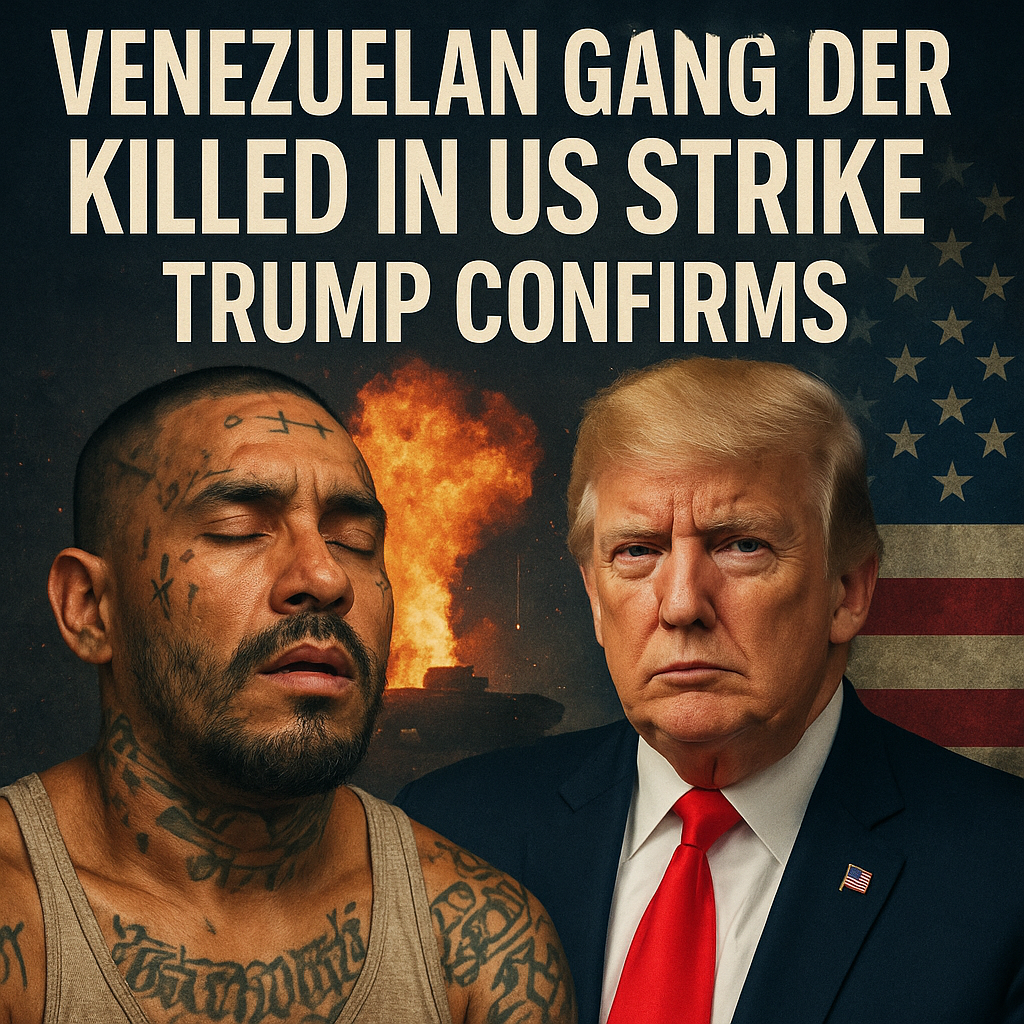
Venezuelan Gang Leader Killed in US Strike, Trump Confirms
Venezuelan Gang Leader Killed in US Strike: Implications of a Controversial Operation
The recent news of a Venezuelan gang leader being killed in a U.S. military strike has sparked significant discussion regarding the implications of U.S. involvement in foreign conflicts. Donald Trump confirmed the operation, claiming it was a necessary step to combat drug trafficking and violence that has plagued the region. This incident intersects multiple complex narratives, including U.S. foreign policy, regional stability, and the ongoing humanitarian crisis in Venezuela.

The Details of the Operation
The targeted operation resulted in the death of José Manuel ‘El Chaca’ Cordero, who was linked to a series of criminal activities, including drug trafficking and extortion. According to U.S. sources, Cordero was responsible for a considerable influx of narcotics into the United States, exacerbating the country’s longstanding battle with drug-related violence. Officials have dubbed the strike a success, framing it as a decisive action against organized crime that poses a direct threat to American citizens.

However, the context of this strike raises several questions about legality and ethics. Critics argue that unilateral military actions by the U.S. violate sovereignty, particularly in a region already struggling with its own political and economic crises. The Venezuelan government has condemned the strike, claiming it as an act of aggression that highlights the U.S.’s tendencies to intervene in domestic matters of other nations under the guise of “national security.”

The Complexity of U.S. Involvement
The operation has reignited debates on U.S. interventionism. Proponents argue that the action was warranted given the increasing influence of gangs in Venezuela, which has destabilized the country and contributed to the displacement of millions of its citizens. A report from Al Jazeera highlights the depth of the humanitarian crisis, citing that a staggering 7 million Venezuelans have fled the country due to violence and lack of resources. From this perspective, targeting gang leaders could be seen as addressing a root cause of the migration crisis.
In contrast, others caution against this perspective by noting that such military actions may only intensify local conflicts without addressing systemic issues. The efficacy of military strikes in solving deeply entrenched problems like corruption, poverty, and governance in Venezuela is highly debatable. RT’s coverage suggests that the U.S. might be overstepping its bounds and that this approach could further alienate the Venezuelan populace, who may view these actions not as liberating but as oppressive.
The Broader Impact on Venezuelan Society
The implications of this strike extend beyond immediate political repercussions. In a nation where public trust in institutions is already waning, such military actions might exacerbate feelings of resentment toward foreign involvement. Many Venezuelans see the U.S. as an outsider with its own agenda, often prioritizing geopolitical leverage over the well-being of ordinary citizens.
Moreover, the killing of a gang leader, while it might disrupt certain criminal activities temporarily, does little to address the broader socio-economic conditions that lead to crime and violence. The cyclical nature of poverty and crime enforcement in Venezuela means that simply removing individuals from the equation does not create lasting change. A more holistic response involving diplomatic engagement and assistance may be necessary to foster stability and hope for the Venezuelan people.
Conclusion: A Path Forward
The death of José Manuel ‘El Chaca’ Cordero raises more questions than answers about U.S. foreign policy and its commitment to intervene in the affairs of other nations. While there may be justification for targeting individuals who threaten U.S. security, it is essential to consider the long-term impacts of such actions on Venezuelan society and regional stability.
Ultimately, striking a balance between addressing immediate security concerns and fostering cooperative, sustainable solutions remains a complex challenge. As the humanitarian situation in Venezuela continues to deteriorate, the international community must contemplate more comprehensive strategies that go beyond military actions to support the people in genuine need.