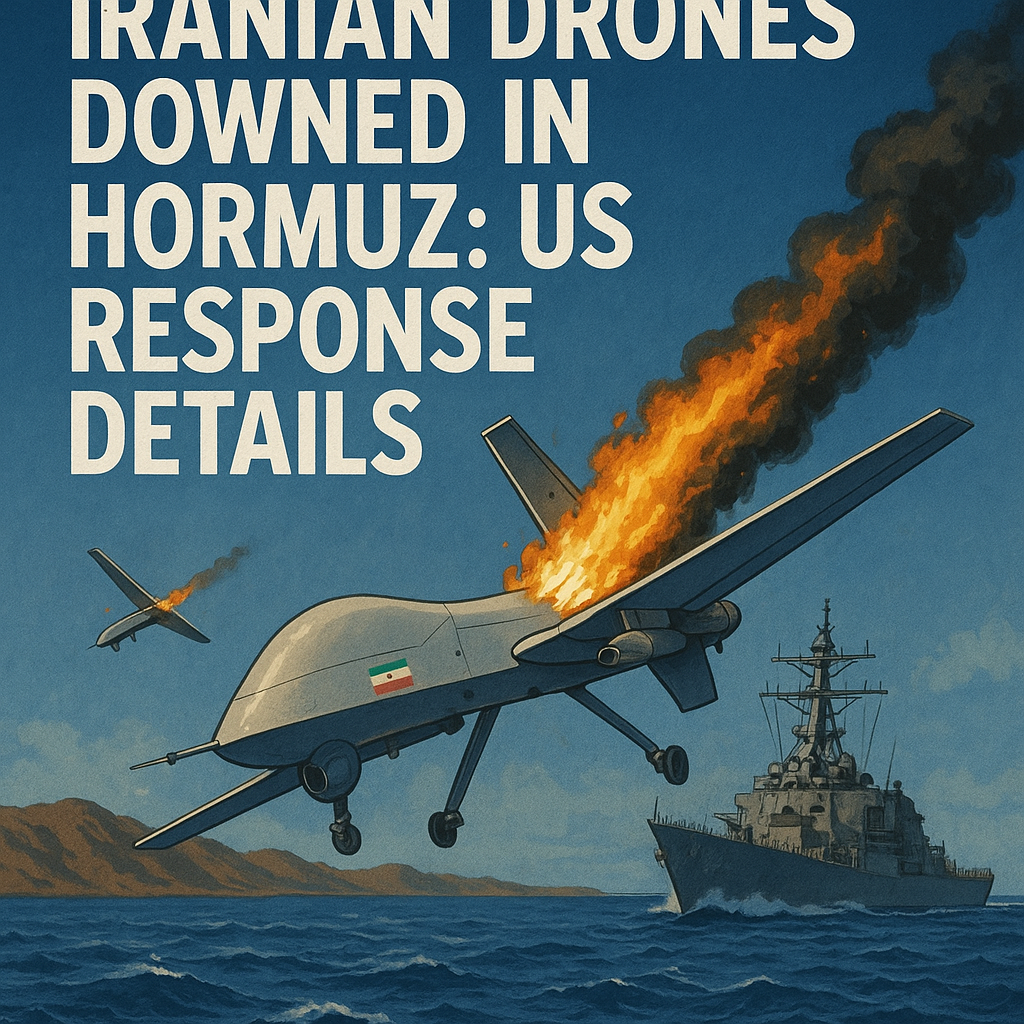
Iranian Drones Downed in Hormuz: US Response Details
Iranian Drones Downed in Hormuz: US Response
In recent developments, incidents involving Iranian drones being downed in the strategic waters of Hormuz have heightened tensions in the region, compelling a multifaceted response from the United States. This scenario is underscored by wider geopolitical implications and ongoing struggles for dominance in this vital maritime passage.

The Incident: What Happened?
Reports confirm that a pair of Iranian drones were intercepted in the Strait of Hormuz, a critical waterway that sees a significant portion of the world’s oil shipments. U.S. Navy ships were involved in the engagement, which has been characterized by varying perspectives. Some sources cite the U.S. military’s meticulous operational protocols in executing the downing of these drones, emphasizing the balance of power and the defensive nature of their actions.

For instance, the U.S. Central Command stated that the intercept was carried out to ensure the safety of ships transiting through these international waters. This framing positions the U.S. as a stabilizing force, acting to deter aggression while maintaining freedom of navigation.

Diverging Perspectives on U.S. Actions
However, contrasting narratives emerge regarding the implications of the U.S. response. According to reports from RT, Iranian officials condemned the action as an affront to their sovereignty, warning that such incidents could exacerbate existing tensions. They assert that the drones were conducting routine surveillance and that their downing was part of a broader strategy by the U.S. and its allies to exert control over regional airspace and maritime routes.
On the other hand, experts from Al Jazeera offer a more nuanced view, describing the incident as indicative of a larger pattern of provocations between the U.S. and Iran. They note that while the U.S. aims to project strength and deter Iranian military expansion, Iranian leaders may leverage such confrontations to rally domestic support and consolidate their standing among regional allies.
Implications for Regional Stability
The downing of drones not only highlights military capabilities but also reflects the fragile state of Iranian-U.S. relations. Each incident can act as a litmus test for broader diplomatic engagements—or the lack thereof. Responses to these events have broader ramifications, as they can influence international oil markets and lead to increased military presence in the region.
– Geopolitical Dynamics:
– The Strait of Hormuz remains a flashpoint where military maneuvers can spark rapid escalations.
– Iran’s show of strength via drone technology has shifted the paradigm of regional military strategy, prompting countermeasures from the U.S.
– Economic Impacts:
– Anticipated ripples from such military actions can affect global oil prices, influencing financial markets amid already tight supply chains.
Given the numerous stakeholders involved—the U.S., Iran, regional partners, and global economic players—the path toward any resolution appears fraught with complexities.
Conclusion: A Cautious Outlook
As we analyze the trajectory of these events, the conversation surrounding Iranian drones and U.S. responses underscores the intricate dance of diplomacy and military readiness in one of the world’s most vital shipping lanes. With both sides entrenched in their respective positions, it remains crucial to monitor these developments for signs of either escalation or de-escalation.
While the immediate responses from the U.S. may emphasize deterrence, the onus is also on navigating the challenging terrain of international relations that this incident has laid bare. Such tensions require careful management to maintain stability not only in the Strait of Hormuz but in the broader geopolitical landscape. The future remains uncertain, and only time will tell how this episode will influence ongoing diplomatic efforts and security strategies in the region.