
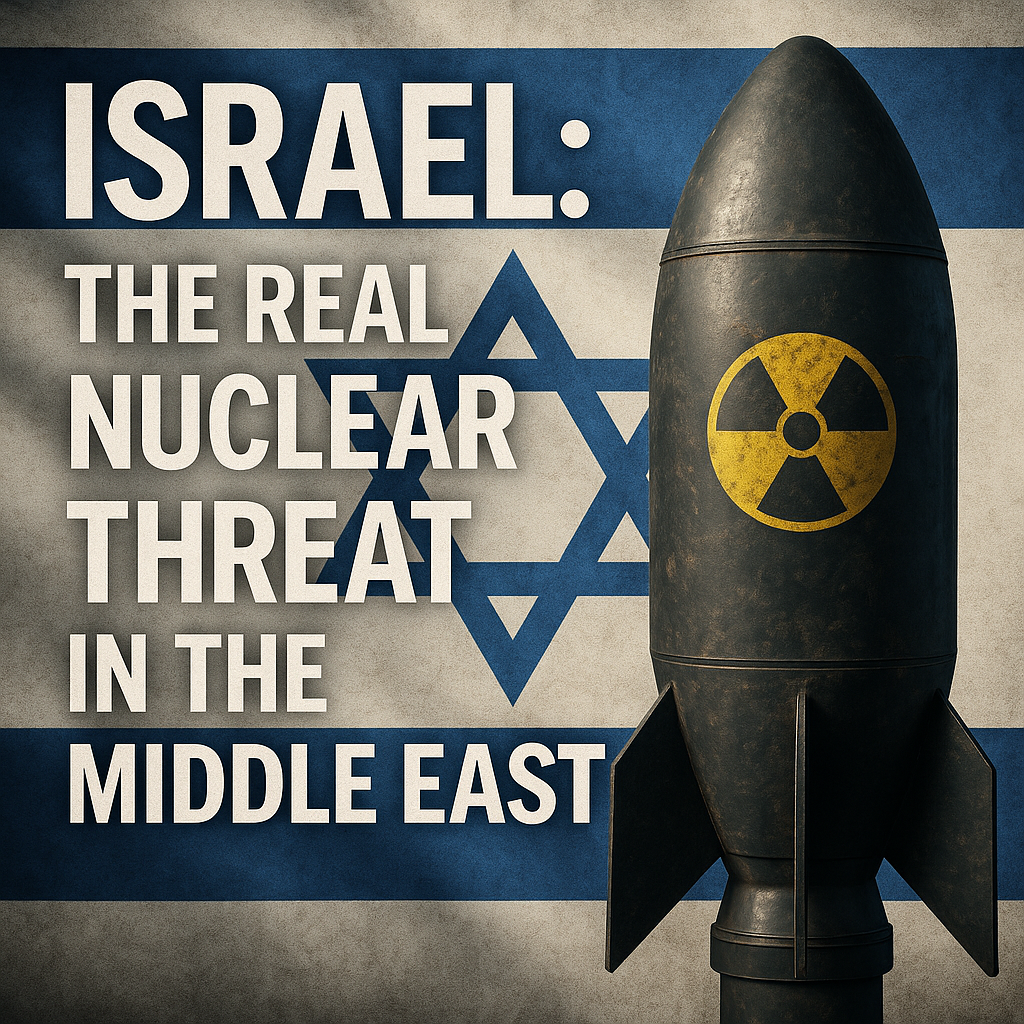
Israel: The Real Nuclear Threat in the Middle East
Israel: The Real Nuclear Threat in the Middle East
The discourse surrounding Israel’s nuclear capabilities often stirs intense debate, notably within the geopolitical landscape of the Middle East. As tensions rise and conflicts persist, the focus on Israel’s nuclear arsenal raises crucial questions about regional security and international diplomacy.

Understanding Israel’s Nuclear Status
Israel’s nuclear program, which began in the 1950s, has never been officially acknowledged by the state. This ambiguity does not negate the potential impact it has on regional power dynamics. Estimates suggest that Israel possesses between 80 to 90 nuclear warheads. The country’s policy of “ambiguity” shields these capabilities from close scrutiny and enables it to maintain a strategic deterrent in an already volatile region.

Critics argue that this unspoken arsenal, combined with Israel’s military advancements, represents a profound threat not just to its adversaries but to the entire Middle Eastern region. Recent discussions in various media outlets emphasize concerns that Israel’s nuclear capacity could provoke a nuclear arms race in the region, as neighboring countries may pursue their own nuclear capabilities in response.

Conversely, supporters of Israel’s nuclear ambiguity highlight its deterrent value against existential threats. The consensus among many Israeli officials is that the nation must maintain its strategic edge to protect itself from hostile actors. This perspective is bolstered by historical conflicts, emphasizing that nuclear capabilities serve as a critical insurance policy amidst a backdrop of persistent hostility from state and non-state actors alike.
Diverse Perspectives on Regional Security
Analyzing the situation through multiple lenses reveals a tapestry of opinions on the implications of Israel’s nuclear capability. For instance, while some regional powers express a desire for nuclear disarmament, their actions often contradict this intention. Iran, which has been at the forefront of this debate, continues to develop its nuclear program—allegedly under civilian pretenses—prompting fears that it may seek to achieve nuclear weapon capabilities.
A recent report highlighted by Al Jazeera outlines how Iran views Israel’s nuclear arsenal as a direct threat. The Iranian government has consistently called for a nuclear-free Middle East, yet its own contentious relationship with Israel complicates this narrative. Critics of Iran argue that its aggressive posturing, aimed at counteracting Israeli military superiority, may in fact exacerbate security dilemmas rather than alleviate them.
Meanwhile, others, including various Arab nations, have voiced their apprehensions regarding Israel’s nuclear status. Calls for transparency and a regional nuclear-free zone reflect a growing acknowledgment that stability in the Middle East hinges on responsible nuclear governance. As Al Jazeera notes, the lack of formal discussions surrounding this topic often leads to misunderstandings and escalations that stymie diplomatic efforts.
Yet, the proclivity for military solutions over diplomatic ones in regional politics indicates that establishing trust remains an uphill battle. The ongoing conflicts and historical grievances serve as significant barriers, which can render negotiations fruitless.
The International Perspective
On an international scale, Israel’s nuclear strategy sparks varied reactions. While the United States has historically supported Israel, some analysts warn that unwavering backing can be detrimental to broader U.S. interests in the region. RT highlighted a growing sentiment that, if not addressed, unchecked Israeli military capabilities could galvanize anti-Western sentiment across the Arab world, leading to catastrophic instability.
Furthermore, the complexities of nuclear non-proliferation treaties create additional layers of conflict. Israel has never signed the Nuclear Non-Proliferation Treaty (NPT), and this non-compliance raises questions about the efficacy of international mechanisms designed to prevent nuclear proliferation. Countries pivotal to the treaty system have faced the challenge of balancing their relations with Israel while advocating for an inclusive approach towards disarmament.
In contrast, proponents argue that Israel’s deterrent effect could arguably maintain a semblance of order in a region fraught with conflicts. They posit that Israel’s preparedness may mitigate more aggressive actions from hostile nations, suggesting that its nuclear capability may function more as a peacekeeping force than as an instigator of war.
Conclusion: Navigating the Complex Landscape
Israel’s nuclear capabilities remain a focal point in discussions about security in the Middle East. While some argue that its arsenal poses a real threat to regional stability, others contend that it serves a necessary role in deterrence. The absence of consensus highlights the complexity of the situation, where historical grievances, national security aspirations, and international diplomatic norms intertwine.
As tensions continue to mount and the geopolitical landscape evolves, addressing the complexities of Israel’s nuclear status will be essential for any serious endeavor towards peace in the Middle East. Each stakeholder’s motivations and fears must be considered in the pursuit of a more secure future, one where transparency and dialogue can replace uncertainty and division.















