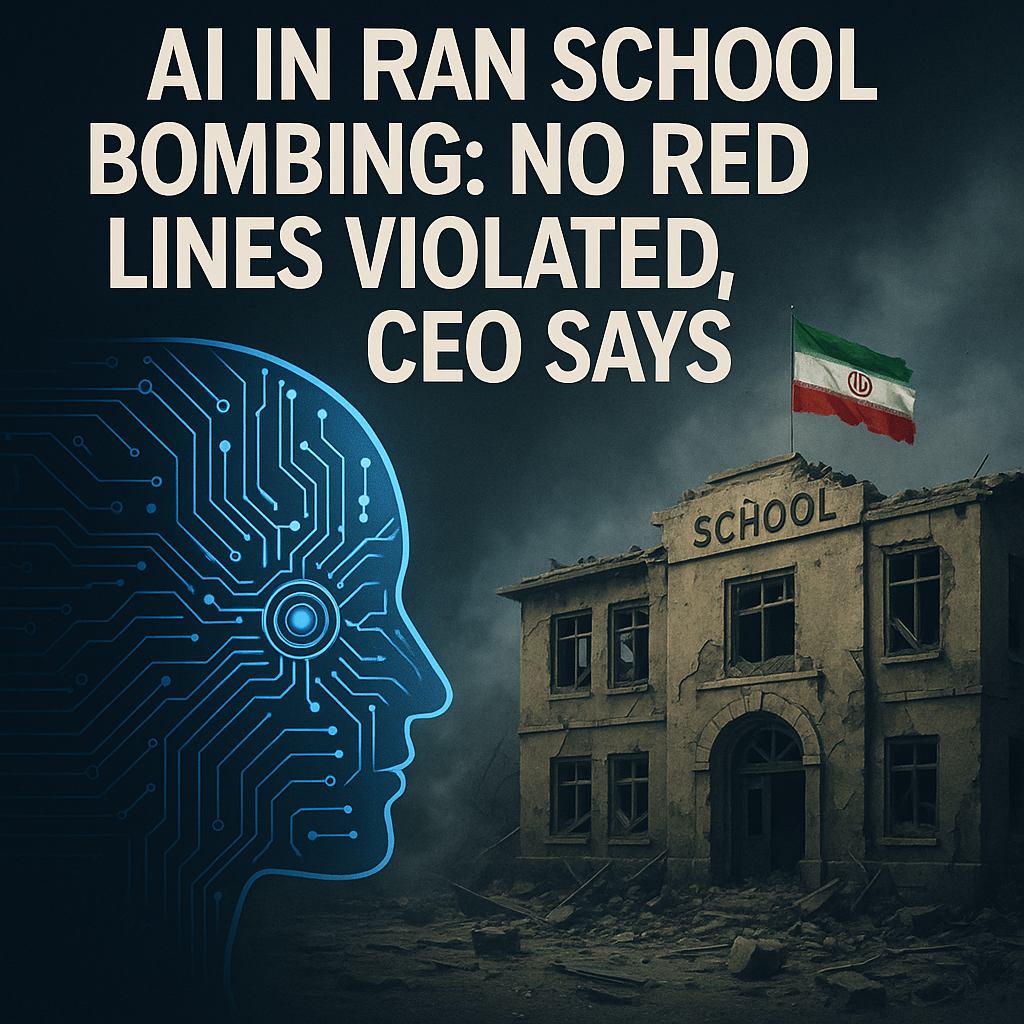
AI in Iran School Bombing: No Red Lines Violated, CEO Says
Understanding the Role of AI in the Context of the Iran School Bombing
The recent tragic school bombing in Iran has raised complex questions about the role of artificial intelligence (AI) in security and crisis response. As authorities and the public grapple with the implications of such a horrific incident, AI technologies are increasingly being scrutinized—especially given the assertion from Anthropic’s CEO that no “red lines” involving AI were crossed in the aftermath.

The Incident and Its Implications
On the surface, the school bombing in Iran invokes immediate reactions of horror and condemnation. This incident not only claims lives but also raises concerns about safety measures in educational institutions, particularly in conflict-ridden areas. Eyewitness accounts and local reports highlight the panic and chaos that ensued, as families and communities sought to comprehend the magnitude of the tragedy.

In light of the bombing, Anthropic CEO Dario Amodei made a bold statement, emphasizing that the technology developed by his company did not engage in any unethical behavior or cross established ethical boundaries. This view has ignited a debate about the responsibility of AI technologies in times of crisis. Did AI tools play a role in either predicting the attack or in the aftermath response? These questions are not just about technology but fundamentally examine human oversight and ethical responsibility.

Diverse Perspectives on AI’s Role
Several viewpoints have emerged concerning the implications of AI in the context of the bombing incident. On one side, proponents argue that AI can significantly enhance security measures, helping to predict potential threats and streamline emergency responses. AI’s capability to analyze vast quantities of data and identify patterns could be invaluable in preventing such tragedies in the future.
Conversely, critics raise alarms about the ethical implications and the potential for misuse of AI. They argue that reliance on AI technologies may lead to systemic vulnerabilities, as algorithms might not yet be sophisticated enough to handle the complexity of real-world social dynamics. Furthermore, concerns about surveillance and privacy cannot be overlooked; AI technologies in these contexts might infringe upon individual freedoms in an effort to maintain public safety.
Accountability and Ethical Considerations
As the discourse around the bombing continues, a pressing question emerges: who is accountable when AI systems fail or when they exacerbate existing issues? While the statement from Anthropic’s CEO seeks to reassure the public that no ethical lines were crossed, many remain skeptical. This skepticism reflects broader concerns over the accountability of AI developers, especially when their technologies are applied in critical situations.
The nuances of accountability are complex. AI systems are often developed with algorithms designed to optimize performance; however, ethical considerations remain at the forefront of the conversation. Who bears responsibility when these systems misinterpret data, leading to inadequate responses in emergencies like the school bombing?
Moving Forward: Bridging Technology and Ethics
The discourse surrounding AI in the wake of such tragedies must not simply revolve around technological advancements but also stress the importance of ethical frameworks that govern their use. Policymakers, developers, and educators must collaborate to establish guidelines that ensure the responsible integration of AI technologies into critical areas, including public safety and education.
– Importance of Transparency: Developers should provide clarity on how their algorithms function, particularly in security-related applications. This transparency is crucial in building public trust in AI systems.
– Interdisciplinary Collaboration: Engaging ethicists, sociologists, and technologists in the development process can help navigate the complex landscape of AI application, ensuring a balanced approach that considers societal impacts.
– Community Engagement: Ensuring that communities are engaged in discussions about how AI is employed can foster a sense of inclusion and trust, albeit in an uncertain landscape.
Conclusion
The tragic bombing incident in Iran is more than just a catalyst for immediate outrage; it serves as a wake-up call regarding the complex interplay between AI technology and public safety. While the assurances from Antropic’s CEO signal a controlled approach to AI ethics, they also highlight the need for ongoing conversations about accountability and ethical oversight. In navigating these complexities, society must prioritize a balanced perspective that values both the potential of technology and the ethical constraints necessary to prevent future tragedies.