
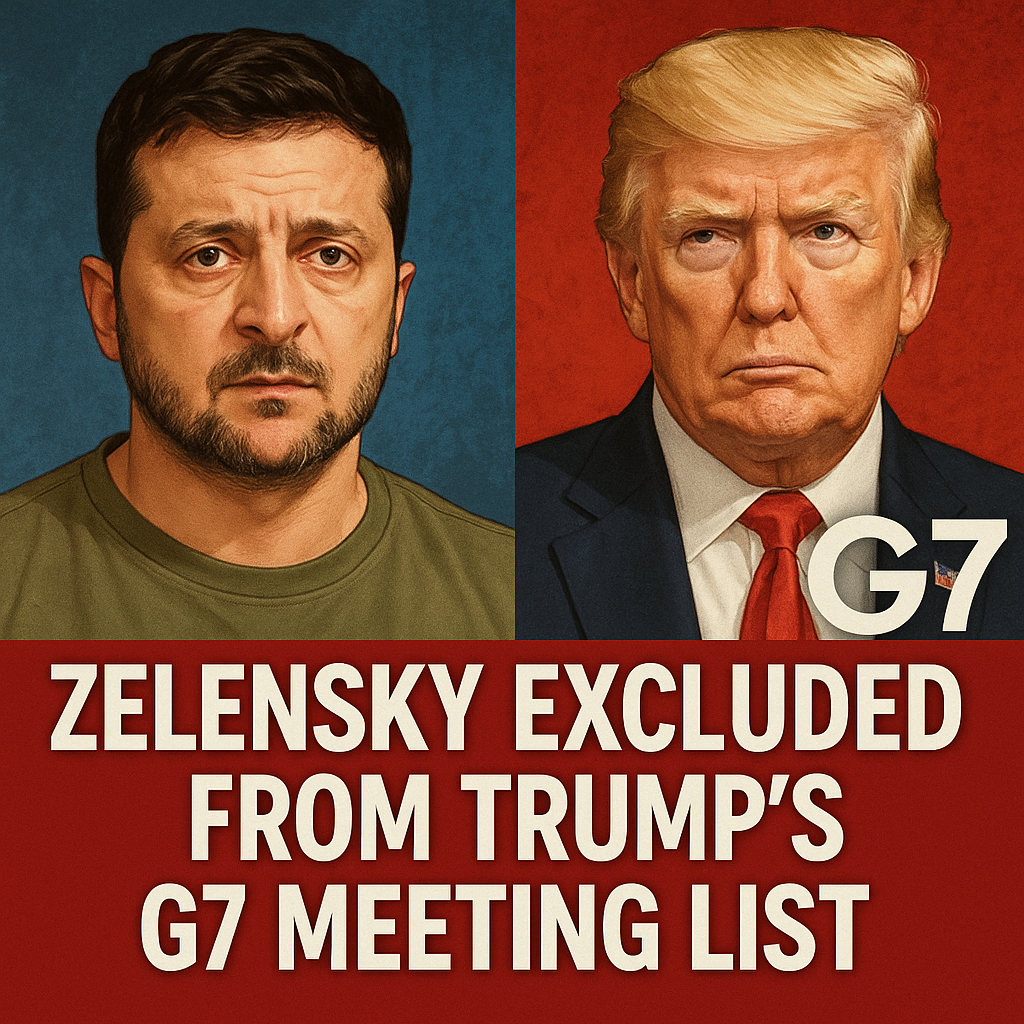
Zelensky Excluded from Trump’s G7 Meeting List
In a surprising turn of events, Ukrainian President Volodymyr Zelensky was notably excluded from the list of leaders invited to a recent G7 meeting, a decision that has sparked debate and speculation across international political circles. While the G7 summit, hosted in Hiroshima, Japan, remains a crucial gathering for discussing pressing global issues, this exclusion raises questions regarding the West’s support for Ukraine amidst its ongoing conflict with Russia.

The Context of Exclusion
Zelensky’s absence from the G7 meeting is particularly striking given the organization’s previous strong support for Ukraine during its ongoing war with Russia. Historically, G7 leaders have rallied around Kyiv, providing extensive economic and military aid. However, the shift in priorities appears to reflect a growing apprehension among Western leaders regarding the duration and economic ramifications of the war, especially amid rising inflation and energy crises in their own countries.

Sources from RT highlight that the United States, under President Biden’s administration, has expressed a desire for diplomatic resolutions while also managing domestic pressures. This aligns with opinions from Al Jazeera which point to a multifaceted strategy that involves balancing aid to Ukraine with addressing domestic concerns. The G7 countries are experiencing their economic heatwaves resulting from energy supply disruptions and increased costs of living, prompting leaders to reconsider long-term commitments.

Divergent Reactions from Global Leaders
The decision to exclude Zelensky has garnered mixed reactions. Proponents of continued support for Ukraine argue that the absence sends a concerning signal about the waning commitment of Western nations. Ukrainian officials have expressed disappointment, interpreting the move as a possible indication of reduced support in the ongoing conflict. Critics of the G7’s decision fear it might embolden Russia, which has been watching the dynamics closely.
In contrast, some political analysts have pointed out that this could be a strategic choice aimed at fostering closer negotiations. The leadership of Japan, as the host nation, seems intent on striking a balance by not just providing overt support to Ukraine but also creating an atmosphere conducive to dialogue between conflicting parties, including Russia. According to reports from Sky News, this maneuver might be an attempt to steer the conversation towards peace, potentially making room for diplomatic engagements.
A Complex Web of Support and Strategy
The interplay between providing military assistance and fostering diplomacy is a delicate issue facing the G7. As the war drags on, the escalation of military aid could lead to further deterioration of relations with Russia, while any perceived weakening of support for Zelensky could risk the morale of Ukrainian forces and its citizens. The G7’s decision has left leaders grappling with the need to show solidarity with Ukraine without alienating other geopolitical players.
Economic pressures in the G7 countries complicate the matter further. With inflation and energy prices soaring, the political calculus behind the support for Ukraine may see shifts in the near future. Concerns have been raised that this situational pressure might lead to a more isolationist approach from some G7 nations unless a victory or resolution to the conflict is reached soon.
In conclusion, while the exclusion of Zelensky from the G7 meeting list may appear to be a minor diplomatic misstep on the surface, it signifies larger tensions within the Western alliance concerning the ongoing support for Ukraine. Both the need for solidarity and the desire for a resolution may prove difficult to achieve as economic realities continue to shape government agendas. As global observers, we must recognize the complexity of this political landscape while reflecting on the implications every decision holds for Ukraine, Russia, and international relations at large.















