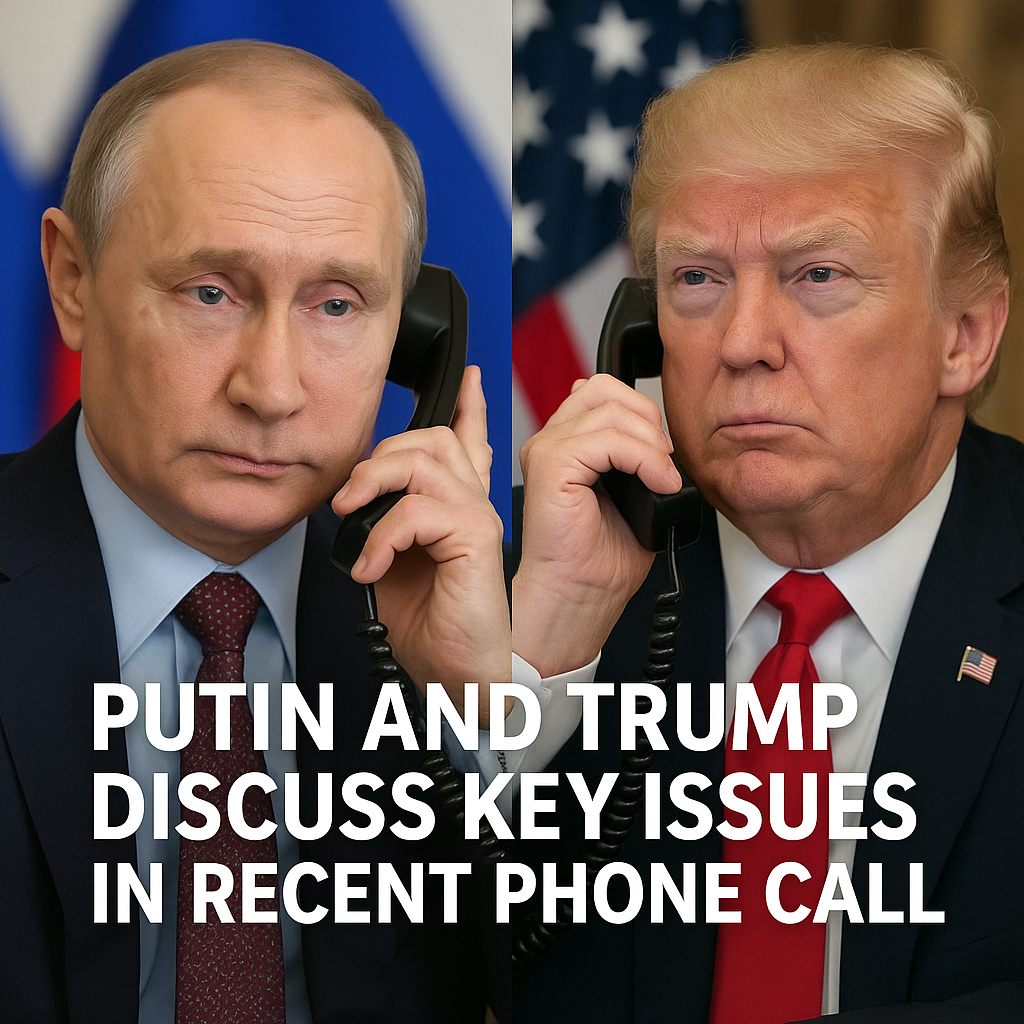
Putin and Trump Discuss Key Issues in Recent Phone Call
In a recent phone call that has drawn considerable media attention, Russian President Vladimir Putin and former U.S. President Donald Trump engaged in a dialogue concerning key issues that could reshape international relations. This unexpected exchange has sparked interest across multiple platforms and sheds light on the ongoing complexities of geopolitics.

The Context of the Call
The backdrop for the discussion between Putin and Trump stems from various pressing global challenges such as the war in Ukraine, energy prices, and the broader U.S.-Russia relationship. Both figures have demonstrated a willingness to discuss contentious topics despite their different approaches to policy and governance.

According to reports from RT, Putin emphasized the necessity for dialogue, particularly around stabilizing energy markets, which have been notably affected by the ongoing conflict in Ukraine. He pointed out that maintaining a balance in energy supply is crucial for both Europe and the global community at large. This viewpoint aligns with a growing call for cooperation in addressing energy security as tensions continue to escalate.

On the other hand, reports from Al Jazeera highlight Trump’s take on the issues at hand, showcasing his focus on restoring America’s role as a global leader while advancing an agenda rooted in nationalism. Trump’s perspective may reflect his belief that diplomacy can still yield results if approached with the right mix of firmness and pragmatism.
Diverging Narratives on Global Stability
The phone call also indicated differing narratives on how to achieve global stability. There appears to be a consensus from both leaders on the importance of dialogue, yet they advocate for markedly different strategies. Trump’s previous “America First” approach contrasts sharply with Putin’s longstanding vision of Russia as a powerful global player advocating for multipolarity.
Both leaders have faced criticism for their handling of international crises. Under Trump’s administration, critics argued that the U.S. weakened its alliances in Europe, making it difficult to present a united front against Russian aggression. Conversely, Putin’s actions regarding Ukraine have been widely condemned, leading many Western nations to impose sanctions and cut diplomatic ties.
The gravity of their conversation raises questions about the effectiveness of their respective leadership styles. While some analysts believe that Trump’s more informal and personal approach to diplomacy could lead to breakthroughs, others remain skeptical, citing that past interactions have often led to little more than platitudes without substantial policy changes.
The Implications for Future Relations
Looking forward, the ramifications of this call could be far-reaching. A collaborative path may open avenues for agreements, particularly in energy markets and nuclear disarmament discussions—topics that both leaders touched upon during their conversation. This suggests a potential thawing of relations, although some experts caution that trust between the nations remains fragile.
Moreover, the mixed responses to the closeness between Trump and Putin reflect the divided political landscape in the U.S. Some factions within the Republican Party support tighter ties with Russia, arguing for a realistic acknowledgment of geopolitical realities, while others strongly oppose any semblance of partnership with a nation they view as a significant threat.
Conclusion: A Complex Landscape Ahead
In summary, the recent phone call between Putin and Trump serves as a reminder of the intricate dynamics that define international relations today. While both leaders appear to recognize the importance of dialogue, the contrasting viewpoints on how to address existing global challenges highlight the difficulties ahead. As political landscapes evolve, the effectiveness of such discussions will depend on not only the willingness of these leaders to engage but also their ability to bridge opposing narratives for the greater good. The true test will come in the form of tangible outcomes that extend beyond mere conversation, reflecting a commitment to fostering stability in an increasingly volatile world.