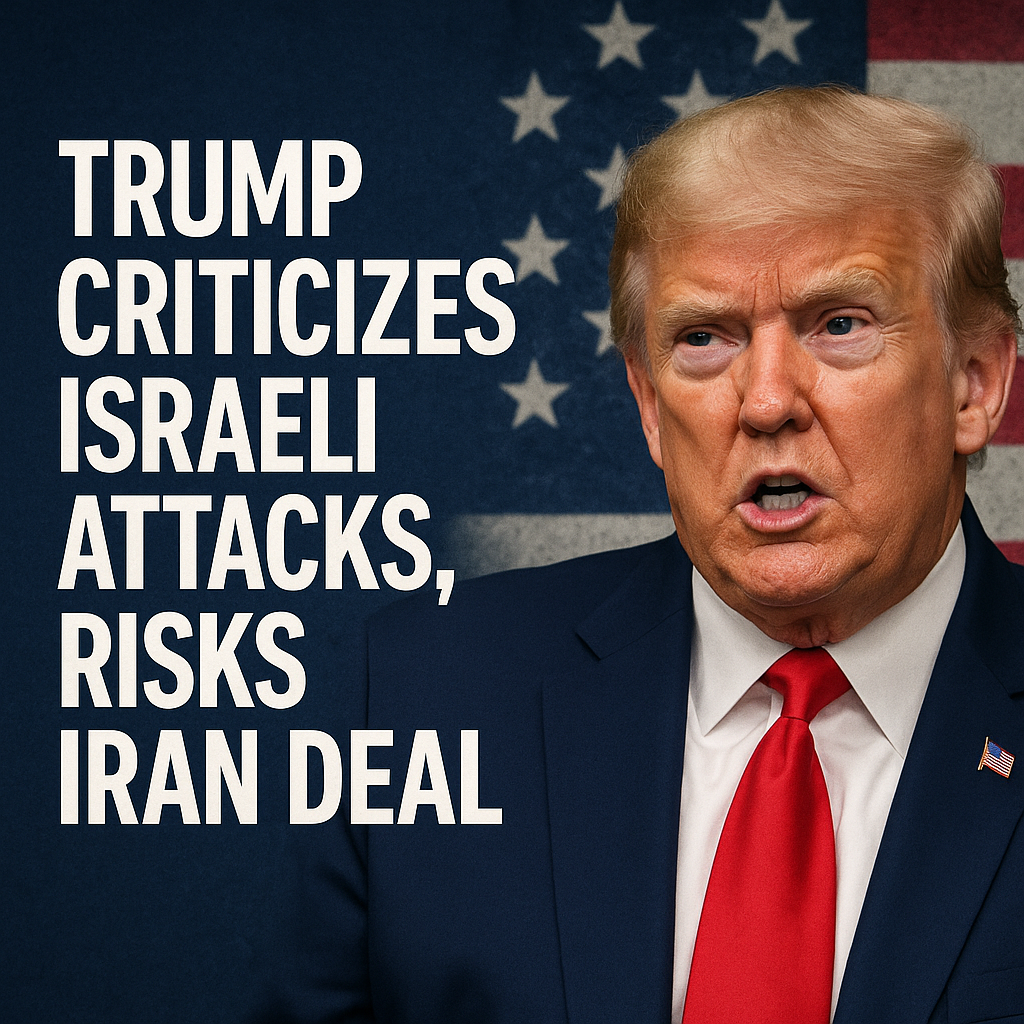
Trump Criticizes Israeli Attacks, Risks Iran Deal
Trump Criticizes Israeli Attacks, Risks Iran Deal
In a recent wave of statements, former President Donald Trump has expressed his disapproval of Israeli military actions in Beirut, labeling them as “unjustified.” This perspective emerges amid ongoing tensions in the Middle East and concerns over the ramifications for the Iran nuclear deal, a significant agreement that aims to restrict Iran’s nuclear capabilities in exchange for sanctions relief.

Trump’s Stance on Israeli Actions
Trump’s opposition to Israeli attacks coincides with a broader international discourse surrounding the Israeli-Palestinian conflict and regional dynamics. In his remarks, he described the airstrikes as excessive, arguing that they undermine stability in an already volatile region. According to sources from Al Jazeera, Trump emphasized that these actions could potentially jeopardize not just regional security, but also the fragile talks revolving around the Iran nuclear agreement.

Critics of Trump’s statements assert that his past support of Israel clashes with his current rhetorical stance. While he has previously championed U.S.-Israel relations, his latest criticism appears to step back from the unwavering support he once offered, suggesting an evolving perspective on foreign policy. Analysts have speculated that this might be an attempt to appeal to a more isolationist constituency within the Republican Party, which has grown increasingly skeptical of extensive foreign entanglements.

The Implications for the Iran Deal
The Iran nuclear deal, formally known as the Joint Comprehensive Plan of Action (JCPOA), was established in 2015 to curb Iran’s nuclear program. Although Trump played a pivotal role in withdrawing the U.S. from this agreement in 2018, the discourse surrounding his recent comments connects a new potential for dialogue or renewed negotiations.
Experts warn that Israeli military actions could alienate the Iranian government and further complicate the delicate balance needed for negotiations. As reported by RT, the Iranian leadership has responded negatively to Israeli aggressions, perceiving them as provocations that could lead to escalation. Any deterioration in relations might embolden hardline factions in Iran, risking the tenuous recalibration of the diplomatic landscape that many analysts view as essential for the success of any future deal.
Adding to the complexity, Trump’s criticisms might resonate with various factions in the Middle East that have historically viewed Israel’s military campaigns with skepticism. This sentiment can be a double-edged sword; while it may strike chords with some allies, it could also set off alarm bells in Israel and among its staunch defenders in U.S. politics. The nuanced positioning of stakeholders in this context is crucial for understanding the potential outcomes of Trump’s public stance.
Diverse Opinions on Trump’s Critique
The response to Trump’s criticisms has been mixed, highlighting the complexities of U.S. foreign policy in the Middle East. Some view his comments as a welcome shift towards a more balanced approach, advocating for diplomacy over military solutions. Conversely, others interpret his remarks as inconsistent or opportunistic, aimed at consolidating power within his political base rather than genuinely addressing the issues at play.
Advocacy groups focused on Middle East peace have largely welcomed Trump’s criticisms as a common-sense acknowledgment of the realities on the ground. They argue that maintaining constructive dialogue is fundamental to achieving lasting peace, especially in delaying the potential for rising tensions in the region. On the contrary, right-leaning commentators argue that his statement could embolden Iranian actions and could lead to instability at a time when a firm U.S. presence is deemed necessary.
Conclusion
Trump’s recent criticism of Israeli attacks in Beirut underscores the delicate interplay between regional security and international diplomacy. As tensions continue to rise, the impact of these remarks on the Iran nuclear deal remains uncertain. While they may signal a shift towards diplomacy, they also risk inflaming already complex relationships in the Middle East. With multiple perspectives emerging, it is evident that navigating these waters will require a balanced and nuanced understanding of both past actions and future implications. The evolving narrative around Trump’s foreign policy could redefine not only American stances but also the larger geopolitical landscape in the years to come.