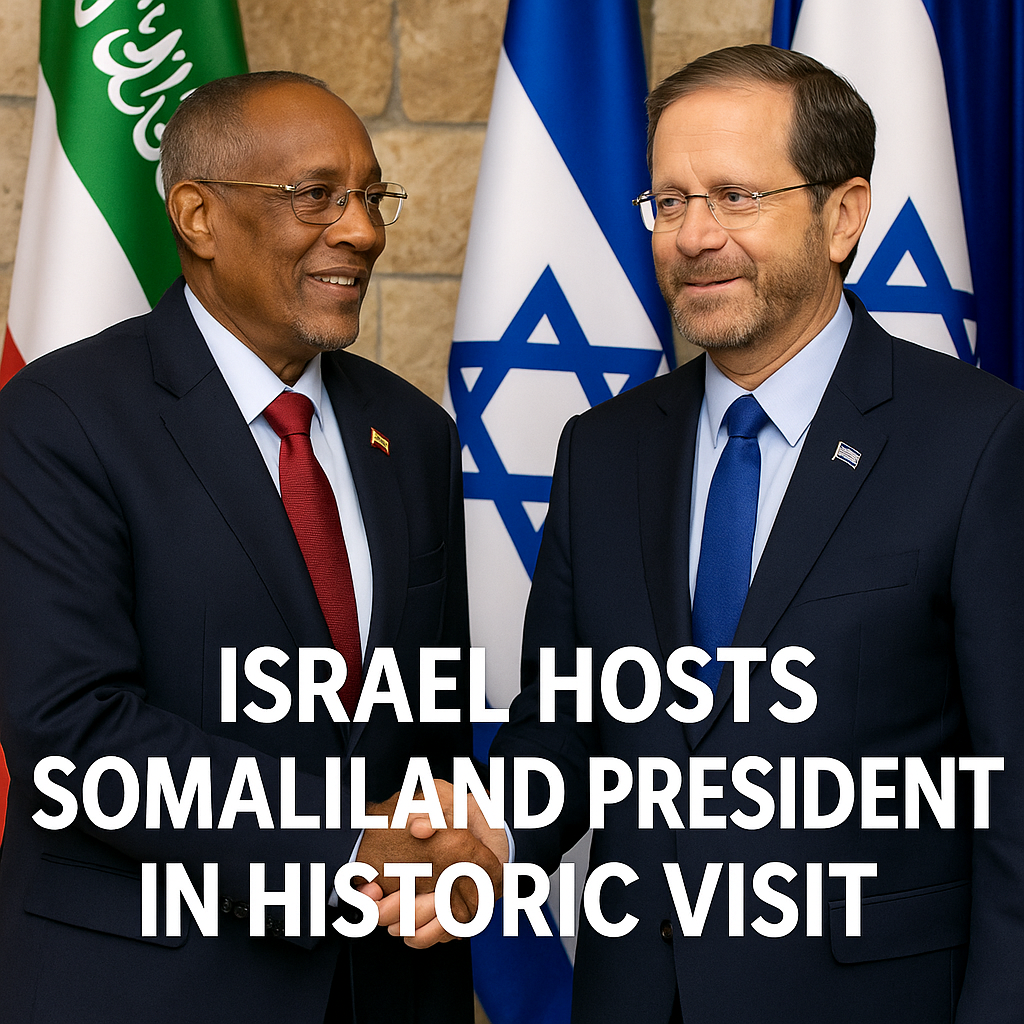
Israel Hosts Somaliland President in Historic Visit
Israel Hosts Somaliland President in Historic Visit
The recent visit of the Somaliland president to Israel marks a significant moment in international relations, highlighting the complexities and evolving dynamics within the Horn of Africa. While the visit is celebrated by some as a step towards recognition and partnership, it also unveils the intricacies of diplomatic relationships in a region fraught with political tension.

Historical Context of Somaliland-Israel Relations
Somaliland, which declared independence from Somalia in 1991, has long sought international recognition without success. The self-declared republic has established informal ties with several countries, but Israel’s official acknowledgment could alter the geopolitical landscape significantly. The visit by President Muse Bihi Abdi aligns with Israel’s broader strategy of strengthening alliances in Africa, particularly with nations that share mutual interests against extremism and piracy.

Israel’s interest in Somaliland is multi-dimensional. Geographically situated near key maritime routes, Somaliland presents opportunities for trade and security cooperation. Historically, Israel has provided military and humanitarian assistance in the Horn of Africa, aiming to counterbalance influences from neighboring nations and extremist groups.

Conversely, Somaliland seeks economic partnership and security assurances as it navigates its quest for sovereignty, witnessing fluctuating relations with Somalia and neighboring states like Ethiopia and Djibouti. This recent visit underscores the potential for deeper bilateral collaborations, not only in security but also in sectors like agriculture, water management, and technology.
Perspectives on the Visit
Reactions to the Somaliland president’s visit to Israel have been mixed, reflecting a wide array of sentiments both regionally and internationally. Proponents highlight the visit as a milestone for Somaliland, suggesting it could pave the way for broader recognition and support from other nations. The Somaliland government emphasizes that formalizing ties with Israel could bring much-needed investment and development.
However, critics point out the potential fallout. Some analysts warn that this visit might complicate Somaliland’s already tenuous relations with Somalia, which rejects Somaliland’s claim to independence. Furthermore, the visit risks alienating nations within the African Union, many of which have historically supported Somalia’s territorial integrity. Observers note that aligning too closely with Israel could provoke a backlash from Arab states, potentially straining Somaliland’s relationships across the broader Middle East and North Africa.
On the international stage, this visit arrives amidst Israeli efforts to normalize relations with several Arab nations under the Abraham Accords, highlighting Israel’s increasing influence in an area historically dominated by Muslim-majority countries. While some see this as a necessary diversification of relationships, others criticize the implications of Israel’s engagement with Somaliland, citing concerns about undermining Palestinian interests and regional stability.
The Strategic Implications Ahead
The implications of this diplomatic overture are vast and multifaceted. For Somaliland, the visit could increase its chances of gaining recognition as a sovereign state, elevating its international profile. It may incentivize other countries to engage with Somaliland, potentially boosting its economy through investment and development aid.
For Israel, strengthening ties with Somaliland fits into a larger geopolitical strategy to secure alliances that can counteract Iranian influence in the region, particularly from proxies in Somalia and the wider Horn of Africa. This visit may symbolize an opportunity for Israel to enhance its intelligence-sharing and military cooperation in a region where such partnerships are crucial for national security.
Nevertheless, this evolving partnership must navigate the challenges of regional politics. Directly addressing the concerns of Somalia and the geopolitical dynamics of East Africa will be essential. The rich historical narratives and existing allegiances mean that shifts, such as the one seen with Somaliland, will require careful handling to avoid escalation or unintended consequences.
Conclusions and Future Outlook
As Somaliland seeks to solidify its standing on the world stage, Israel’s reception of its president offers both opportunities and challenges. While the partnership could herald economic and security advances for Somaliland, it also necessitates careful calibration of diplomatic relationships with neighbors and other stakeholders.
The extent to which this visit will alter the geopolitical dynamics in the Horn of Africa remains uncertain. Somaliland stands at a crossroads, as it weighs the benefits of alignment with Israel against the potential diplomatic risks. For now, the visit has opened a new chapter in Somaliland’s quest for acknowledgment, stimulating debates about sovereignty, alliances, and the future of diplomatic relations in a complex and evolving region.