
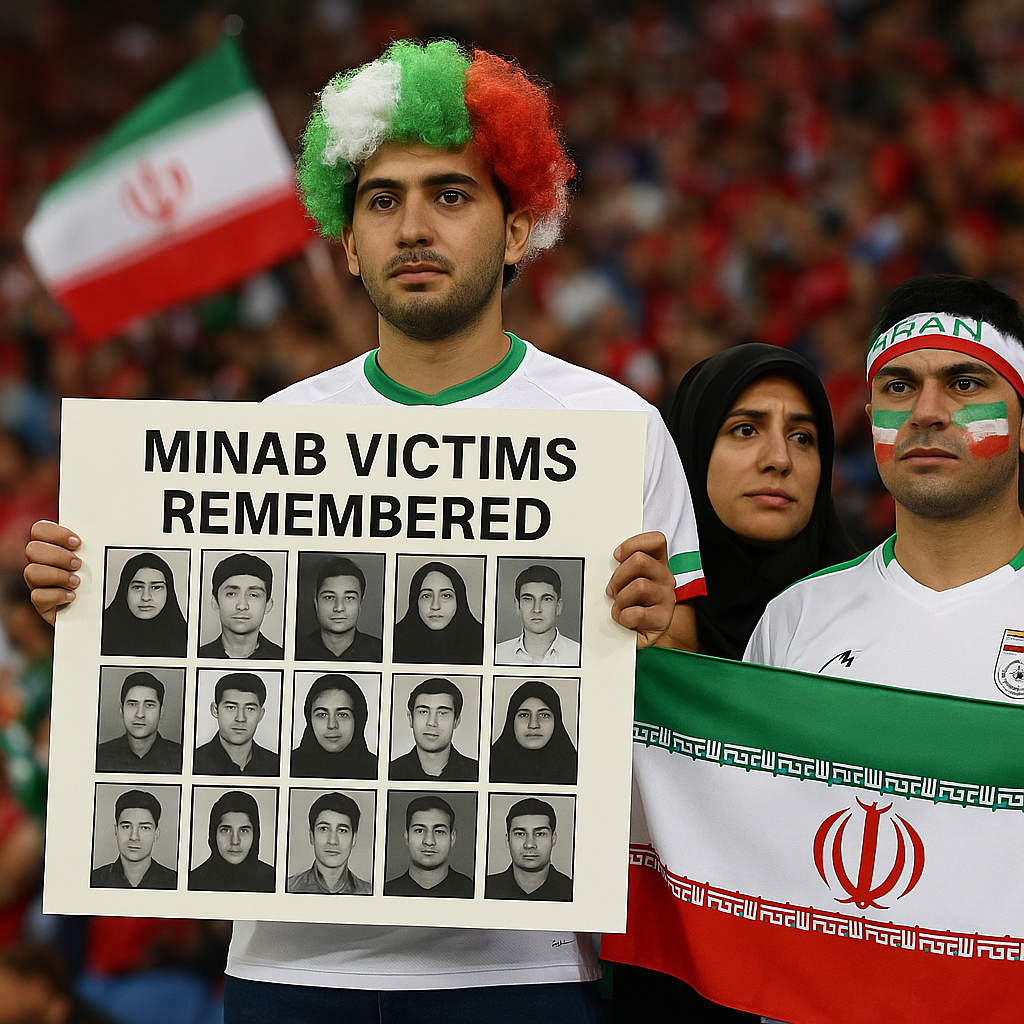
Minab Victims Remembered by Iranian Fans at World Cup Match
Remembering the Minab Victims: A Rallying Cry at the World Cup
As the world tuned into the World Cup matches, Iranian fans made headlines not just for their support of their national team but for a poignant moment of remembrance for the victims of the tragic Minab incident. This display transcended mere sporting allegiance, highlighting the intersection of national identity, mourning, and unity in a complex socio-political landscape.

The Tragic Background of the Minab Incident
The Minab tragedy refers to the loss of several lives in a densely populated region of Iran, a situation that sparked widespread protests and unrest among locals. As Al Jazeera reported, this incident involved security forces firing upon crowds, leading to a significant loss of life and igniting calls for accountability from the Iranian government. The emotions surrounding the event are raw, with families and communities still grappling with the aftermath.

In the wake of this tragedy, gatherings have taken on a dual meaning for many Iranians. They serve not only as a platform for sportsmanship but also as an opportunity for cultural expression and social commentary. The World Cup match became a stage for this continuum, where fans wielded slogans and displayed banners in honor of the Minab victims.

Fans Unite: A Display of Solidarity
During the World Cup match where Iran faced off against their rivals, fans proudly waved banners that memorialized the Minab victims. Eyewitness accounts describe emotional scenes in the stands, with supporters chanting slogans that echoed the calls for justice and remembrance. According to RT News, this moment was a reminder of the emotional undercurrents that govern public sentiment in Iran, where many see sports as entwined with political voice.
While sports events typically embody unity and celebration, this gathering reflected the stark realities faced by these fans. The juxtaposition of cheer and mourning drew attention not only within the Iranian community but also among international viewers. The sentiment expressed by fans highlighted a desire for justice and reflection on the state of rights in Iran, showcasing how international events can serve as a forum for pressing local issues.
The Complex Nature of Mourning in Public Spaces
This act of remembrance at a global sporting event invites a deeper understanding of how communities engage with their history in contemporary settings. Fans merging passion for football with calls for justice challenges the notion of sports as solely a realm of escapism. Instead, it illustrates how deeply intertwined these cultural expressions can be with social and political realities.
What becomes clear is the complexity of mourning within public spaces. While many fans sought to celebrate their team, the stark reminders of loss and demand for accountability permeated the atmosphere, leading to an event that was as much about sport as it was about a movement for change.
The Broader Implications for Iranian Society
The solidarity displayed by Iranian fans serves as a microcosm of a larger narrative about national identity, grief, and activism. In a country where dissent can be met with severe repercussions, public demonstrations of unity over shared grief speak volumes about the spirit of the people. Sky News emphasized that these acts of remembrance may not only reinforce community ties but also challenge the status quo by asserting that even in sports, one’s voice can resonate beyond the playing field.
As global audiences appreciate the art of football and the stories that emerge from it, the burden of remembrance remains a crucial part of the Iranian identity. The fans’ collective actions at the World Cup illustrate how cultural and social expressions are often limited by external perceptions but are rich in layered meanings.
Concluding Thoughts
As the World Cup continues to captivate audiences, the moments of remembrance for the Minab victims remind us of the complex interplay between celebration and mourning in Iranian society. The actions of these fans extend beyond mere tributes; they encapsulate a demand for recognition and a yearning for justice that still resonates today. By embracing both triumph and tragedy, the Iranian fans have woven an additional narrative into the fabric of the World Cup, one that calls for remembrance, unity, and ultimately, change.















