FBI Prevents Drone Attack at Trump’s UFC White House Event

FBI Prevents Drone Attack at Trump’s UFC White House Event
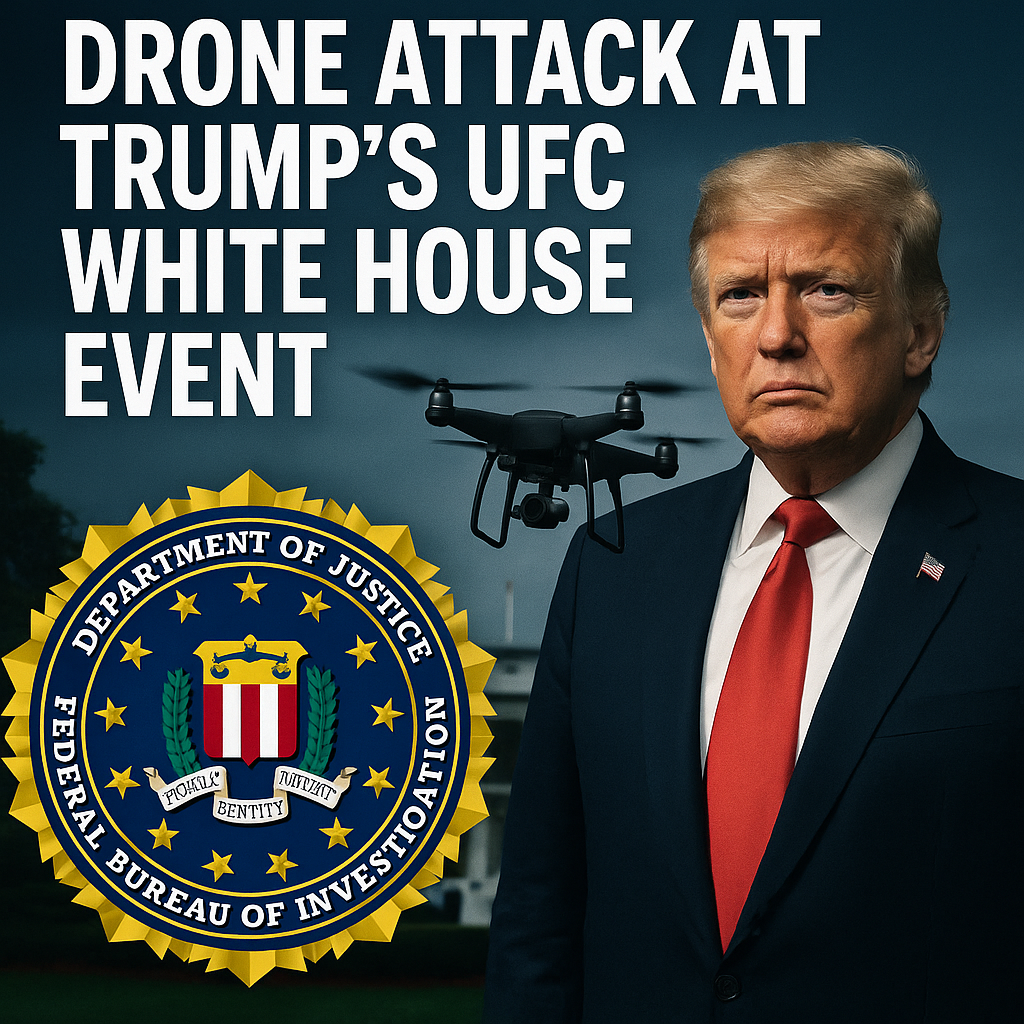
In a striking development, the FBI recently thwarted a drone attack aimed at a high-profile event hosted by former President Donald Trump at the UFC in Washington, D.C. This incident raises critical questions about security, the implications of modern technology in warfare, and the nature of contemporary political rallies.

The Incident Overview
The FBI’s intervention comes amid ongoing political tensions and heightened security concerns surrounding public events. According to reports, the agency received credible intelligence indicating that an individual was plotting to use a drone to carry out an attack during Trump’s event. The Federal Bureau of Investigation was quick to act, preventing what could have been a catastrophic incident.


This situation is notable not just for its immediate implications but also for highlighting the evolving landscape of threats facing public figures. Drones, once limited to recreational use, have become increasingly accessible and have shown potential for malicious applications. This trend raises alarming questions about how security frameworks must adapt to address new technological threats.


Security Measures and Public Reactions
In the aftermath of the attempted attack, security measures surrounding events featuring political figures have come under scrutiny. Law enforcement agencies are emphasizing the need for preemptive actions and intelligence-gathering to ensure safety. The FBI stated that they are closely monitoring social media platforms and other digital communications to identify potential threats.
Reactions to the incident have been mixed. On one hand, many Americans feel a sense of relief knowing that the FBI was able to thwart a potential disaster. The agency’s swift action is seen as a testament to its commitment to public safety. A spokesperson for the FBI noted that “proactive measures are critical in preventing violence in politically charged environments.”
On the other hand, some critics argue that these security efforts indicate an increasingly polarized society where political figures need to be safeguarded to an extent previously unseen. Concerns are being raised about the normalization of such extreme security measures at public events. As one commentator put it, “How far are we willing to go to ensure the safety of our leaders? This raises further questions about the state of our democracy.”
The Role of Drones in Modern Threats
Drones represent a dual-edged sword in the current security landscape. While they offer potential benefits, such as surveillance and monitoring, their use for malicious purposes poses serious risks. Similar attempts have been observed globally, reflecting a worrying trend among those looking to exploit drone technology for attack purposes.
Analysts suggest that as drone technology evolves, so too should our strategies for defense. Legislation aimed at regulating drone sales and usage, particularly around sensitive venues or events with notable figures, has begun to emerge. However, critics argue that regulation alone may not suffice, pointing to the importance of public awareness and engagement with drone technology’s risks.
Conclusion: A Complex Path Forward
The thwarting of the drone attack during the UFC event underscores the need for a nuanced understanding of security in an age where technology and public safety intersect. While the FBI’s actions have been lauded as effective and timely, the circumstances also reflect a larger societal issue. The increasing polarization of the political climate and the accessibility of advanced technology necessitate an ongoing conversation about how to balance security with civil liberties.
As we navigate these complex challenges, it becomes clear that collaboration among law enforcement, policymakers, and the community will be essential in fostering a safe environment for political engagement. Understanding the risks and developing comprehensive strategies against such threats will play a crucial role in shaping the future of public safety in politically charged settings.