
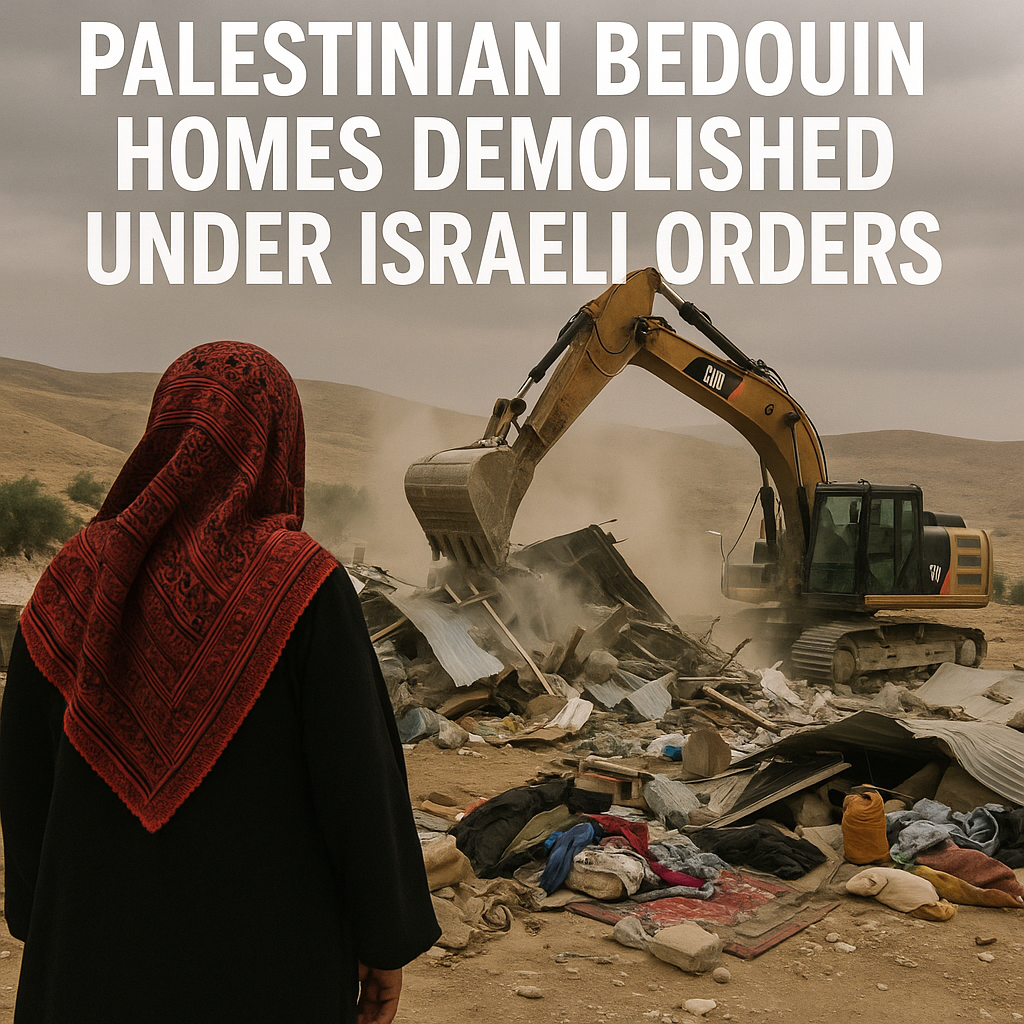
Palestinian Bedouin Homes Demolished Under Israeli Orders
The Complex Reality of Palestinian Bedouin Homes Demolished Under Israeli Orders
The issue of Palestinian Bedouin homes being demolished under Israeli orders presents a challenging and multifaceted situation that encapsulates broader tensions in the region. Recent reports highlight the escalation of these demolitions, sparking debates around sovereignty, cultural heritage, and human rights.

Context of the Demolitions
The Bedouin communities in the Negev desert have a long history rooted in nomadic traditions and a deep connection to their lands. However, these communities have faced significant challenges in recent years, primarily due to Israeli government policies that aim to settle these areas and reclaim land for state development. According to reports from Al Jazeera, the demolitions have primarily targeted villages deemed illegal by Israeli authorities. Despite local objections and appeals to international bodies, the demolitions have proceeded, illustrating a stark power imbalance between the communities and the state.

Conversely, the Israeli government defends these actions as efforts to enforce building regulations and promote law and order. Proponents argue that these measures are necessary to ensure the proper use of land—a claim often met with skepticism and outrage from human rights activists and local leaders. They emphasize that many of these homes were built prior to the strict enforcement of such regulations and that the demolitions could go against the spirit of coexistence.

Humanitarian Concerns and International Response
The destruction of homes raises serious humanitarian concerns. Displacement not only disrupts the lives of residents but also endangers cultural preservation among these communities. Activists point to the psychological toll it takes on families who lose their homes and are forced into temporary shelters or urban settings they may not be familiar with.
Despite the ongoing situation, international response has been mixed. Organizations such as Human Rights Watch have condemned these demolitions and called for accountability from the Israeli government for what they term as violations of international law. Reports suggest that these actions could be classified as collective punishment, infringing on the rights of individuals, especially those of children and vulnerable populations within the Bedouin communities.
The Broader Implications
The issue doesn’t simply reflect a clash over land but embodies deeper conflicts regarding identity, sovereignty, and the future of the Israeli-Palestinian relationship. Critics argue that these demolitions effectively erase Bedouin culture and push communities toward further marginalization. Furthermore, with international attention divided, many fear a lack of comprehensive action may allow these practices to continue unchecked.
In response, various advocacy groups have mobilized efforts to raise awareness and support for the Bedouin communities. By collaborating with local leaders, they aim to draw attention not only to the humanitarian aspects but also to the potential cultural and social losses incurred through these demolitions.
As the situation unfolds, stakeholders from various backgrounds—including local leaders, human rights advocates, and government representatives—continue to engage in dialogue. The complexities of this issue highlight the importance of understanding the narratives on both sides. While Israeli authorities emphasize compliance with law and order, the Bedouin communities speak to the fragility of their existence and cultural identity.
Conclusion
The demolitions of Palestinian Bedouin homes under Israeli orders represent a complex and sensitive topic that embodies the struggle for rights and recognition in a contested region. As the situation continues to evolve, it is crucial for all parties involved to foster dialogue and seek peaceful solutions that consider the rights and dignity of the affected populations. The path forward may be fraught with challenges, yet a balanced perspective is essential to address the underlying issues of displacement, identity, and the future of both the Bedouin communities and the broader Israeli-Palestinian conflict.















