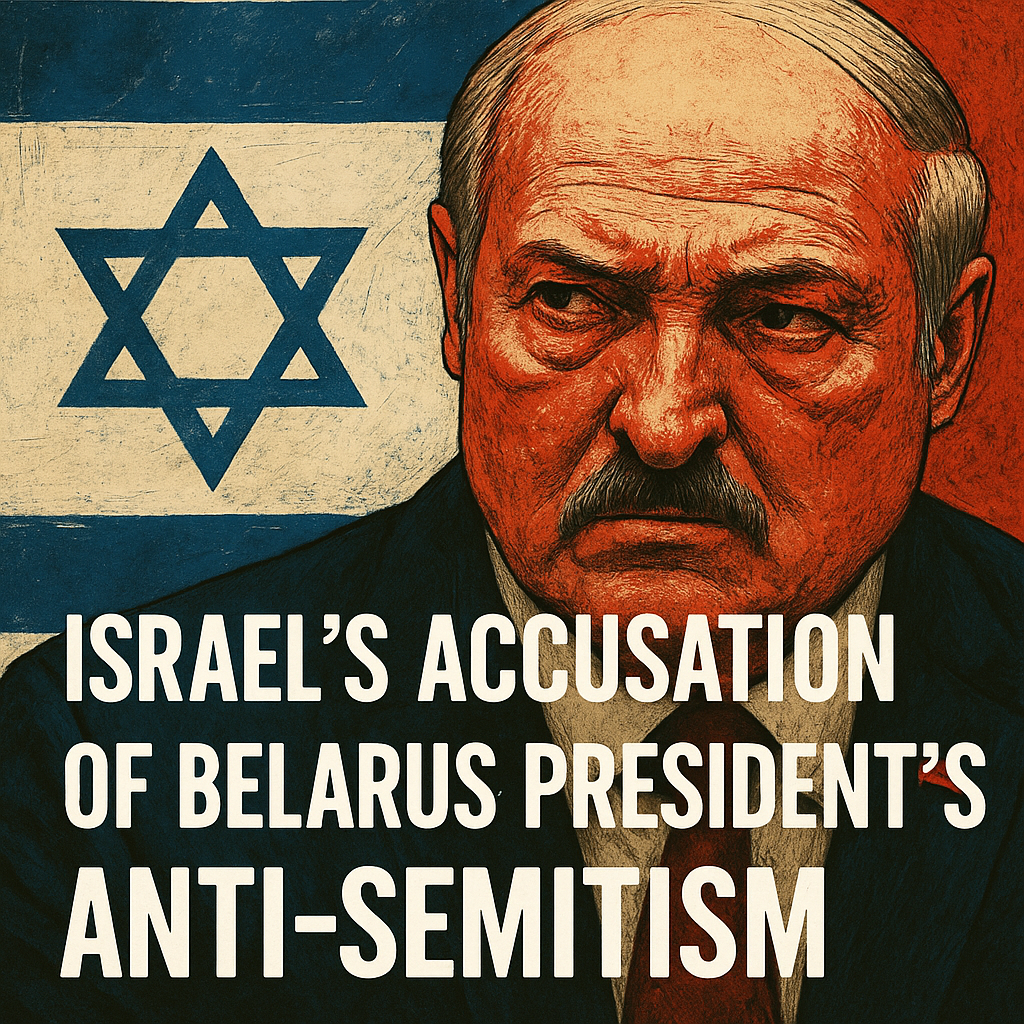
Israel’s Accusation of Belarus President’s Anti-Semitism
Understanding Israel’s Accusation of Anti-Semitism Against Belarus President
The recent accusations from Israel regarding Belarusian President Alexander Lukashenko’s alleged anti-Semitic remarks raise significant questions about the intersections of politics, history, and discrimination. In this overview, we delve into the nuances surrounding this controversial issue, drawing insights from multiple news sources to offer a balanced perspective.

The Context of the Accusation
Israel’s government has taken a strong stance against President Lukashenko’s comments, particularly in light of his statements regarding the ongoing conflict in Gaza. According to reports, Lukashenko characterized the Israeli actions in Gaza as “state terrorism,” a phrase that elicited a swift response from Israeli officials. They condemned his remarks, labeling them as not only anti-Israel but also anti-Semitic, given the historical and cultural sensitivities surrounding such language.

In a statement, Israel’s Foreign Ministry asserted that Lukashenko’s rhetoric is reminiscent of dangerous anti-Jewish tropes that have historically fueled violence and discrimination. The ministry emphasized the inherent link between anti-Zionism and anti-Semitism, arguing that rhetoric which undermines the legitimacy of a nation-state can perpetuate harmful stereotypes about Jewish people worldwide. This perspective reflects a broader trend where countries or leaders opposing Israeli policies are often scrutinized for their language and the implications it might have within the context of global anti-Semitism.

Diverse Reactions and Opinions
While Israeli officials are united in their condemnation, opinions on the significance of Lukashenko’s comments vary widely. Notably, some commentators in the media have been more measured in their analysis, suggesting that the labeling of anti-Zionism as anti-Semitism can sometimes muddle legitimate criticism of Israeli policies. According to an analysis from Al Jazeera, the nuance of Lukashenko’s language appears to focus more on the political ramifications of the Gaza conflict rather than a direct attack on Jewish identities. This perspective sparks a critical conversation about the complexity of distinguishing between anti-Zionism and anti-Semitism, highlighting the risks of conflating the two.
Supporters of Lukashenko argue that his statements reflect a broader anti-imperialist stance, positioning Belarus alongside nations that criticize Western policies in the Middle East. They contend that allegations against Lukashenko are politically motivated, serving to delegitimize alternative narratives in an increasingly polarized global context. This reaction echoes historical sentiments wherein leaders from various countries have often used anti-Israel rhetoric to rally domestic support or to position themselves on the world stage.
The Broader Implications of Anti-Zionism
The debate around anti-Zionism and anti-Semitism poses significant challenges not only for diplomatic relations but also for social cohesion within countries experiencing rising anti-Semitic sentiments. As noted by analysts, labeling discussions about Israel’s policies as inherently anti-Semitic can lead to defensive reactions that stifle discourse on legitimate critiques. It is essential to unpack what constitutes hate speech versus political dissent, recognizing that the line can often be blurry.
With the geopolitical landscape constantly evolving, the ramifications of such accusations extend beyond the borders of Belarus and Israel. They contribute to broader discussions about nationalism, statehood, and how historical narratives shape contemporary political discourse. The functionality of diplomacy relies on the ability to engage with these difficult subjects constructively rather than merely labeling dissent as hate.
Conclusion: A Complex Dialogue
As tensions evolve, the accusations leveled at President Lukashenko by Israel highlight a deeply rooted complexity in the conversation surrounding nationalism, identity, and conflict. Ensuring a balanced dialogue that differentiates between critiques of state policies and genuine anti-Semitic tendencies remains crucial. The challenge lies in fostering an environment where diverse views can be expressed without descending into vitriol or prejudice.
Ultimately, navigating these challenges requires a careful approach that respects the historical weight of anti-Semitism while allowing for meaningful discourse on political policies. The stakes are high, and the impact of language on both public perception and international relations cannot be understated. As the global community watches, the importance of nuance in these discussions has never been clearer.