US-Israel War on Iran: Reasons for Its Failure

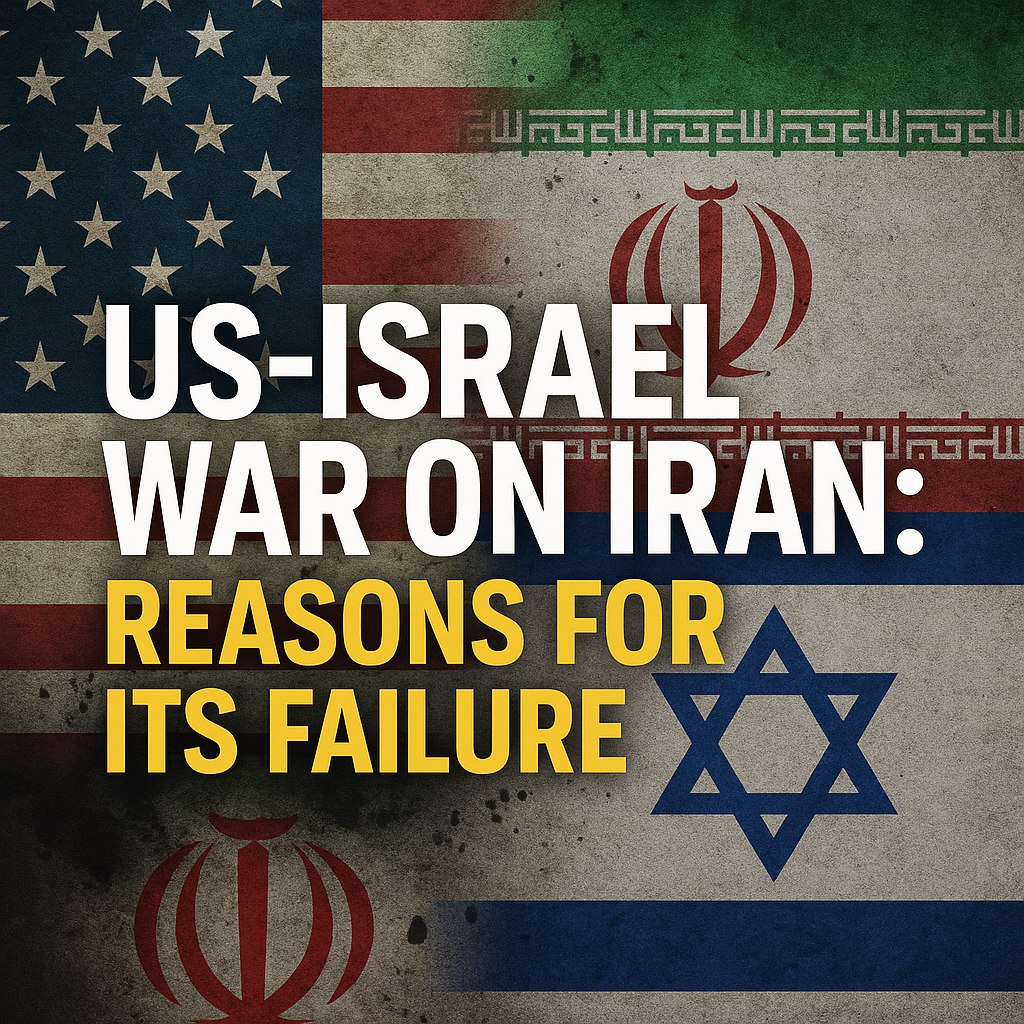
The ongoing conflict involving the U.S., Israel, and Iran remains one of the most complex geopolitical situations in contemporary history. Analyzing the reasons behind the perceived failure of the US-Israel strategy towards Iran reveals a multifaceted tapestry woven with historical grievances, military miscalculations, and the intricate politics of the region.

Historical Tensions and Miscalculations
The roots of U.S.-Israel relations with Iran can be traced back to the 1979 Iranian Revolution, which marked a significant upheaval in regional power dynamics. Since the revolution, both nations have perceived Iran as a destabilizing force due to its nuclear ambitions and support for militant groups like Hezbollah. The aggressive posture adopted by the U.S. and Israel, including sanctions and military posturing, reflects years of attempts to curtail Iranian influence in the Middle East. However, this aggressive approach has often been met with resistance, leading to unintended consequences.


The Impact of Sanctions
Sanctions imposed by the U.S. and its allies have aimed to cripple Iran’s economy, thereby limiting its ability to fund military and proxy operations. However, reports indicate that these sanctions have not succeeded in their primary objective. Instead of weakening Iran, the sanctions have arguably strengthened nationalist sentiments within the country. According to Al Jazeera, “Iranian officials have claimed that they can withstand pressure and that their country is more united under sanction.”


This situation raises questions about the efficacy of sanctions as a tool of foreign policy. While they may put economic pressure on Iran, they have also consolidated internal support for the regime. The Iranian narrative has successfully painted the U.S. and Israel as aggressors, further solidifying public opinion against foreign interference.
Military Involvement and Tactical Failures
On the military front, both the U.S. and Israel have engaged in various operations aimed at dismantling perceived threats from Iran, including targeted airstrikes and clandestine actions against Iranian assets. However, these military endeavors have often faced criticisms for their lack of clarity and coherence. The RT report suggests that “military interventions by the U.S. and Israel have not resulted in the strategic outcomes they anticipated, leaving the region in a precarious balance.”
A significant factor contributing to the failure of military strategies is the spiraling complexity of the region’s politics. Ineffective coordination among allies, coupled with a lack of exit strategies, has left both the U.S. and Israel without clear paths to achieve their objectives in Iran or in the broader region.
Shifting Alliances and Regional Dynamics
An additional layer complicating the dynamics is the shifting landscape of regional alliances. The normalization of relations between Israel and several Arab states, as seen in the Abraham Accords, alters the strategic calculus surrounding Iran. While these agreements were initially thought to isolate Iran further, they also unintentionally opened up avenues for Iran to strengthen its ties with opposing factions within the region, including groups in Iraq and Syria that view the U.S. and Israel as adversaries.
Moreover, the geopolitical clout of Russia and China in the region adds another complication. As Iran continues to deepen its relationships with these powers, the effectiveness of U.S. and Israeli strategies is further diminished. Al Jazeera highlights that “an increasingly multipolar world complicates the success of unilateral U.S.-led efforts against Iran.”
The Role of Domestic Politics
Lastly, internal politics both within the U.S. and Israel influence foreign policy towards Iran. Shifting administrations may alter approaches, with hardline stances being moderated by more diplomatic overtures depending on the leadership in power. This inconsistency can breed uncertainty and undermine long-term strategic goals.
In Israel, the rise of various political factions has led to fluctuating views on how best to confront Iranian capabilities. This political instability blurs the boundaries in decision-making regarding military action, often resulting in half-measures that do not produce tangible outcomes.
Conclusion: A Complex Landscape
The failed U.S.-Israel approach to Iran stems from multiple intersecting factors, each contributing to the perceived ineffectiveness of existing strategies. Historical legacies, economic sanctions, military miscalculations, shifting regional alliances, and domestic political dynamics all interplay in a complex game that often sees neither side achieving its aims.
Going forward, a more nuanced strategy that considers the deep-seated historical grievances and the dynamic nature of regional politics may be essential for the U.S. and Israel to effectively recalibrate their approach to Iran. Continued reliance on aggressive tactics may further entrench Iranian resolve, making dialogue and engagement necessary components of any future strategy. As uncertainties persist, it remains crucial to understand the broader context and consequences of actions taken in this high-stakes arena.